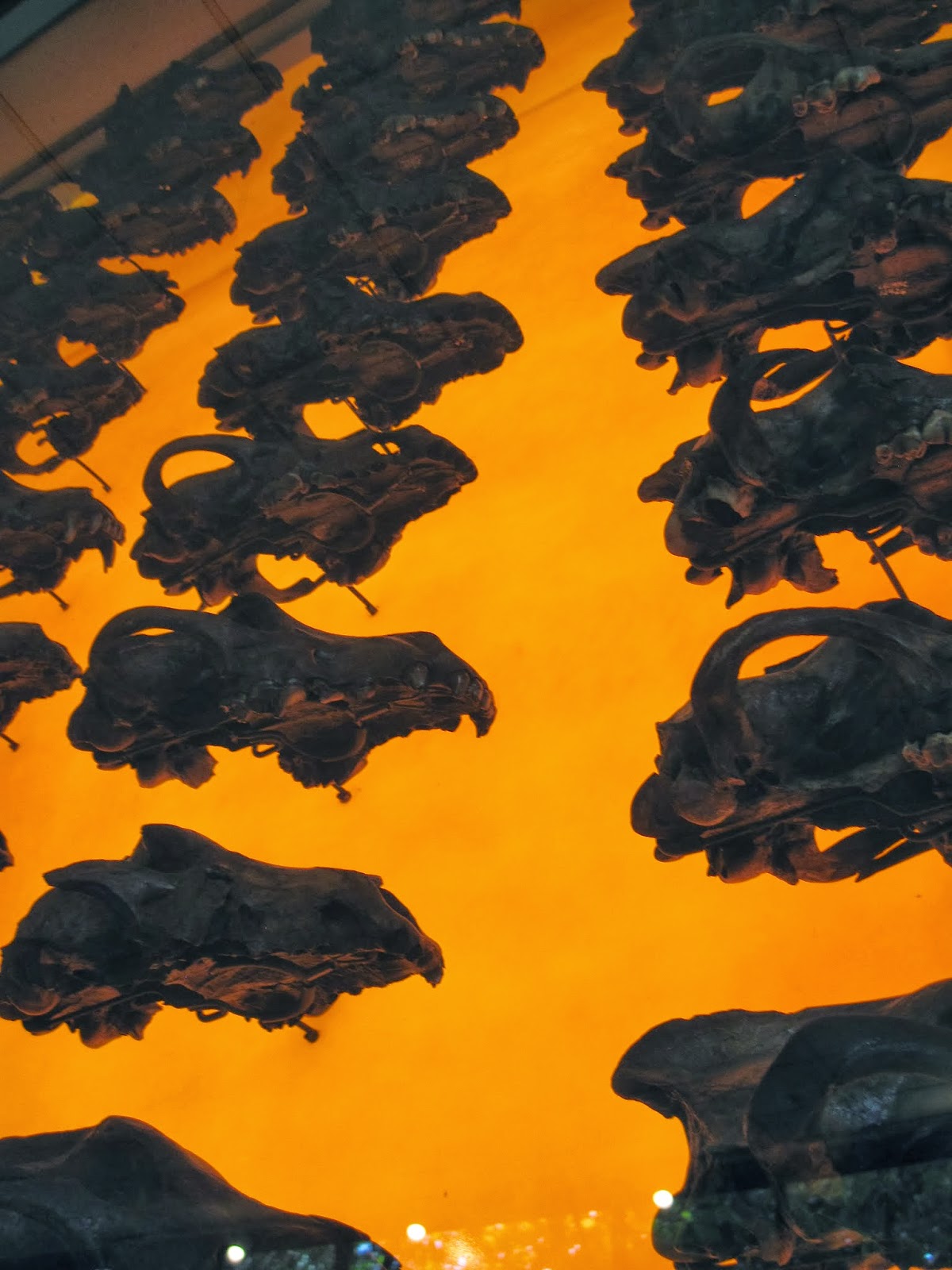
For the final entry in this year’s SVP recap, let’s head over to the Page Museum, which showcases specimens collected right outside its front doors in the La Brea tar seeps. Continue reading
For the final entry in this year’s SVP recap, let’s head over to the Page Museum, which showcases specimens collected right outside its front doors in the La Brea tar seeps. Continue reading
Next up in the post-SVP report: the La Brea Tar Pits! This is one of those classic localities that I’m sure is on many a palaeo must-see list. I didn’t get a chance to see this on the pre-conference field trip, but a couple of us from the UofA made time to head over before our flights home.
Several of the excavations have viewing stations where you can watch palaeontologists and volunteers hard at work. Pit 91 is the largest of the excavations, but digging is on hiatus while they work on another project.
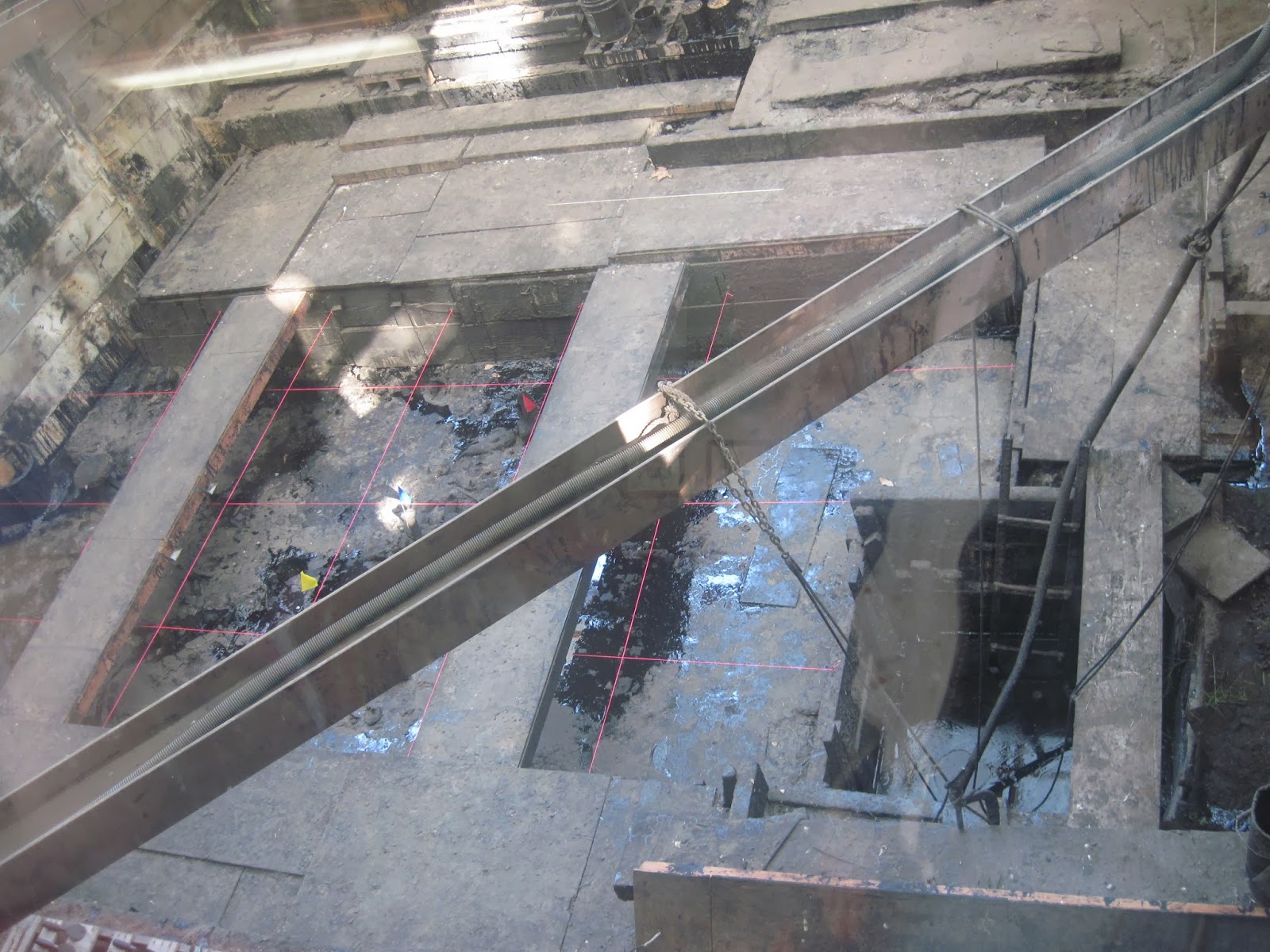
It is both so similar and so different compared to my experiences digging dinosaurs. The tar pits, or tar seeps as I think they are more accurately called, are kind of a sandy, semi-consolidated sediment with Ice Age vertebrates and asphalt. Excavators lie on the boards across the surface, and work in marked out grid squares.
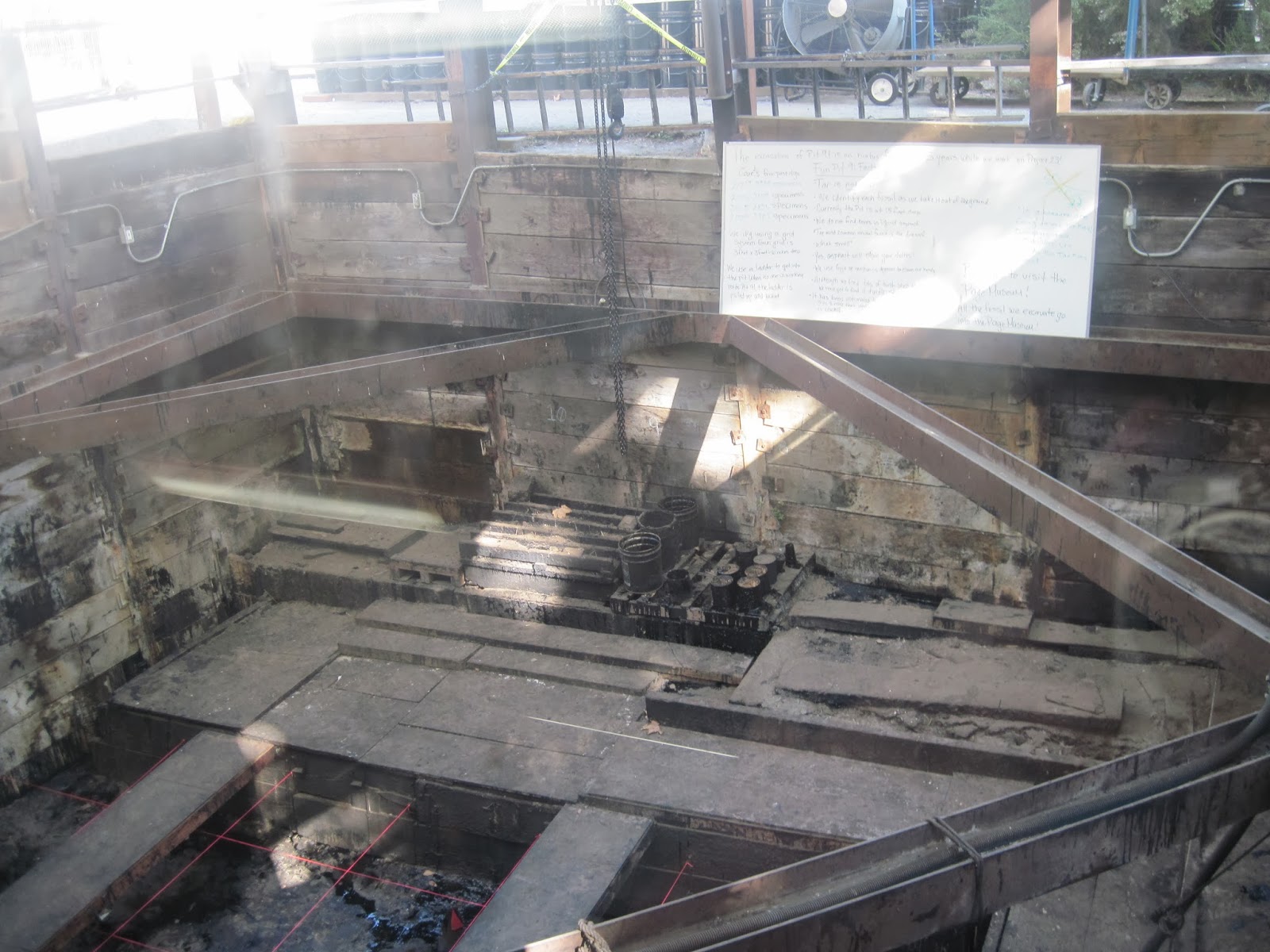
Here’s another shot of the quarry to give a sense of how deep they have gone. Pit 91 has been excavated almost continuously since the 1970s.
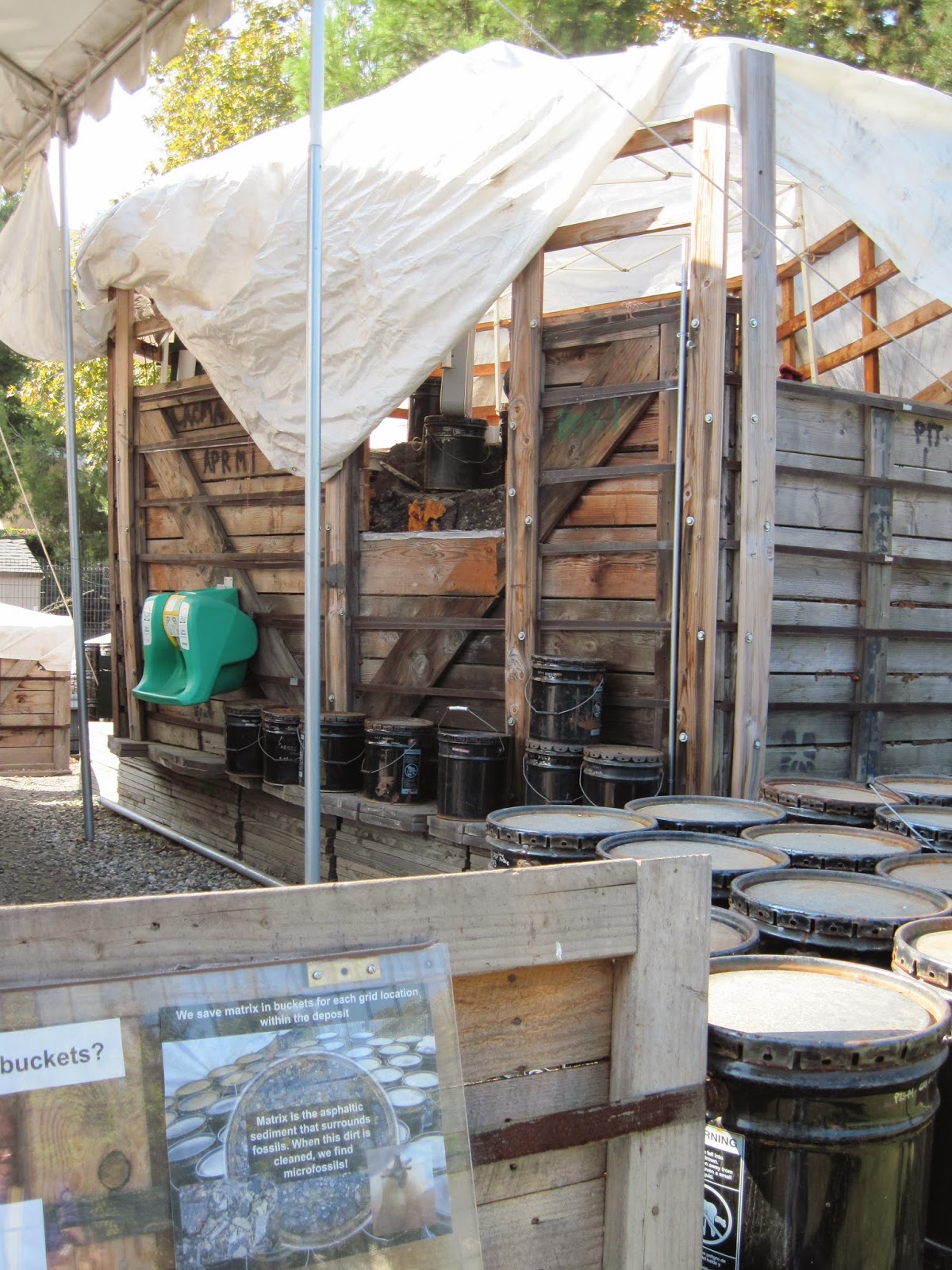
Work halted at Pit 91 a few years ago for a new dig, called Project 21. A construction project (for a parking structure, I think) down the road encountered several tar seep deposits with fossils. Instead of holding up construction for years and years, the team at the Page Museum simply scooped up the entire seep deposit and brought it over to the park to work on. The result was 21 large crates which are ‘excavated’ above ground. Apparently this is much nicer for the diggers since it isn’t quite as wet and sticky, as the tar can drain out the bottom of the crates.
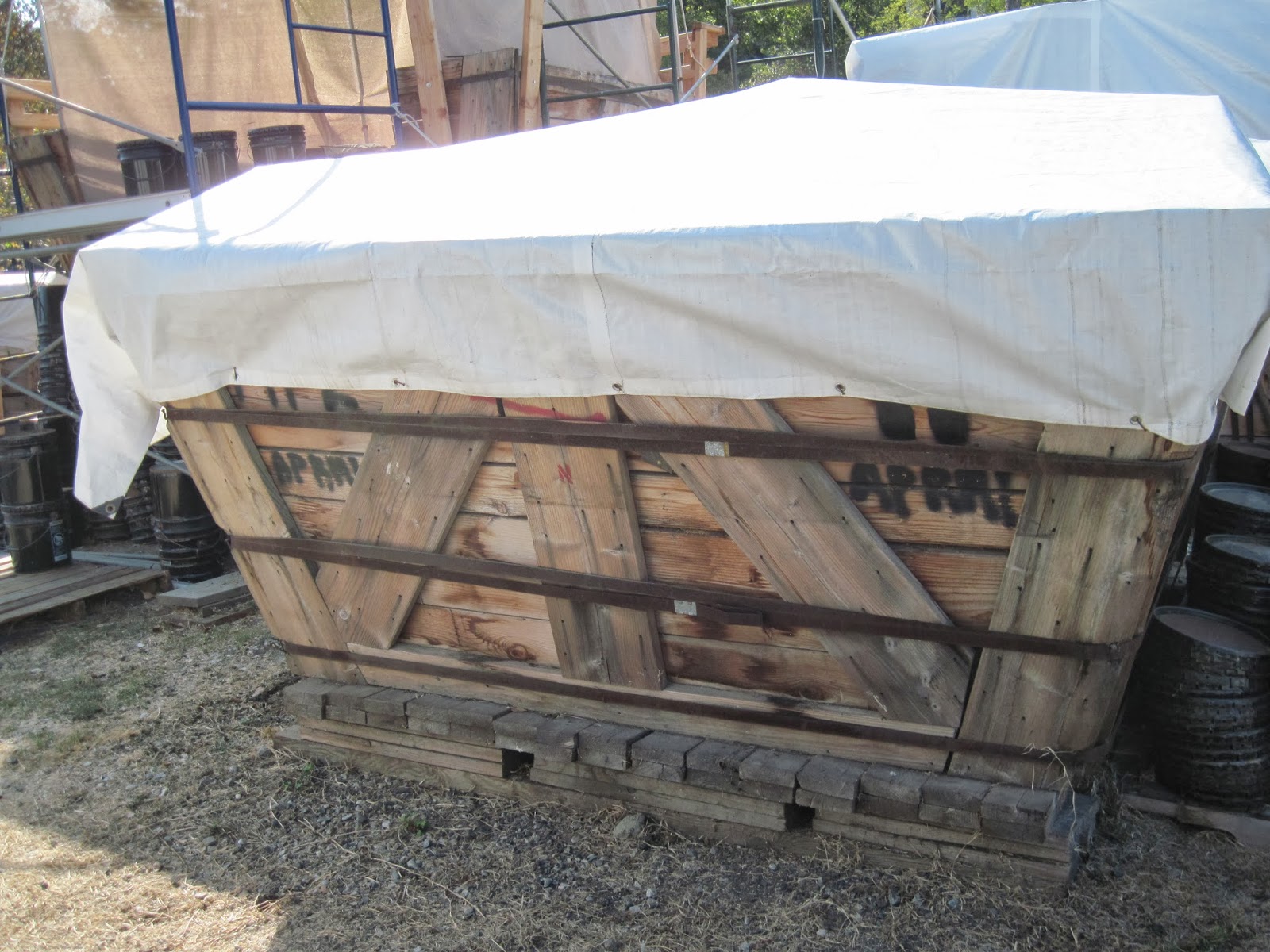
Another, slightly smaller crate waiting to be worked on.
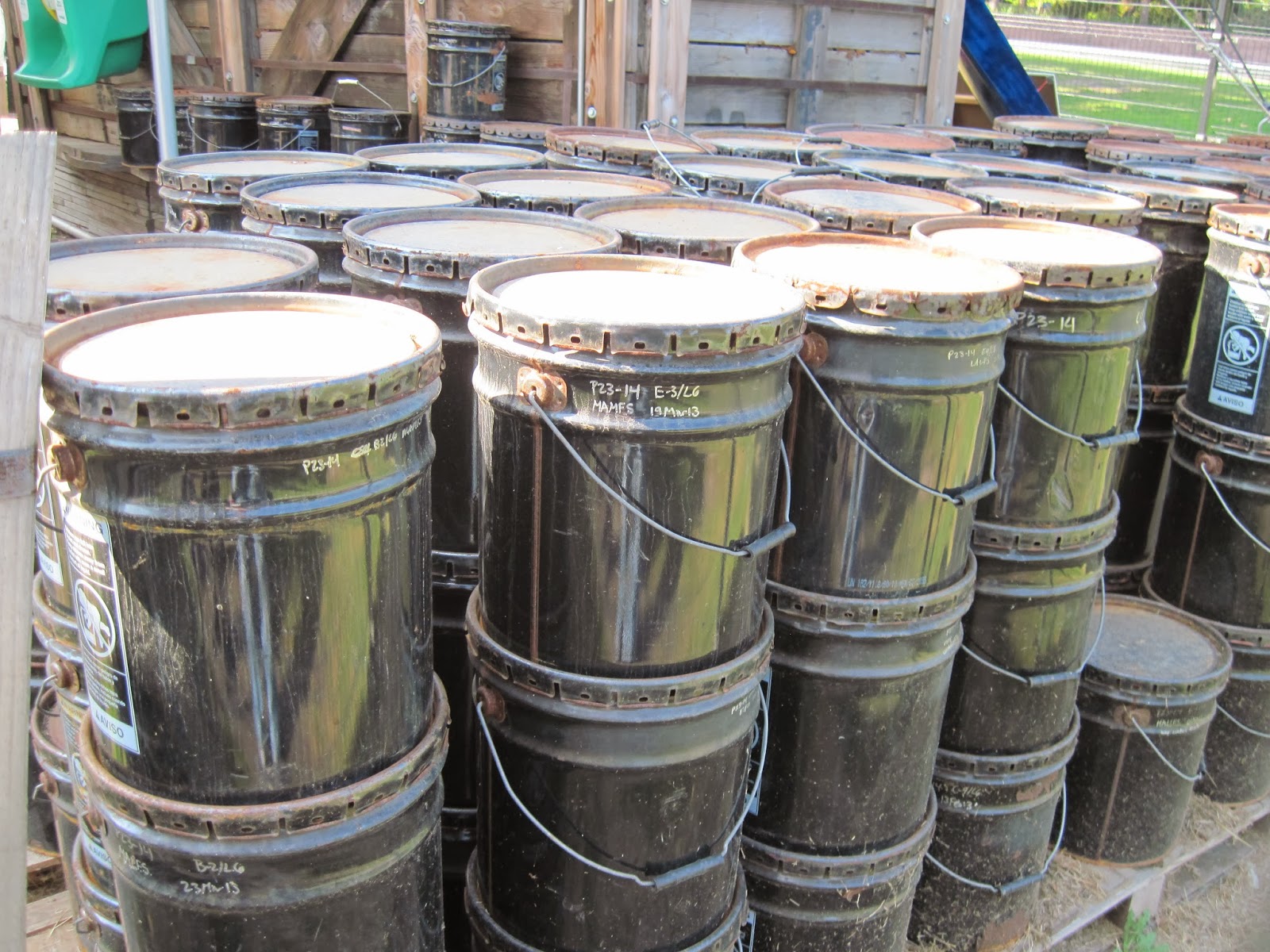
The sediment is saved in large barrels, so that technicians can look for microvertebrates – things like birds, snakes, lizards, small mammals, etc.
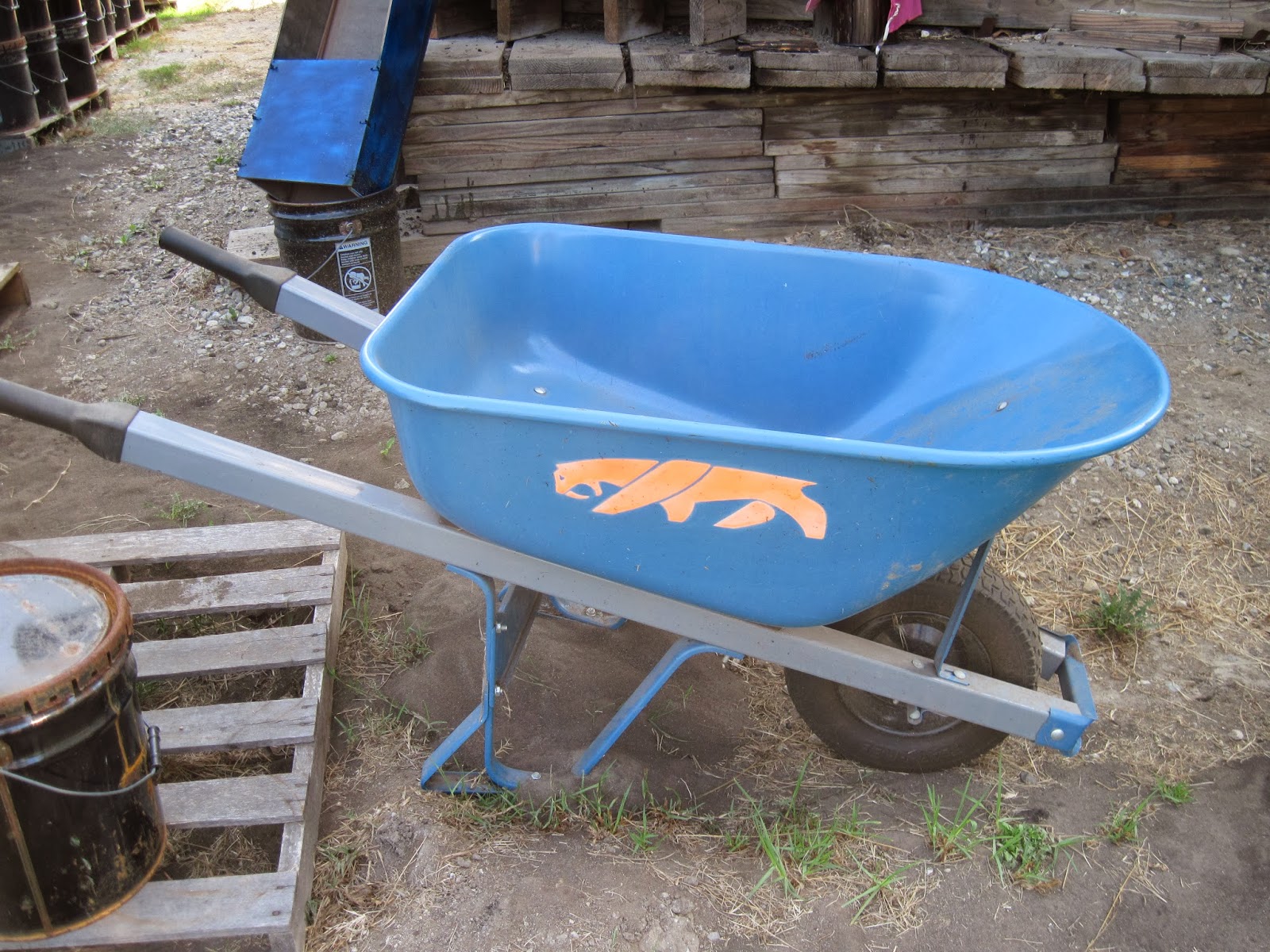
Smilodon wheelbarrow!

Just outside the entrance to the museum is the largest of the pits, the Lake Pit. There wasn’t originally a pond here – rainwater has filled in an old pit mined for asphalt. The pit bubbles and gurgles away, which is quite amusing.
Next time: the Page Museum!
The Natural History Museum of LA County is excellent! I had a chance to visit it during the Society of Vertebrate Paleontology annual meeting in Los Angeles the week before last. A great museum with some wonderful dinosaur exhibits. Here’s a sampling!
Things have been quiet around this blog as of late because there have been TOO MANY THINGS. There are still too many things, but I figured I’d do a quick update as to the goings-on around these parts over the summer.
The University of Alberta Laboratory for Vertebrate Paleontology is celebrating the 50th anniversary of a landmark international paleontology conference, held at the university in 1963 and which kicked off the start of our formal paleontology program here, with a symposium on Friday, August 30.
You’re invited to join us in Edmonton from August 29 to September 1. Our 50th anniversary celebrations will be held concurrently with the 2013 Canadian Paleontology Conference, and the inaugural meeting of the Canadian Society of Vertebrate Paleontology.
Abstracts for the CPC are due by August 1. You can register for both events, and find out more information, at our conference website: http://cpc2013.wordpress.com.
We hope that many of our palaeontology colleagues, and especially UALVP alumni, will be able to join us in Edmonton in August!

Last week I returned to Happy Jack’s at Dinosaur Provincial Park for a brief stint of fieldwork. This has been the University of Alberta’s base camp since 2008, and the area has been very productive for us. Continue reading
Over the last few posts, I’ve talked about why Euoplocephalus tutus is a valid genus and species, how the Horseshoe Canyon Formation ankylosaurid is really Anodontosaurus lambei, and how the headless and clubless holotype of Scolosaurus cutleri is most likely the same species as the ankylosaurid from the Two Medicine Formation. Here’s a diagram summarizing some of the key points from the paper.
Behold, NHMUK R5161: the extraordinary holotype of Scolosaurus cutleri. This is truly one of the most amazing dinosaur fossils that has been collected from Alberta, and is one of the best preserved ankylosaurs in the world. And the best part is that it is on display for everyone to enjoy in the galleries of the Natural History Museum in London.
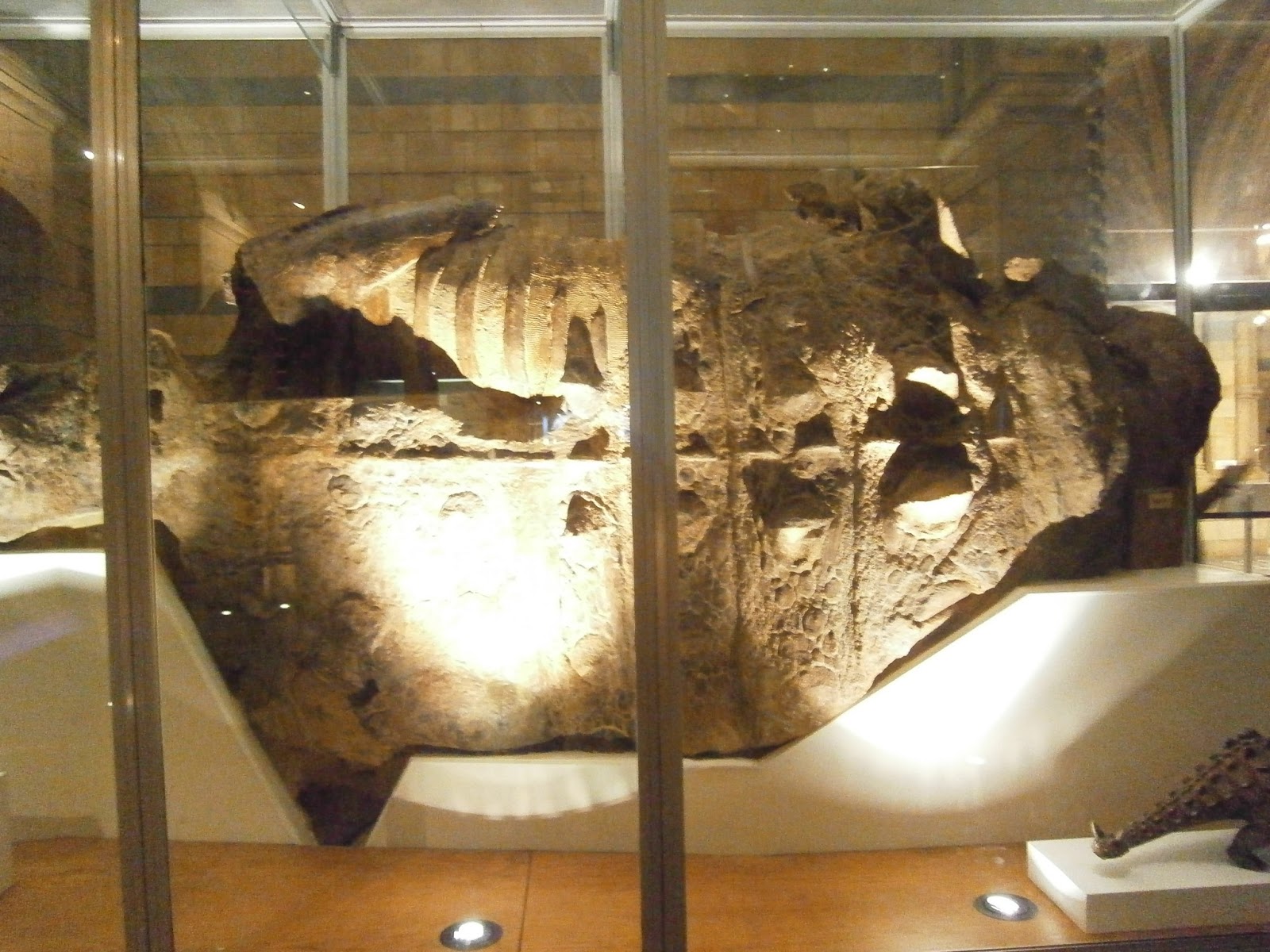
(Many thanks to Angelica Torices for snapping this photo for me! NHMUK R5161 is beautiful to look at, but difficult to photograph well, and I’m afraid most of my photos from my visit in 2009, while useful to me, are not necessarily that nice to look at.) Continue reading
With the identification of UALVP 31 as a specimen that could be confidently referred to Euoplocephalus based on the shape of the cervical half ring, I now had a pretty complete skull, and some postcranial material, to help expand our knowledge of Euoplocephalus.
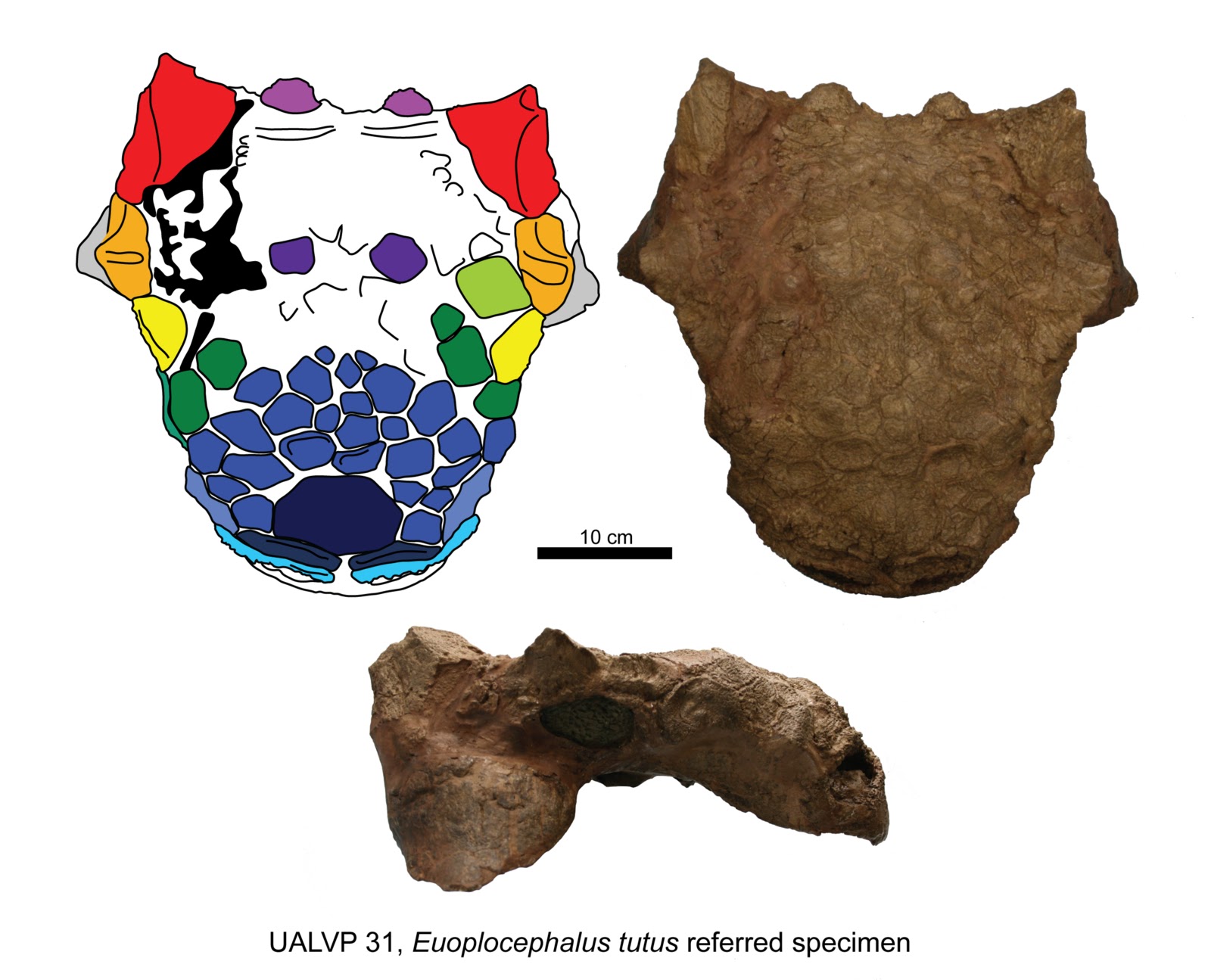
The Euoplocephalus skull UALVP 31. From Arbour and Currie (2013).
Continue reading
The holotype of Euoplocephalus isn’t very complete, as holotypes go. So, one of the first things I had to figure out for this project was whether or not the holotype of Euoplocephalus had any diagnostic features. Euoplocephalus was certainly unique when it was named – no other dinosaurs had the pattern of flat, polygonal plates on the skull like CMN 0210 has, and Lambe wasn’t even entirely sure what the cervical half ring was (he suggested it might have been the back of a frill or crest).

Here it is again: CMN 0210, holotype of Euoplocephalus tutus.
A lot of times, features that are unique or diagnostic to a species when it is named are later found to be present in other closely related dinosaur species. There’s a great term for this – character obsolescence (Wilson and Upchurch 2003). Anodontosaurus, named by Sternberg in 1929, had similar flat polygonal plates on the skull. And although Ankylosaurus was named in 1908, a skull was not known for some time – but it too has flat polygonal plates on the skull. So, this pattern isn’t necessarily a diagnostic or unique feature for Euoplocephalus.
Paul Penkalski looked at variation of skulls referred to Euoplocephalus in 2001, and noted that there were a couple of different morphologies represented by cervical half rings. Is the cervical half ring of CMN 0210 unique? Luckily for me, the University of Alberta has an excellent ankylosaur specimen called UALVP 31. Collected by GF Sternberg in 1921 and described by Gilmore in 1923, the skull has been on display in our paleontology museumfor several decades.
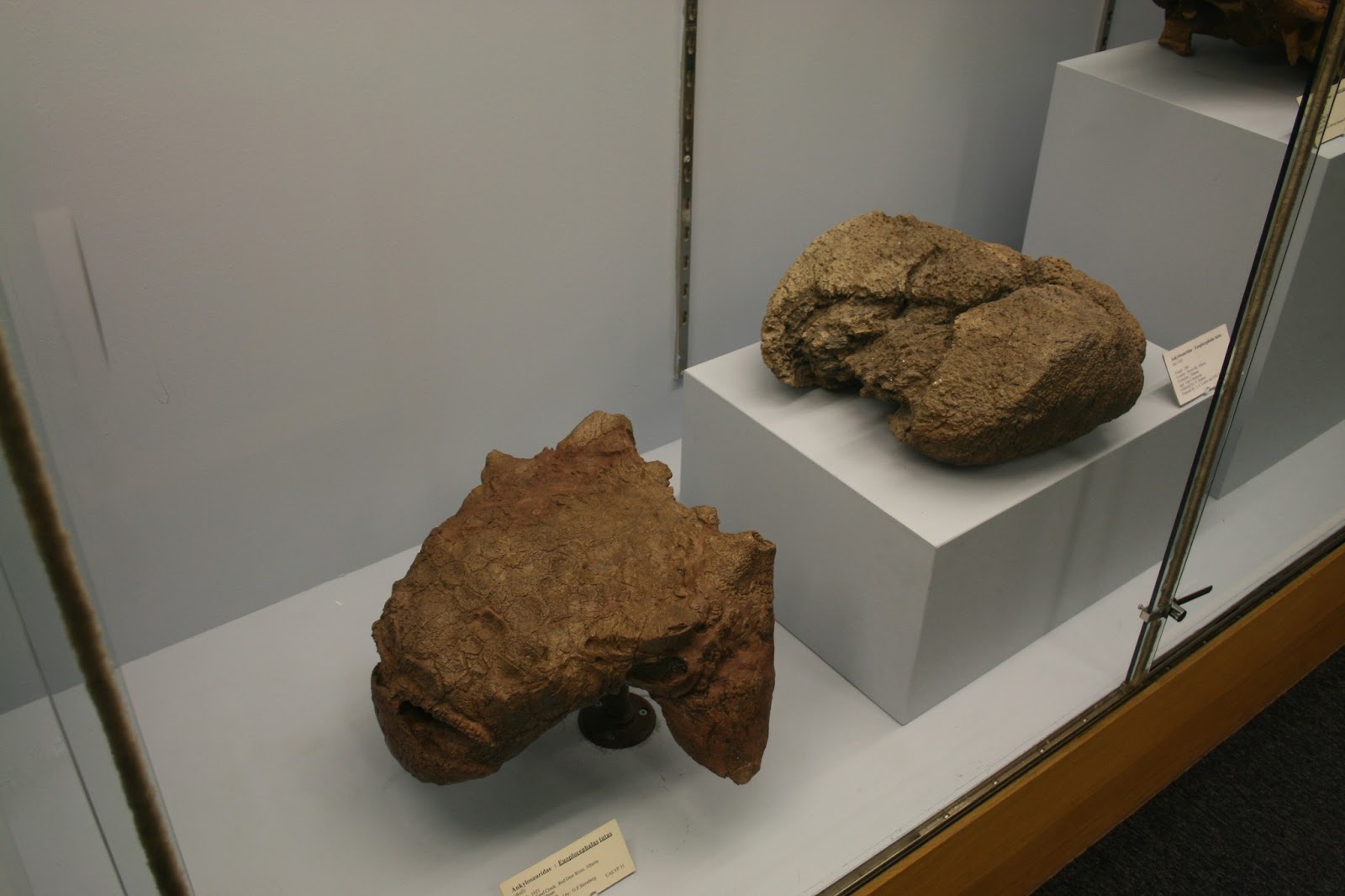
And here’s UALVP 31’s skull on display, plus the tail club UALVP 16247.
But more than the skull was collected – the cervical half rings, part of the hips and leg, a scapula, and other bits and pieces had been collected but never prepared! So, I dug out the half rings and other pieces and got to work.
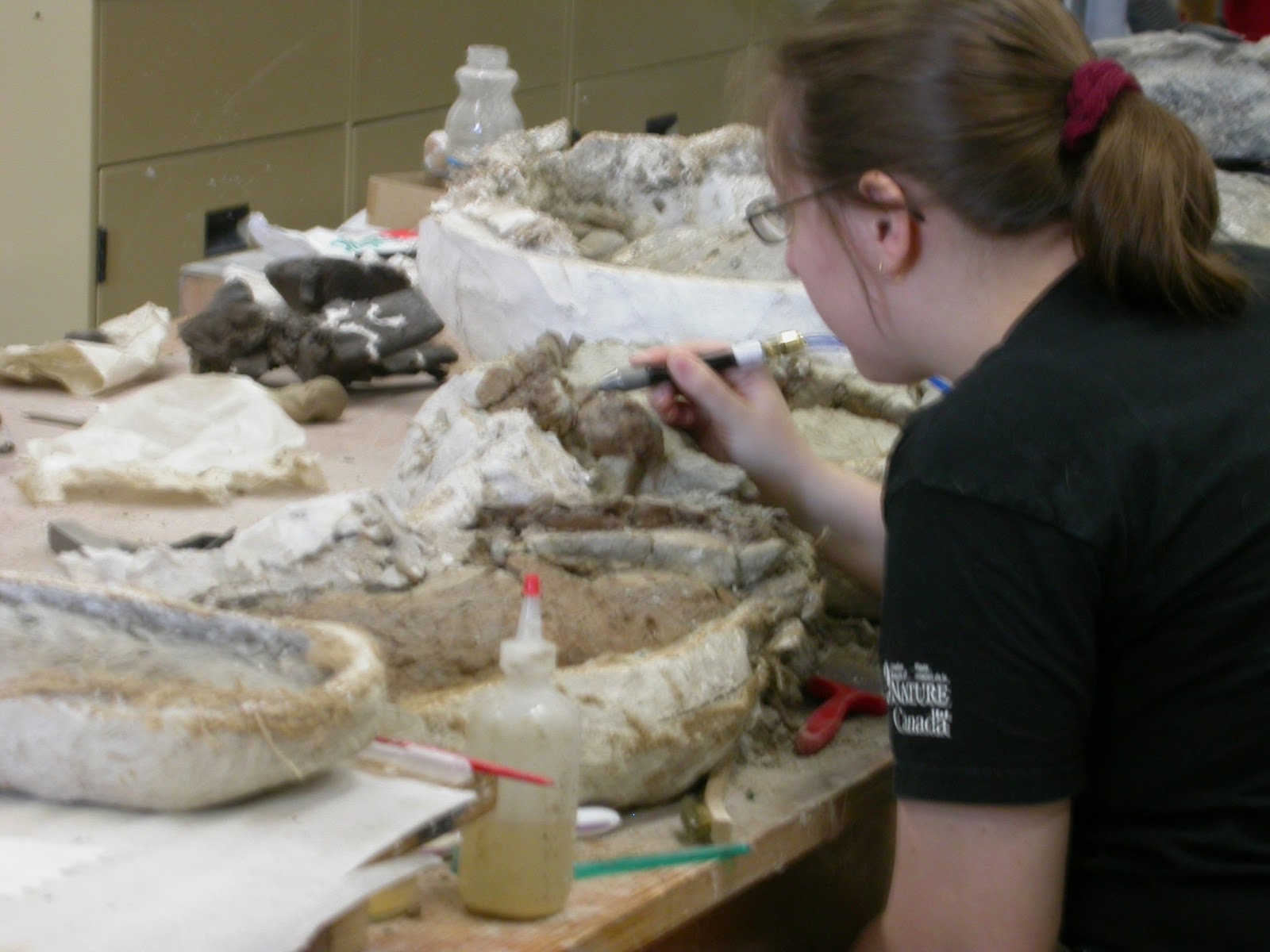
Hop in the wayback machine, here’s a picture from 2007, my first year at the U of A, working on the cervical half rings of UALVP 31.
Preparing the material took a couple of years, because I did it in bits and snags around my research and other projects. I had help from several of my fellow grad students and technicians – Robin Sissons did the scapula, Mike Burns and Kristina Barclay helped with the pelvis, and Ian Macdonald and Clive Coy assisted with some of the trickier parts like the poorly-preserved second cervical half ring.

You guys, opening up old jackets is hard! Anyway, this is Mike and Robin in 2008 being awesome weirdos.
In 2009, I decided to supervise two high school students in the University of Alberta’s WISEST Summer Research Program. WISEST (Women in Scholarship, Engineering, Science and Technology) is an awesome organization that organizes conferences for junior high and high school students, and supports grad students, postdocs, and early career professionals on campus. Their Summer Research Program places high school students into university labs for about 6 weeks during the summer, and by the end the students produce and present a poster discussing what they’ve been up to. In 2009 I was joined by Carmen Chornell and Idel Riemer, who were enthusiastic and excellent fossil preparators! Together we completed preparing the UALVP 31 pelvis, as well as other small bits.
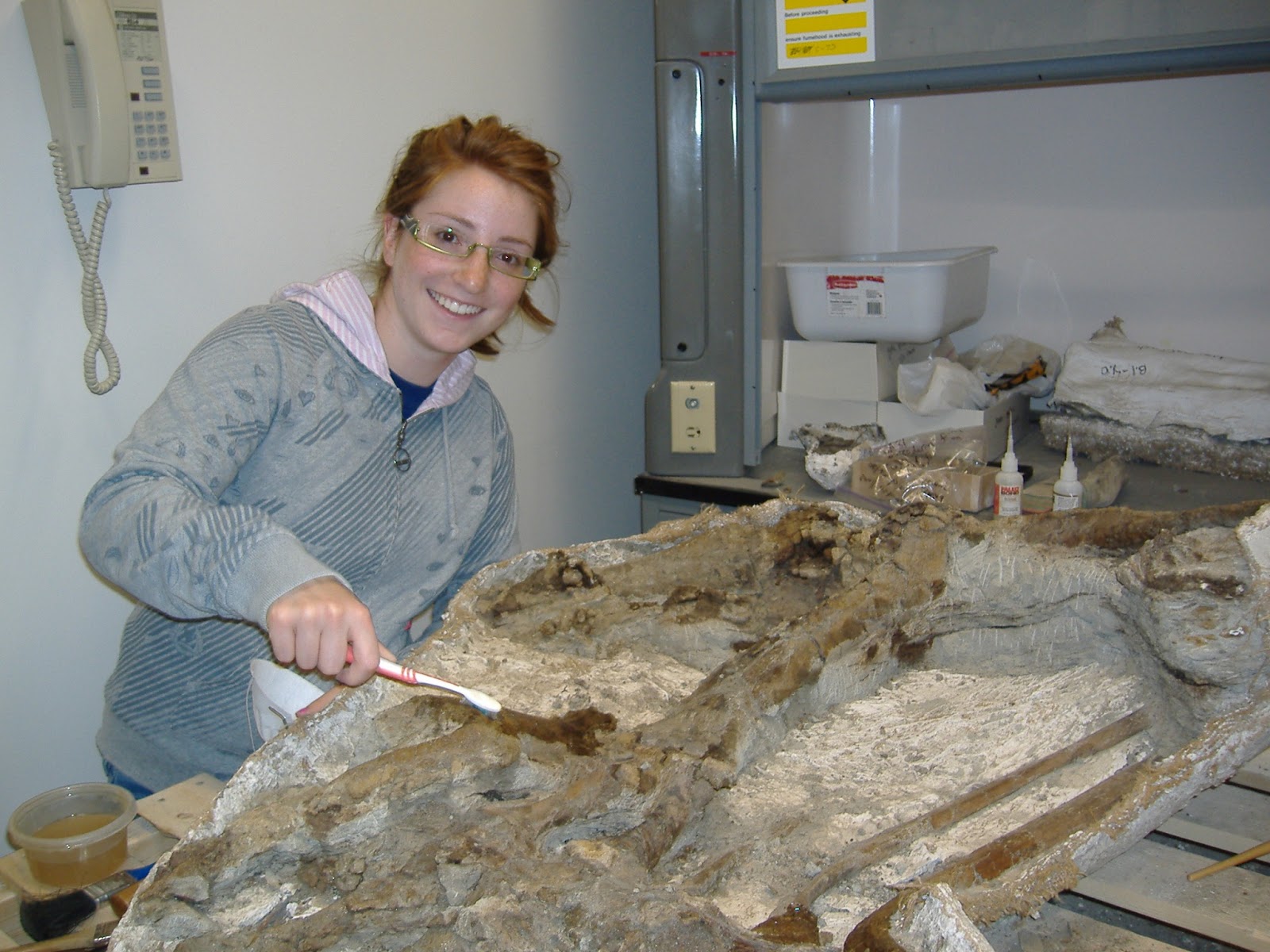
Carmen works away on the pelvis and leg…
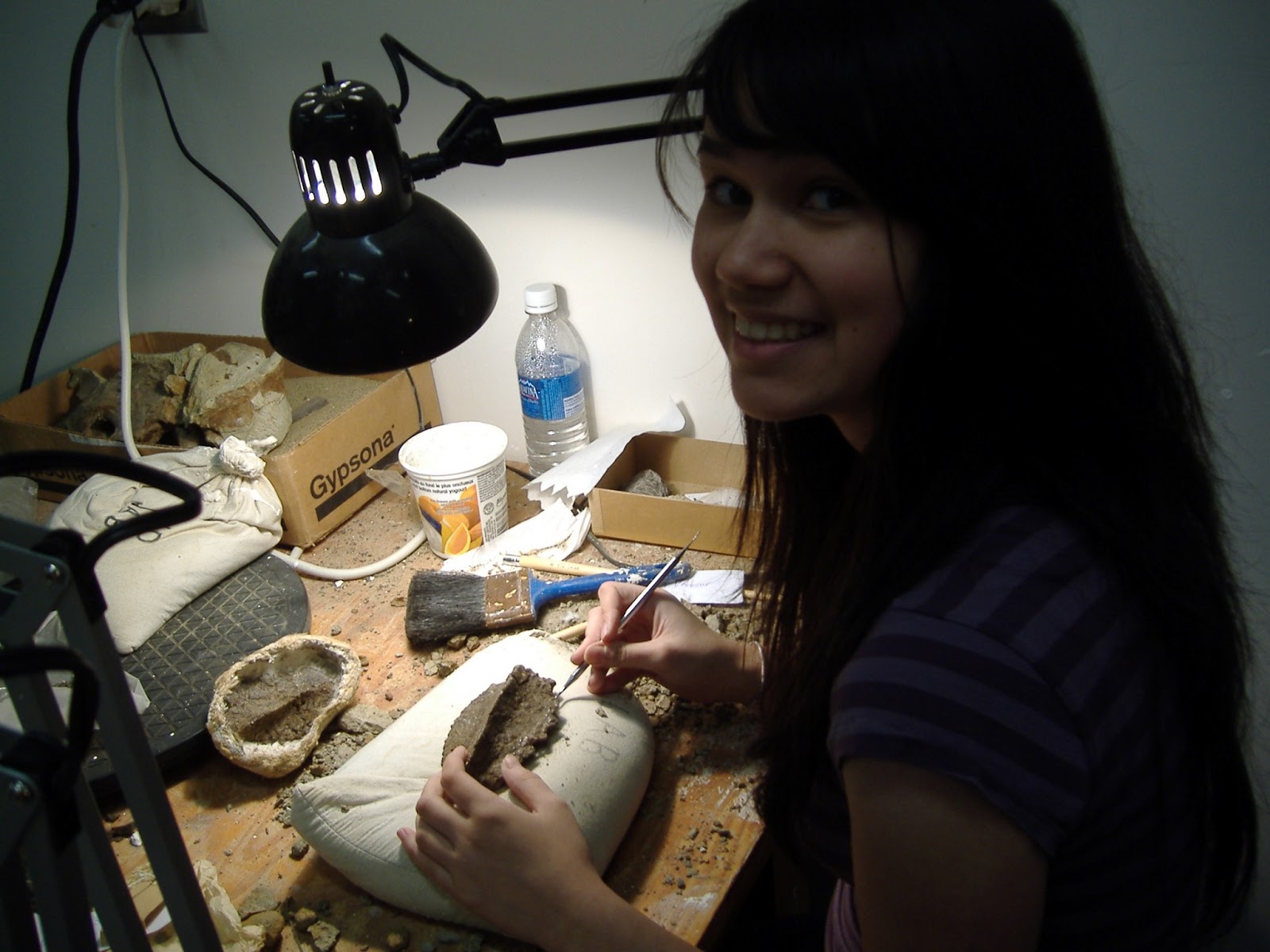
…while Idel puts the finishing touches on some osteoderms.
The UALVP 31 cervical half ring turned out pretty neat, but I needed more information to figure out if the half ring of CMN 0210 was unique. I visited lots of museums to see what the half rings of other “Euoplocephalus” specimens looked like, and to see the half rings of other species of ankylosaurs. Thankfully, it seems that the half ring of CMN 0210 is diagnostic, so Euoplocephalus is a real taxon after all. The first cervical half ring has 6 tall, keeled osteoderms, and each pair has a distinct morphology. The middle (medial) pair are tall, with a centrally located apex to the keel. The lateral pair also have a keel, but it’s kind of sigmoidal (or, S-shaped). The distal pair, which cover the tips of the band, are flange-shaped. Some specimens, like UALVP 31, are missing the distal osteoderms – these don’t seem to fuse on as tightly, so it’s possible that they are more easily broken off before fossilization. The half ring of UALVP 31 shares the same morphology as CMN 0210, and so UALVP 31 was one of the few specimens that I could confidently refer to Euoplocephalus for a long time (another being AMNH 5406). UALVP 31 was the only one of these that had a complete skull.

On the left, CMN 0210, in the middle is UALVP 31, and on the right is AMNH 5406.
In the next post, I’ll talk about figuring out variation in the cranial ornamentation in Euoplocephalus skulls.
AND HERE ARE SOME PAPERS!
Arbour VM, Currie PJ. 2013. Euoplocephalus tutus and the diversity of ankylosaurid dinosaurs in the Late Cretaceous of Alberta, Canada, and Montana, USA. PLOS ONE 8: e62421.
Brown B. 1908. The Ankylosauridae, a new family of armored dinosaurs from the Upper Cretaceous. Bulletin of the American Museum of Natural History 24:187–201.
Gilmore CW. 1923. A new species of Corythosaurus with notes on other Belly River Dinosauria. Canadian Field Naturalist 37: 1–9.
Lambe LM. 1902. New genera and species from the Belly River Series (mid-Cretaceous). Geological Survey of Canada Contributions to Canadian Palaeontology 3: 25–81.
Lambe LM. 1910. Note on the parietal crest of Centrosaurus apertus and a proposed new generic name for Stereocephalus tutus. Ottawa Naturalist 14: 149–151.
Penkalski P. 2001. Variation in specimens referred to Euoplocephalus tutus. In: Carpenter K (ed.) The Armored Dinosaurs. Bloomington: Indiana University Press, 363-385.
Wilson JA, Upchurch P. 2003. A revision of Titanosaurus Lydekker (Dinosauria – Sauropoda), the first dinosaur genus with a “Gondwanan” distribution. Journal of Systematic Palaeontology 1:125-160.
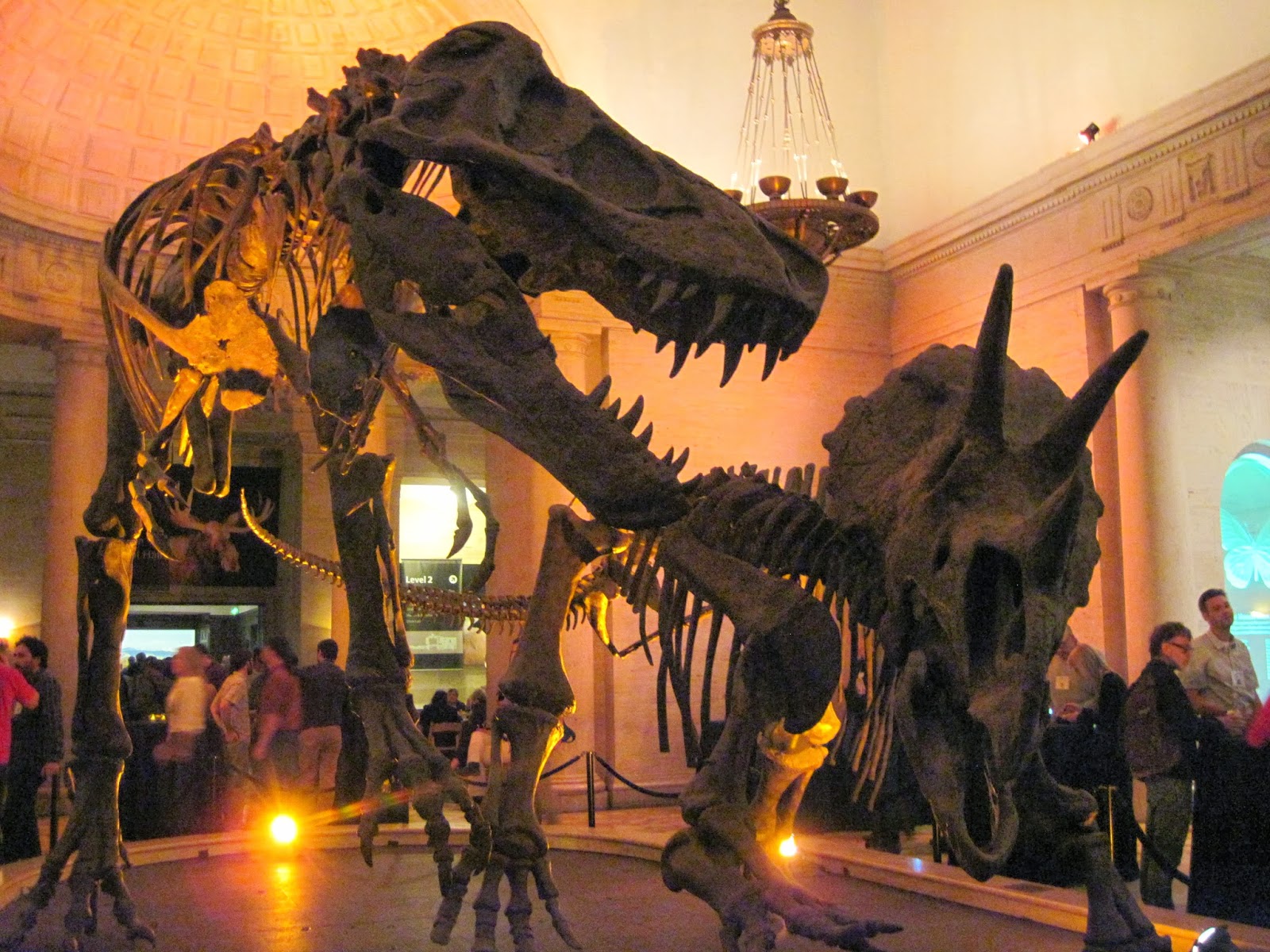

 pseudoplocephalus