Today I published a revision of the North American ankylosaurid genus Euoplocephalus. I’d like to take some time to go through some of the major points of the paper over the next few days here, but today I will give a brief introduction to the motivation behind this study.
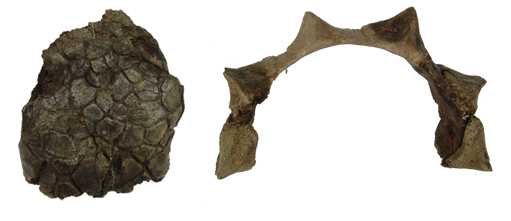
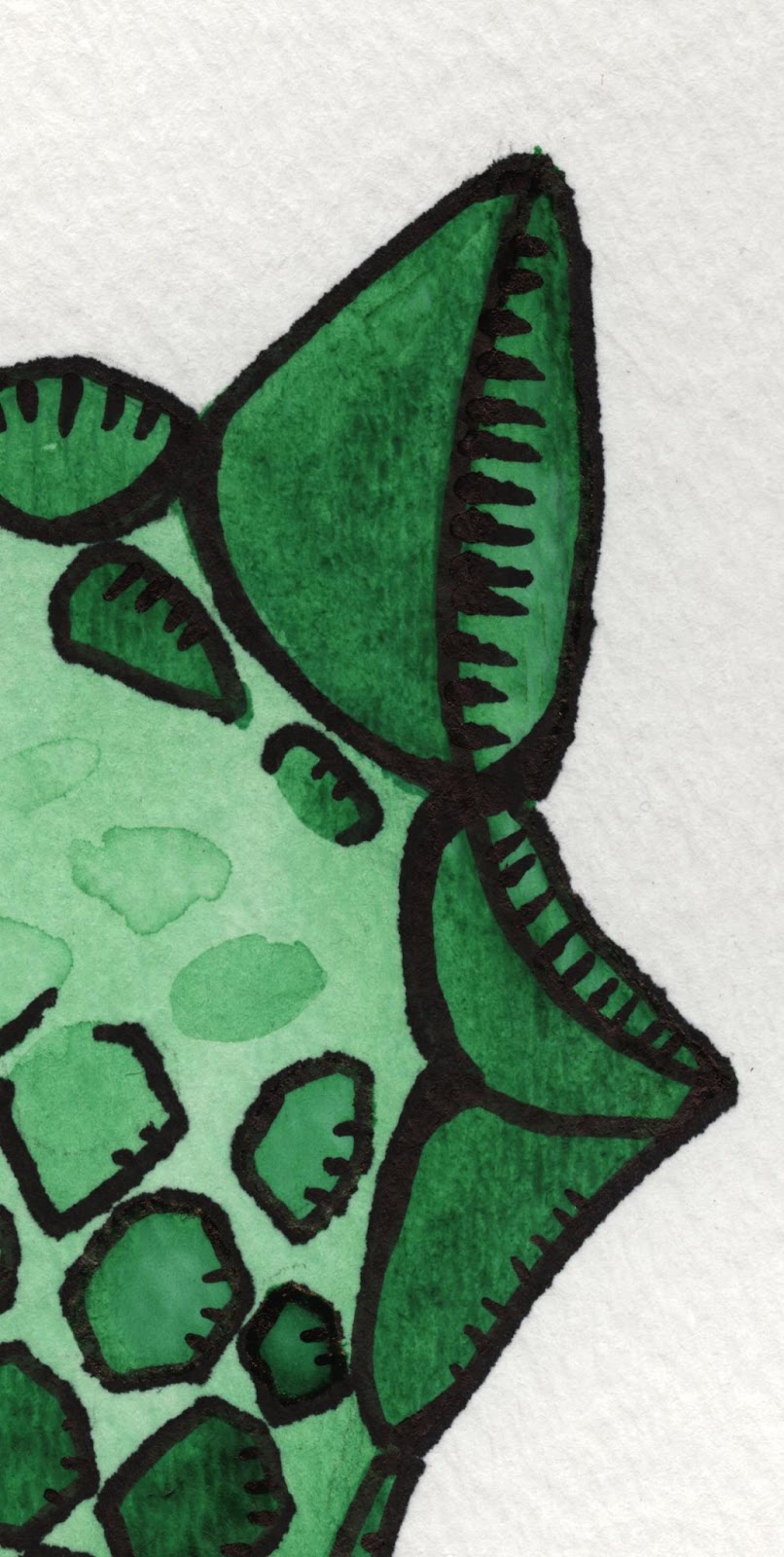
Euoplocephalus is one of those ‘classic’ dinosaurs. Named in 1902 (as Stereocephalus, which was preoccupied by…a beetle! of course), it wasn’t known from very much material. All that Lambe had was a chunk of the snout/forehead region, and an unusual structure called a cervical half ring. Cervical half rings are totally bizarre structures that seem to be unique to ankylosaurids. They’re made of an underlying yoke of fused bone segments, and topped by fused osteoderms like you see on the rest of an ankylosaur’s body.
Canadian Museum of Nature 0210, holotype of Euoplocephalus tutus. On the left, the skull chunk. On the right, the first cervical half ring. Images modified from Arbour and Currie (2013).
In addition to working through the home stretch of my PhD, an exciting project has kept me hopping for the last few months. I’m part of the team creating the University of Alberta’s flagship MOOC, in partnership with Udacity: Dino 101: Dinosaur Paleobiology. If MOOC is a new acronym for you, don’t worry – it was for me, too. There will be three flavours, so to speak, of Dino 101, but all will feature the same online content. Dino 101 will be available through Udacity, for free, to everyone around the world. Registered University of Alberta students who want to take the course for credit will register for PALEO 200 (online only), or PALEO 201 (same online content, but with additional in-person activities like field trips).
Working on Dino101 has been a great experience for me so far, even though it can be challenging. We’re working closely with educational specialists to make sure the pedagogy is sound, and that our assessments will be rigorous. We want to make sure that real learning will occur. We’ve spent a lot of time thinking about the foundational aspects of the course, like what our learning outcomes will be, and what skills will be tested. I’ve been learning a lot about educational theory – even though the scale of MOOCs is new, there’s a lot of people on board with this project who have researched the best ways to deliver and assess online content. We also have a great team working on unique interactives for the course, which should enhance the experience for students.
As we finish off scripts and move into production, I’m looking forward to seeing some of the cool ideas we have planned for teaching the basic concepts of dinosaur palaeontology come to life. I also hope that this course will serve as a springboard for people who are interested in animal biology and geology, and that everyone will come away with a better understanding of the scientific method.
I hope we’ll see you in Dino101 when we launch this September!
(Check out the UofA’s official Dino101 page for more information and to sign up for updates.)
Well, a lot has happened since the auction of a nearly complete Tarbosaurus was halted last May. At the end of December, Eric Prokopi surrendered his claim to the Tarbosaurus and other Mongolian and Chinese dinosaur fossils in his possession, and pleaded guilty to several charges surrounding the Tarbosaurus case. The Mongolian government is renewing its commitment to preserving its outstanding natural history heritage by creating a new dinosaur museum in capital city Ulaanbaatar, and several museums elsewhere in the countryside.
I hope the awesome leather Tarbosaurus makes the trip to the new digs.
The annual Society of Vertebrate Paleontology meeting wrapped up yesterday. This year we got to visit the very nice city of Raleigh, North Carolina. There were many, many interesting talks and posters which I can’t possibly cover in detail here, but I will look forward to the papers that will hopefully eventually come out of this meeting. SVP is the big-time serious palaeo conference for most of us here in North America…and yet, although at times the talks are SO SERIOUS, what I really like about SVP is how much fun everyone is having. And this brings me to the chairs. The chairs at the Raleigh Convention Centre seem to have built-in whoopie cushions. If you sat down too quickly, the result was unavoidable. (Raleigh Convention Centre: please don’t change this!) And so, during the transition between each talk as people moved in and out of the session, a low murmur of toots resonated throughout the room. This was pretty funny during the talks, but was almost unbearable during the final banquet and awards ceremony on Saturday night. As we recognized the contributions of various members of the SVP, we would rise to give standing ovations. And as about 1000 people sat down simultaneously, the squeaky chairs were that much more noticeable. Continue reading →
Some of you are already aware of the Philip J. Currie Dinosaur Museum, which is scheduled to be built in Grande Prairie, but certainly all of you are aware of Philip Currie himself. As part of the final push to raise the remaining construction funds, we have launched a crowd-fundraising campaign on www.indiegogo.com/curriemuseum. The aim is to raise $1,000,000 in 120 days. In the first hour alone, we raised $1,600!
Every donation, no matter how small, is important and donors are rewarded with a range of increasingly cool gifts including a museum logo pin, t-shirts, and original artwork by palaeo-art master Julius Csotonyi. It’s all outlined on the website, so please check it out, spread the word, and help us build a world-class museum and research institute.
Now that I’ve talked about the ROM‘s current offerings of temporary special dinosaur exhibits, I thought I’d turn my attention to the permanent fossil galleries. The ROM has long been one of my favourite museums, and as a student of palaeontology the only museum I have visited more often for my research is the Tyrrell. The last five years have seen some major renovations at the ROM, including the construction of the Michael Lee-Chin Crystal. Continue reading →
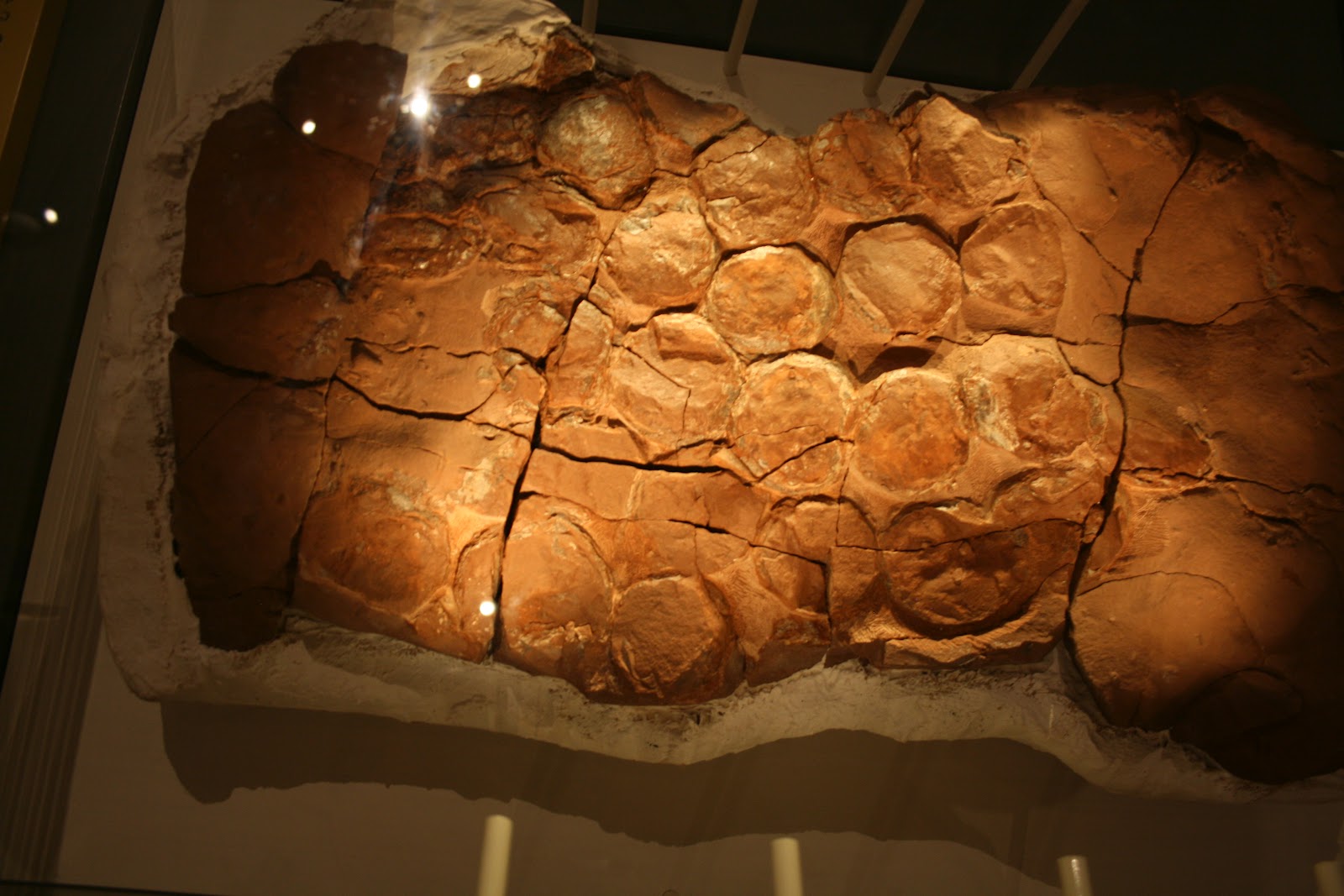
The ROM has another temporary dinosaur exhibit on display right now, Dinosaur Eggs & Babies: Remarkable Fossils from South Africa. It showcases nests and embryos of the prosauropod dinosaur Massospondylus, which were described by ROM and University of Toronto scientists in 2005 (with a subsequent paper in 2010).
The nests were found in Golden Gate National Park, South Africa. Continue reading →
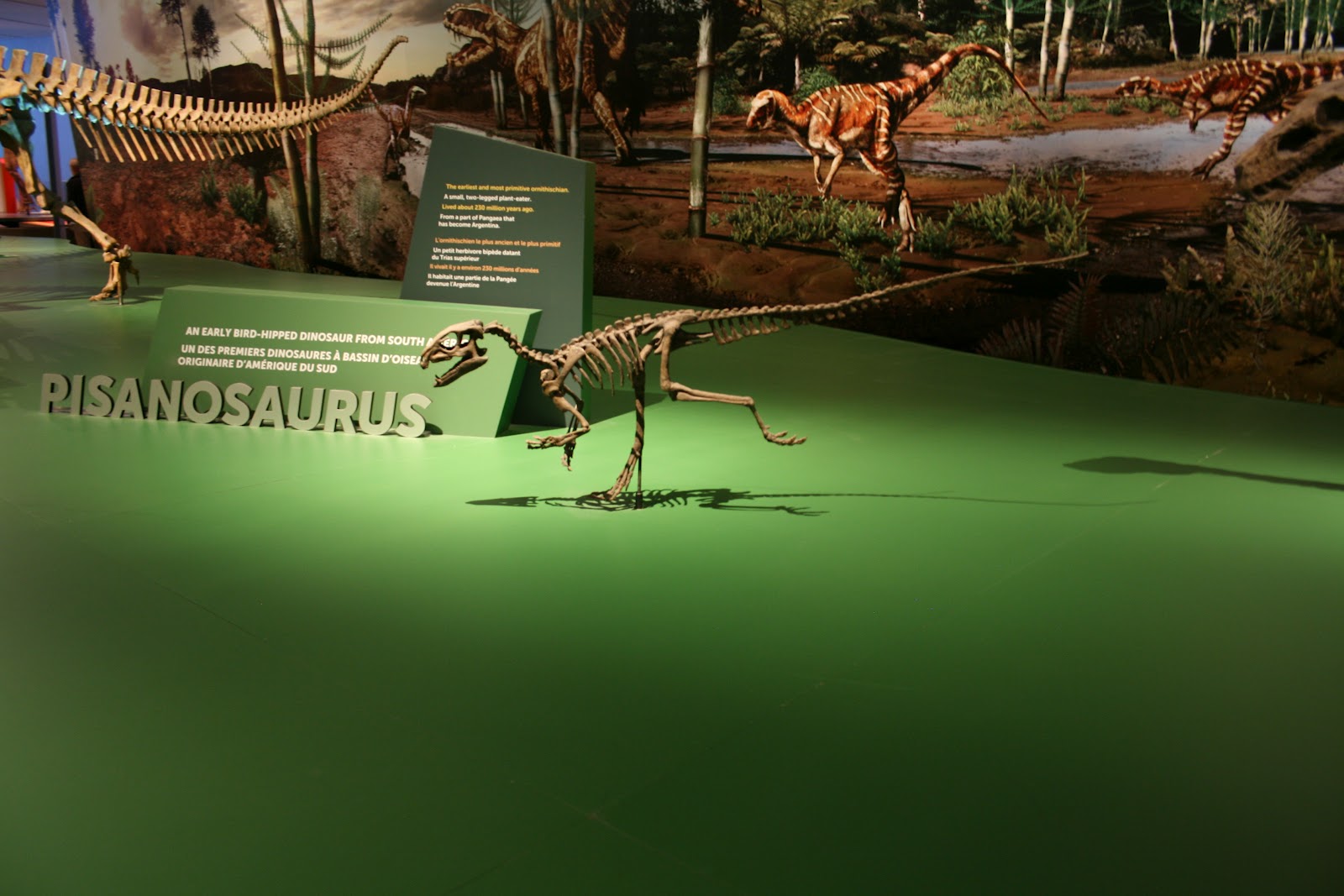
This summer, the Royal Ontario Museum unveiled a brand-new exhibit all about the dinosaurs of Gondwana. When Pangaea rifted apart during the Triassic, it split into two continents – Laurasia, represented by the modern northern continents of North America, Europe, and Asia, and Gondwana, represented by the modern southern continents of South America, Africa, Australia, and Antarctica, plus India, Madagascar, and New Zealand. The dinosaurs and other extinct terrestrial vertebrates of Gondwana differed from their northern neighbours, and we don’t often see them in exhibitions in North America.
Ultimate Dinosaurs: Giants of Gondwana features lots of interesting and sometimes obscure dinosaurs, some really great artwork, and some neat technological things (of which I am sometimes skeptical, but can wholeheartedly endorse here).
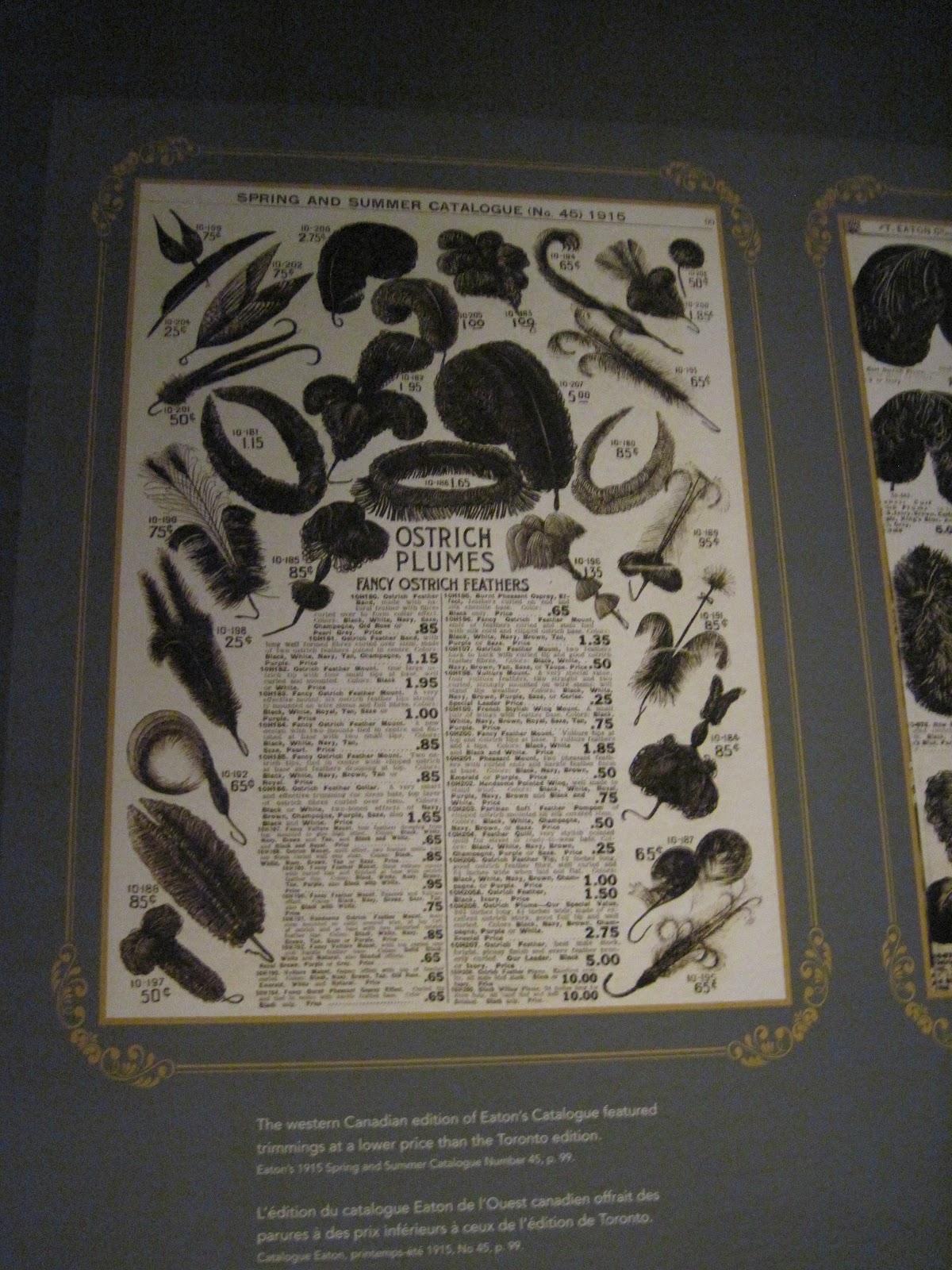
The Royal Alberta Museum is also currently hosting a temporary exhibit on the use of feathers in hat-making (millinery!) and fashion, called Fashioning Feathers. I’m not usually all that into the history of costume and fashion in museums, and so I was pleasantly surprised by how interesting I found this particular exhibit. I think it was the intersection of biology and fashion that was so neat.

 pseudoplocephalus