Ice to Meet You

Several weeks ago, I talked about the Antarctic dinosaur Cryolophosaurus. As Phil and Eva’s Antarctic adventure winds down, I thought it was high time to write a little bit about another Antarctic dinosaur, Glacialisaurus.

This is not Glacialisaurus, but it is still awesome. Ice sculpture competitions like Ice on Whyte are one of the winter benefits of living in the frozen tundra of Edmonton. And this year, there were several teams from China participating! Continue reading

On the Presence of Female Palaeontologists in the Popular Media

Last week I did a bunch of interviews with many different media outlets about a new paper I had published. One of the most interesting was a conversation I had with CBC Radio Edmonton’s show Radio Active, which aired on Friday evening. You can listen to it here.

I was asked not just about the pterosaur, but about what it is like to be a female palaeontologist and how the media exposure may affect the career of a scientist just starting out. What I thought was interesting was that the interviewers both before and during the Radio Active show noted that most people don’t really associate palaeontology with women, and that dinosaurs seem to be more for boys. I found this a bit surprising because whenever I go out and do activities with younger kids, ALL kids love dinosaurs, regardless of gender. But it got me thinking again about women in palaeontology, and in particular, where are the female palaeontologists in the popular media? Continue reading

Vesuvio!

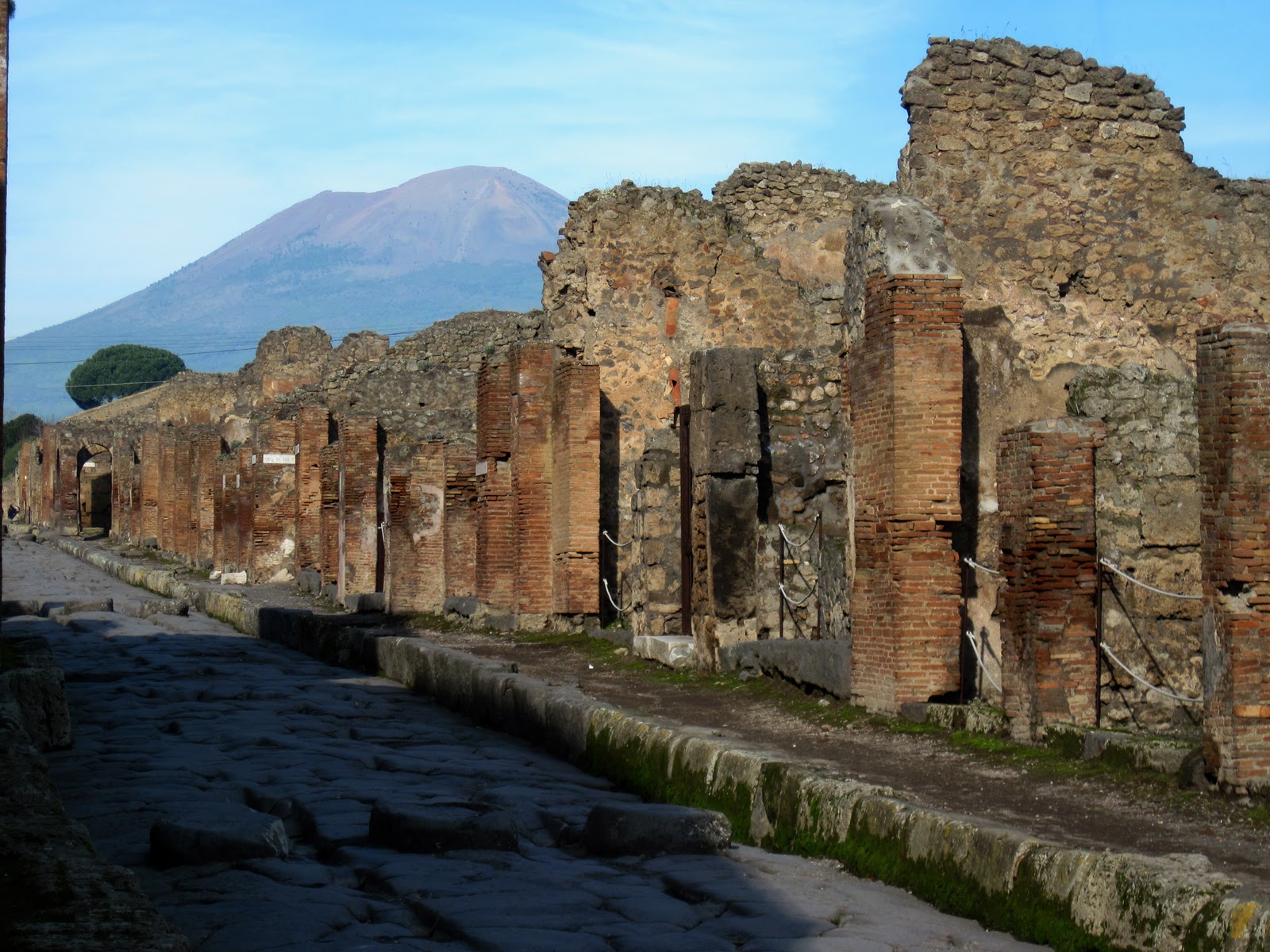
This Christmas break my family decided to trek down to Pompeii to visit the ruins and Mount Vesuvius, something that I have wanted to do for a long time. If you’ve ever taken an introductory geology class, then you’ve probably heard the story of the eruption of Vesuvius in 79 AD, as it is used to illustrate several concepts about volcanic eruptions. The 79 AD eruption began with a Plinian eruption, where a large column of ash extends high into the air, as far as the stratosphere. The term “Plinian eruption” is derived directly from the 79 AD Vesuvius eruption – Pliny the Younger was one of the first people to describe a volcanic eruption in detail. There are many examples of Plinian eruptions from the last few decades – Mount Pinatubo in 1991, Mount St. Helens in 1980, and most recently, Eyjafjallajökull in 2010. After a day of Plinian-style eruption, several pyroclastic flows covered the cities of Pompeii, and, in particular, Herculaneum. Like many other volcanos, Mount Vesuvius is found at the intersection of two plate boundaries. The African Plate is subducting (diving down) beneath the Eurasian Plate, and as this occurs, melted rock moves up towards the surface and eventually erupts from the volcano. Continue reading

Another new Korean dinosaur!

I’m happy to announce the publication of another new Korean dinosaur, Koreaceratops, by my friends and colleagues Yuong-Nam Lee, Michael Ryan, and Yoshi Kobayashi.


This little fellow was actually discovered very close to where I spent much of my summer this year, at Jeongok Harbour in Hwaseong-si (somewhat close to Jebu-do). Koreaceratops is diagnosed by some features of the ankle as well as the tall, deep tail. It’s a beautiful specimen even though it lacks a skull – here’s hoping that a head is found sometime!
Continue reading