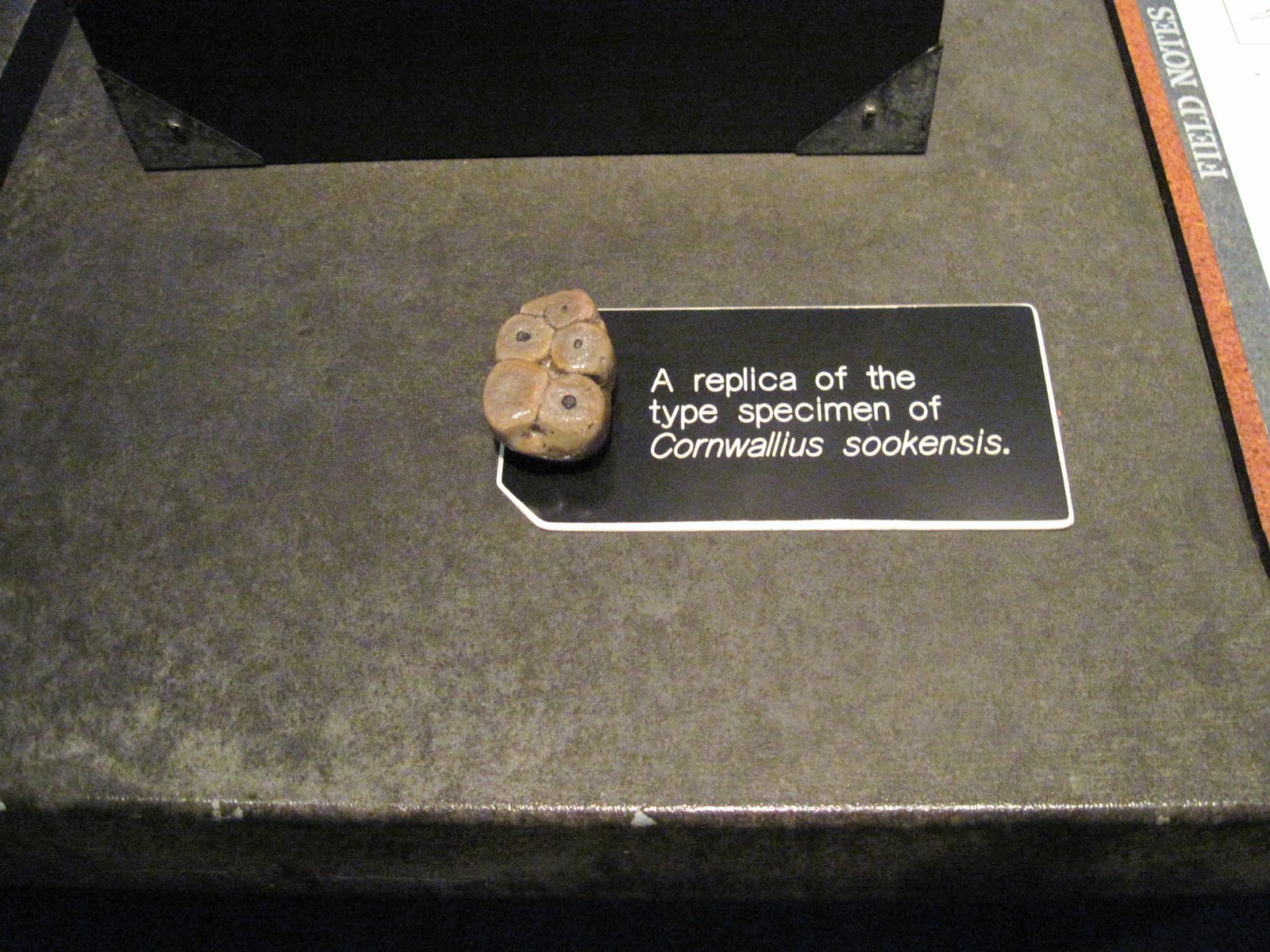
I found myself in Victoria, British Columbia for the day, and spent some time wandering around the Royal BC Museum. Although many people don’t associate Vancouver Island with abundant fossils, there are many palaeontological treasures to be had…here’s a few highlights:
Throw Scotty a bone!
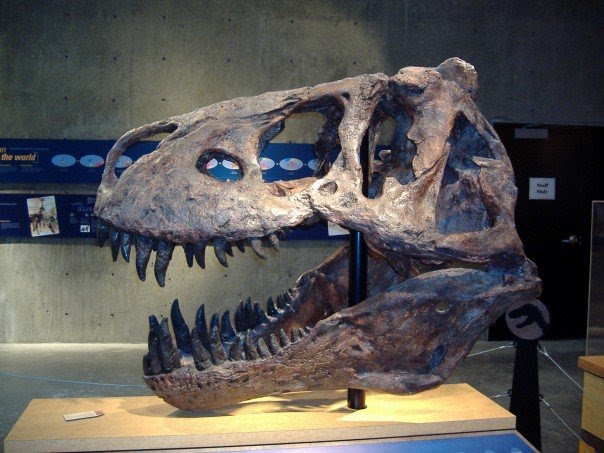
The T. rex Discovery Centre in Eastend, Saskatchewan (home of the Royal Saskatchewan Museum Fossil Research Station) is participating in the Pepsi Refresh Challenge, which could ultimately give them $100 000 for renewing their galleries. The centre is home to Scotty, perhaps the largest (or at least, most robust) Tyrannosaurus ever collected. Continue reading
Edmonton’s Sewersaurus
I was in Mongolia when this story originally appeared in the news, but I like it too much to not mention it here on the blog.
Last August, Edmonton city construction workers were digging a new sewer tunnel when they discovered dinosaur bones! My fellow ankylosaur worker Mike Burns, and Don Brinkman from the Royal Tyrrell Museum helped out at the site for about two weeks, excavating bits and pieces of Edmontosaurus and Albertosaurus. In particular, some awfully nice Albertosaurus teeth were found.
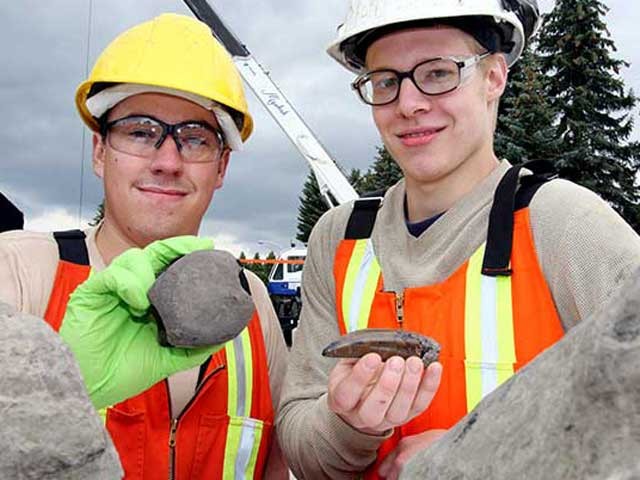 Image from the Edmonton Sun.
Mike has mentioned that it was a lot of fun to get lowered down into the tunnel each day. I suspect this was quite an unusual excavation experience – we don’t usually work deep underground when digging up dinosaurs!
Overall, the material looks quite similar to a bonebed we’ve been excavating in the south of Edmonton for the last several years – dark black shales, and dark black bones. There’s a good chance there’s dinosaurs underneath us everywhere in Edmonton, but they’re covered up by trees and roads and buildings and such.
Recent update in the Edmonton Sun.
Original articles at the National Post and CBC News.
A nice slideshow can be seen at the Edmonton Sun.
And there’s a short video about the find at the Toronto Star.
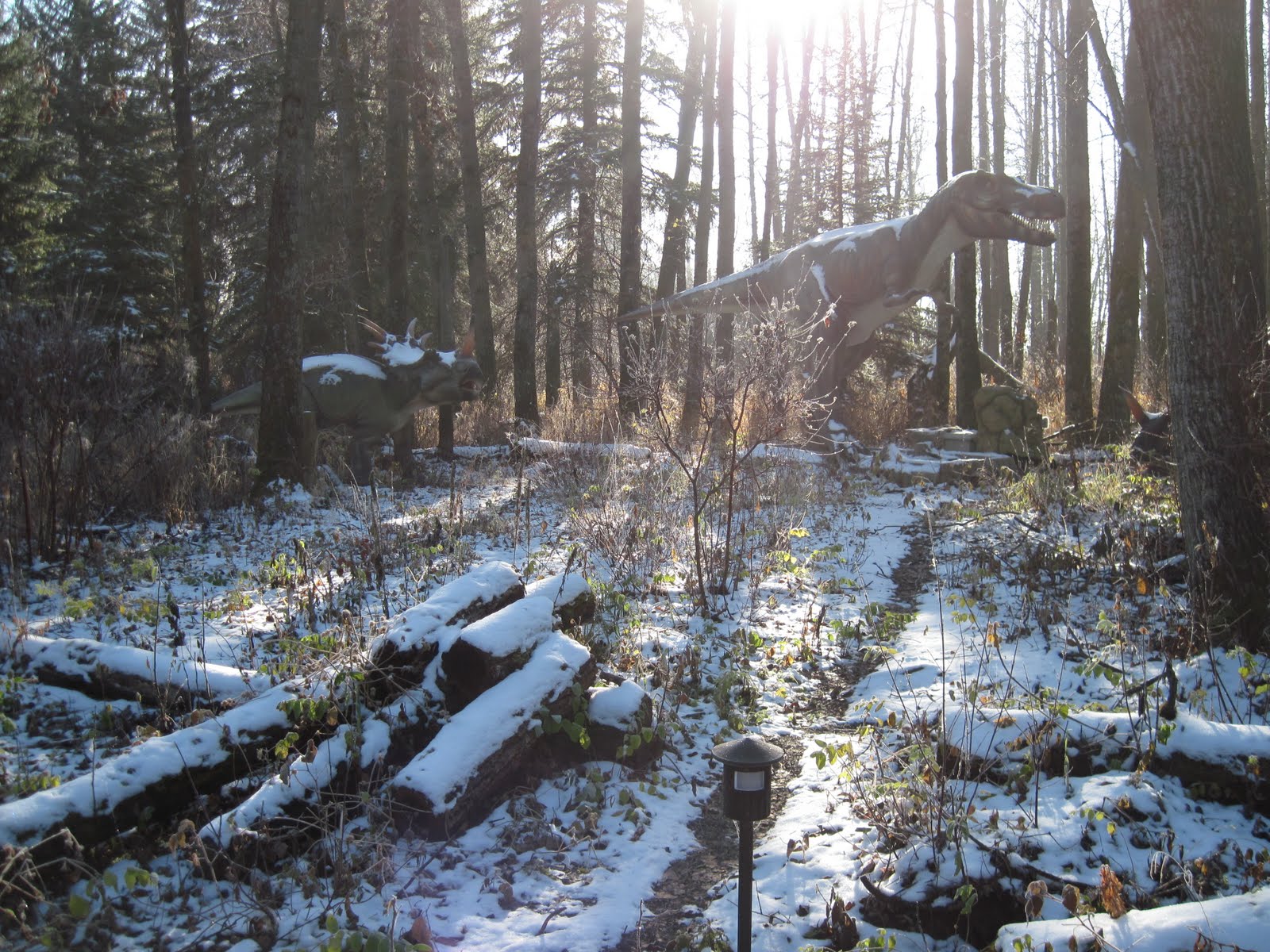
A visit to the Jurassic Forest.
The University of Alberta has a pretty active Palaeontological Society with undergrad, grad student, and faculty members, and when we can we try to organize palaeo-themed field trips. Lucky for us, this summer Edmonton had a very cool new dinosaur attraction open called the Jurassic Forest, so of course we had to check it out.
More Albertosaurus Bonebed Coverage
The CBC did a nice interview with Phil about the Albertosaurus Bonebed on the radio show Quirks and Quarks. You can download an mp3 of the episode here.
Previous post about the Albertosaurus Bonebed CJES volume here!
Gobi Desert Diaries: Life in Camp
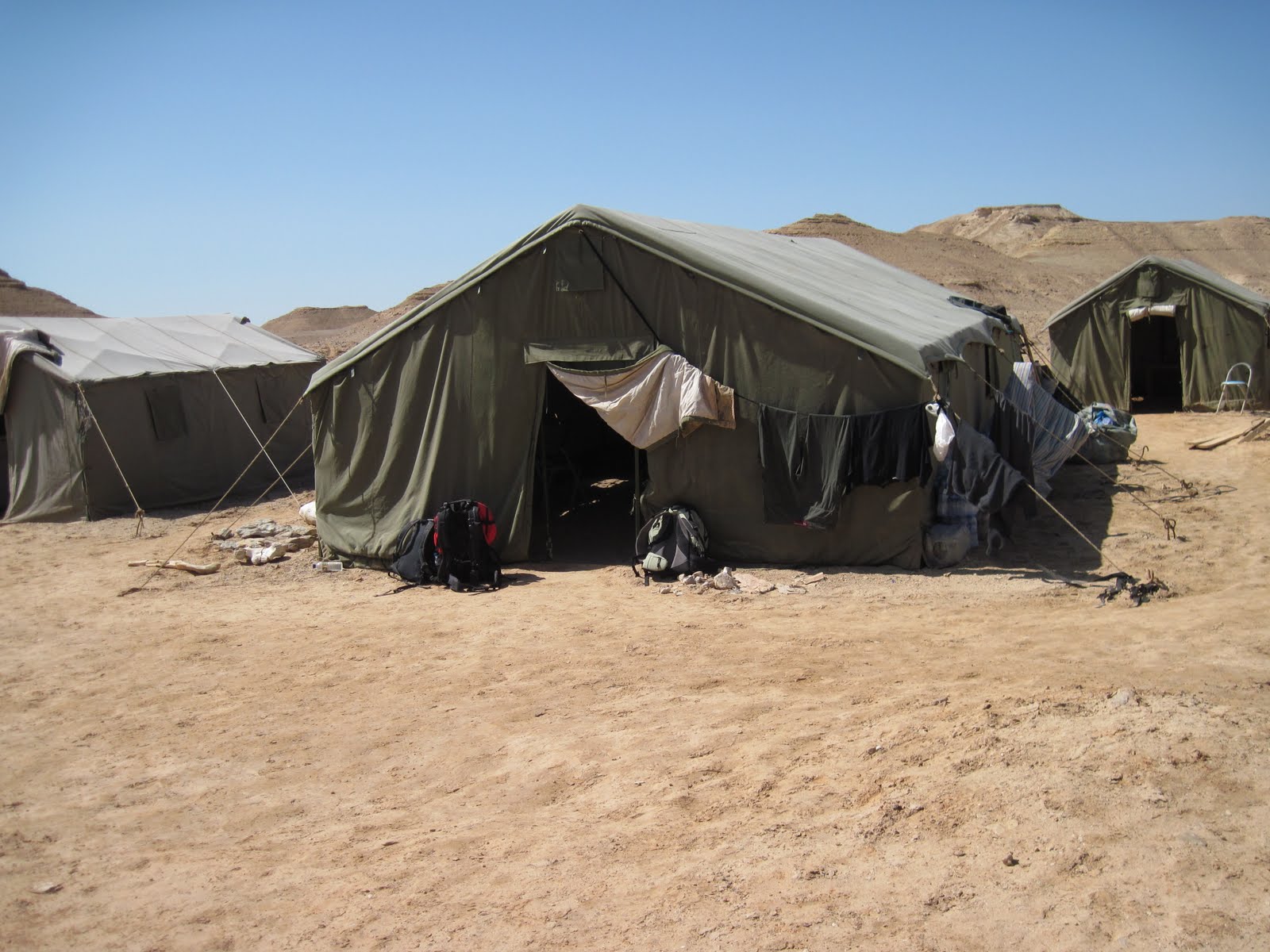
In the Gobi we tended to spend most of the day (from about 8:30 am to 7pm, with a break for lunch) out prospecting in the desert. It was nice to come home to such swanky digs each evening at Camp Bugin Tsav!
Phil Currie receives Alberta Order of Excellence
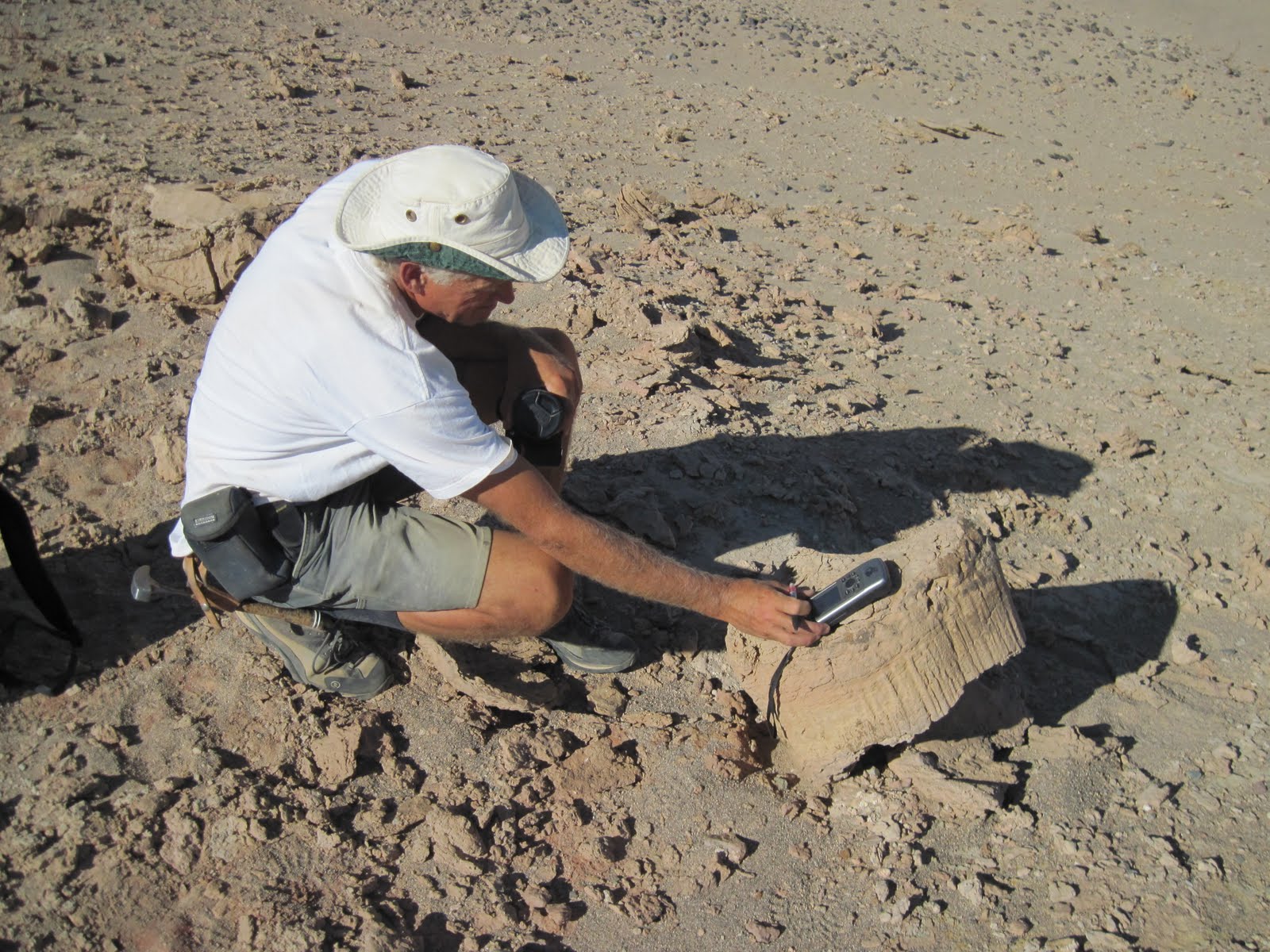
Earlier this week my supervisor Phil Currie received the Alberta Order of Excellence, the province’s highest order for public service. Hooray Phil!
News covereage of the event, and interviews with Phil can be found via the Edmonton Journal, The Gateway, and CBC News. (Excellent photo of Phil in The Gateway’s article.)
The picture above shows Phil this summer in Mongolia, marking the location of a particularly nice sauropod footprint.
Gobi Desert Diaries: All creatures great and small, part 4.

Although you wouldn’t necessarily know it from this picture, the Bactrian Camel Camelus bactrianusis is the two-humped camel found in the deserts and steppes of Mongolia. When I was growing up, the way to remember which camel was which was to turn the B of Bactrian and D of Dromedary on their sides – Bactrians have two humps, Dromedaries have one. Last winter was very harsh in Mongolia, and millions of livestock died – I wonder if this is the reason that so many camels had flopped-over humps this year.
Continue reading
Gobi Desert Diaries: All creatures great and small, part 3.

In addition to dead and fossilized animals, I came across the remains of many recently dead animals while prospecting (including one tremendously large and dead camel with the skin still intact). Skulls and skull caps with horns of Altai Argali (Ovis ammon ammon), Siberian Ibex (Capra sibirica), and Goitered Gazelle (Gazella subgutturosa) were common sights, and many skulls were affixed to the fronts of our camp trucks. On one occassion we did see several Goitered Gazelles fleeing from our approaching vehicles – they are incredibly fast. Continue reading
Gobi Desert Diaries: All creatures great and small, part 2.
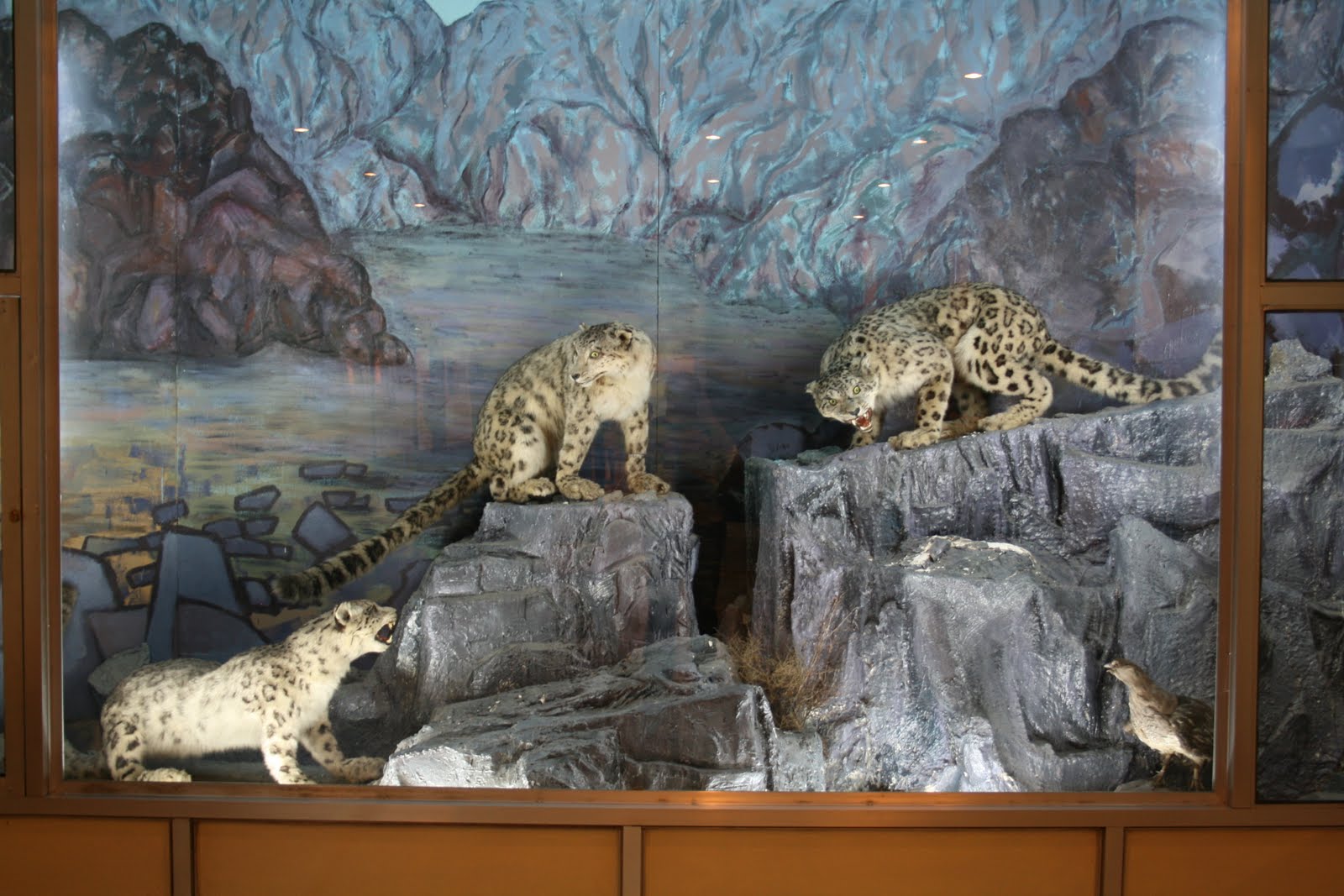
Perhaps the most charismatic of the Mongolian predators is the Snow Leopard, Uncia uncia, seen here at the Natural History Museum in Ulaanbaatar. Sadly I did not get to see one of these great cats, as they are fairly rare and highly reclusive. Continue reading
 pseudoplocephalus