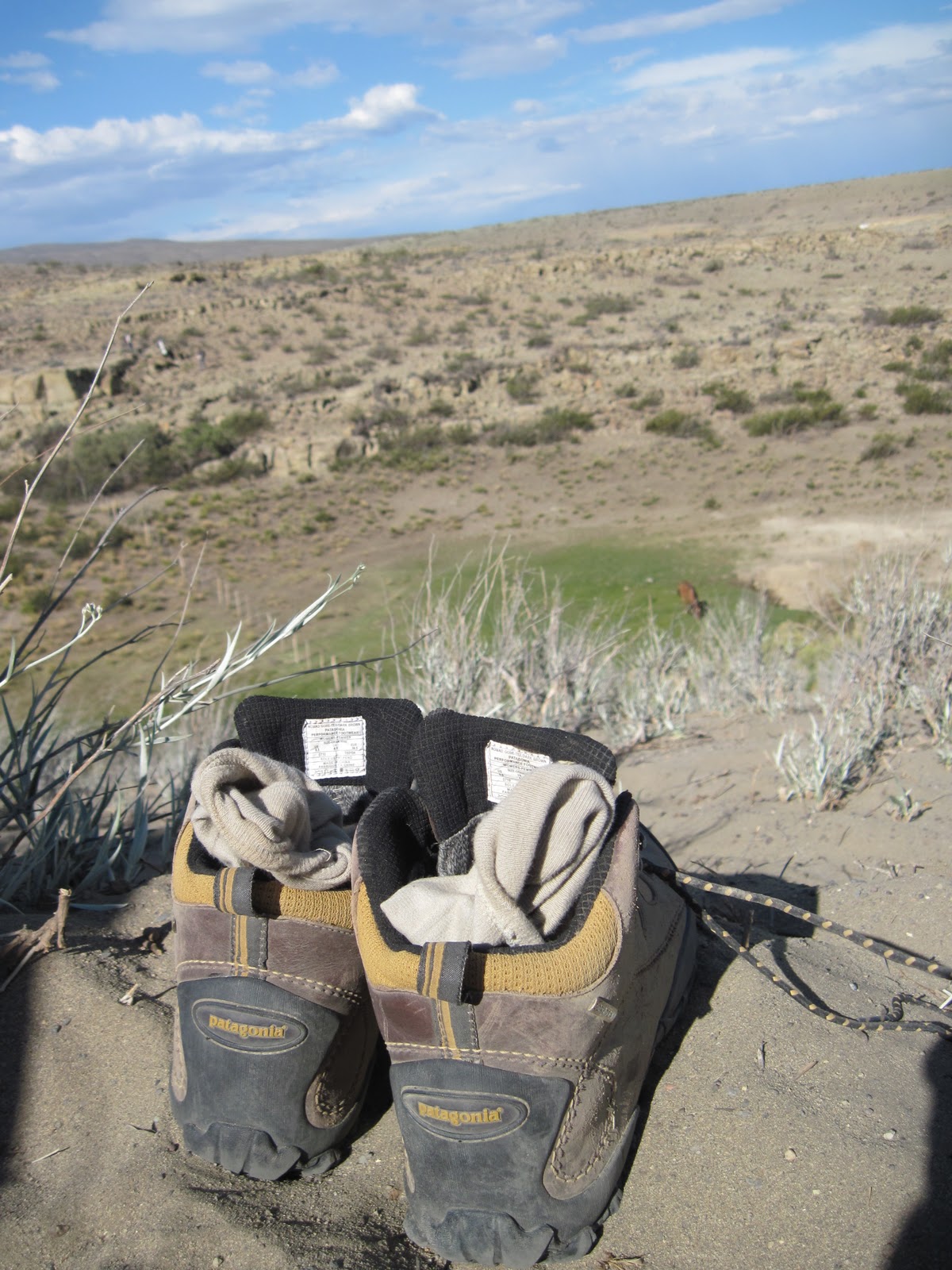
Guess where I’ve been? The boots don’t lie… Continue reading
Guess where I’ve been? The boots don’t lie… Continue reading
I’m late to the party again with the recent spate of dino documentaries, but I thought I’d review a couple here on the blog over the next few weeks. Today I wanted to take a look at Dino Gangs, a documentary featuring my PhD supervisor Dr. Phil Currie as well as several scientists from the Royal Tyrrell Museum.
The area around Grande Prairie is rich with dinosaur fossils, although the setting is somewhat different than you might expect if you’re used to working in badlands like Dinosaur Provincial Park. In Grande Prairie, the only badlands outcrops are the Kleskun Hills, and most other sites are found along creeks and river valleys. I spent the bulk of my time at the Wapiti River bonebed, but helped out a little bit at the concurrent excavation at Pipestone Creek. Continue reading
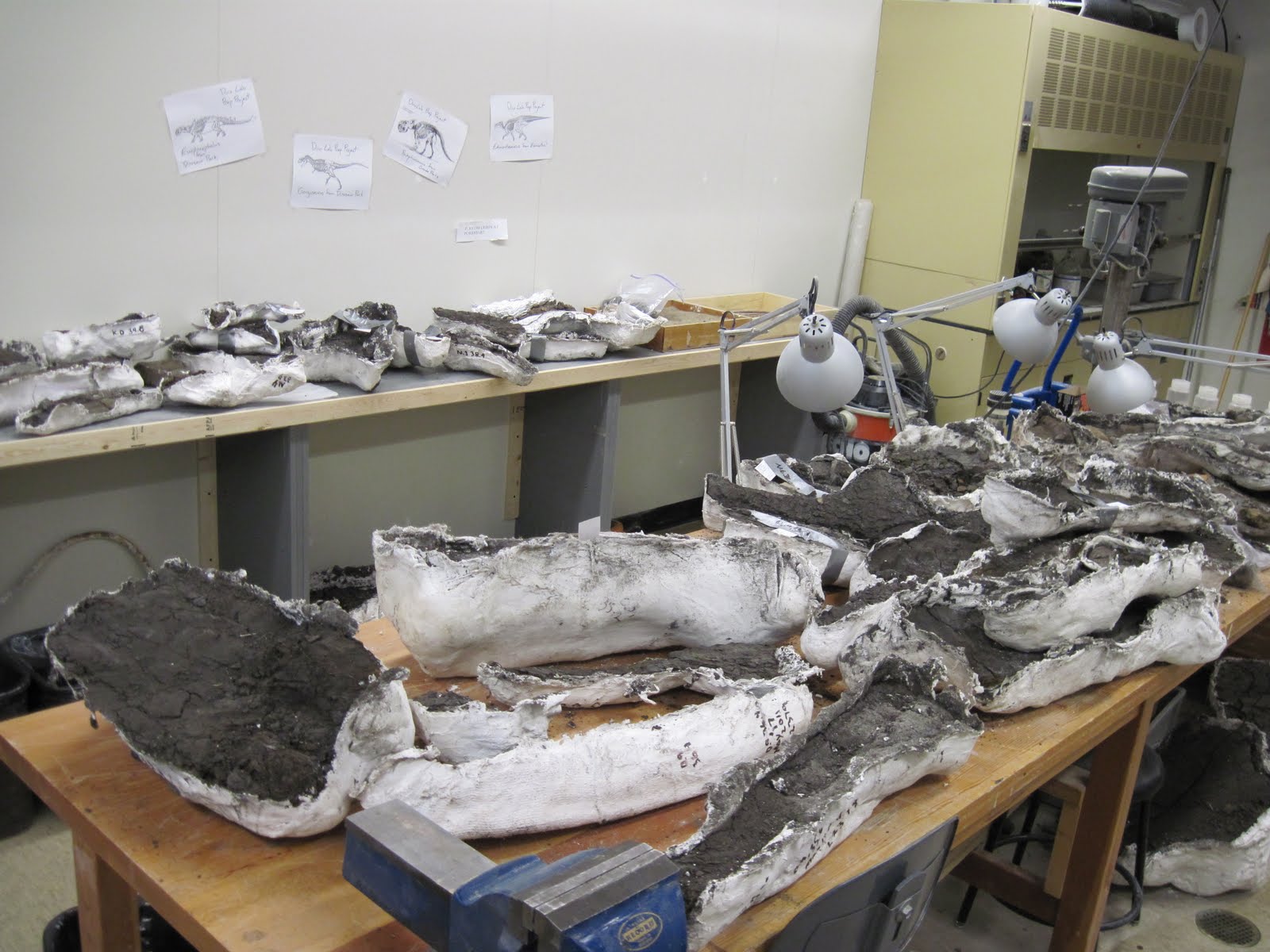
Here’s a few more shots from the University of Alberta’s fieldwork at the Wapiti River bonebed near Grande Prairie. Fieldwork wrapped up on Friday and the fossils are now at the U of A awaiting preparation.
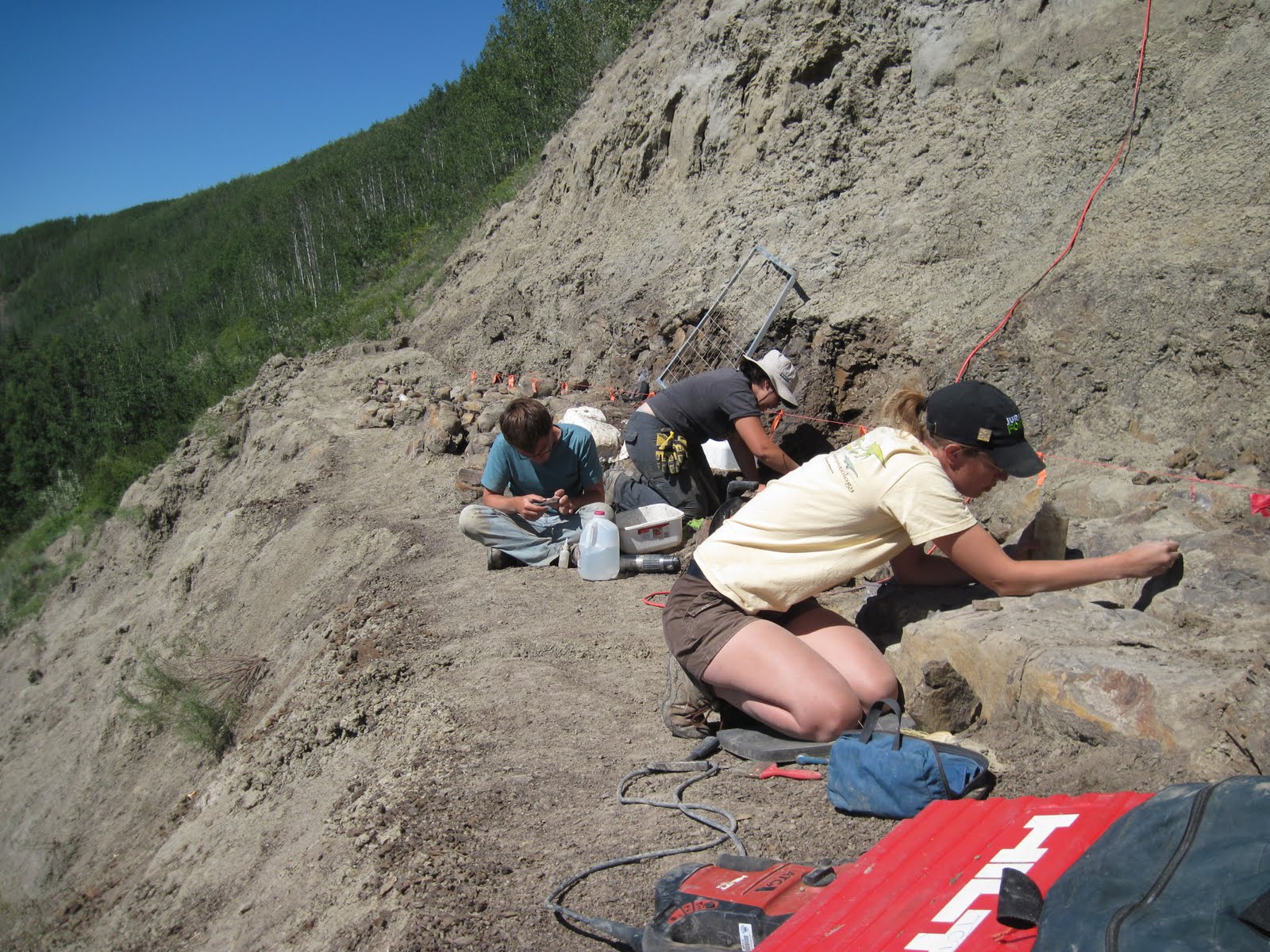
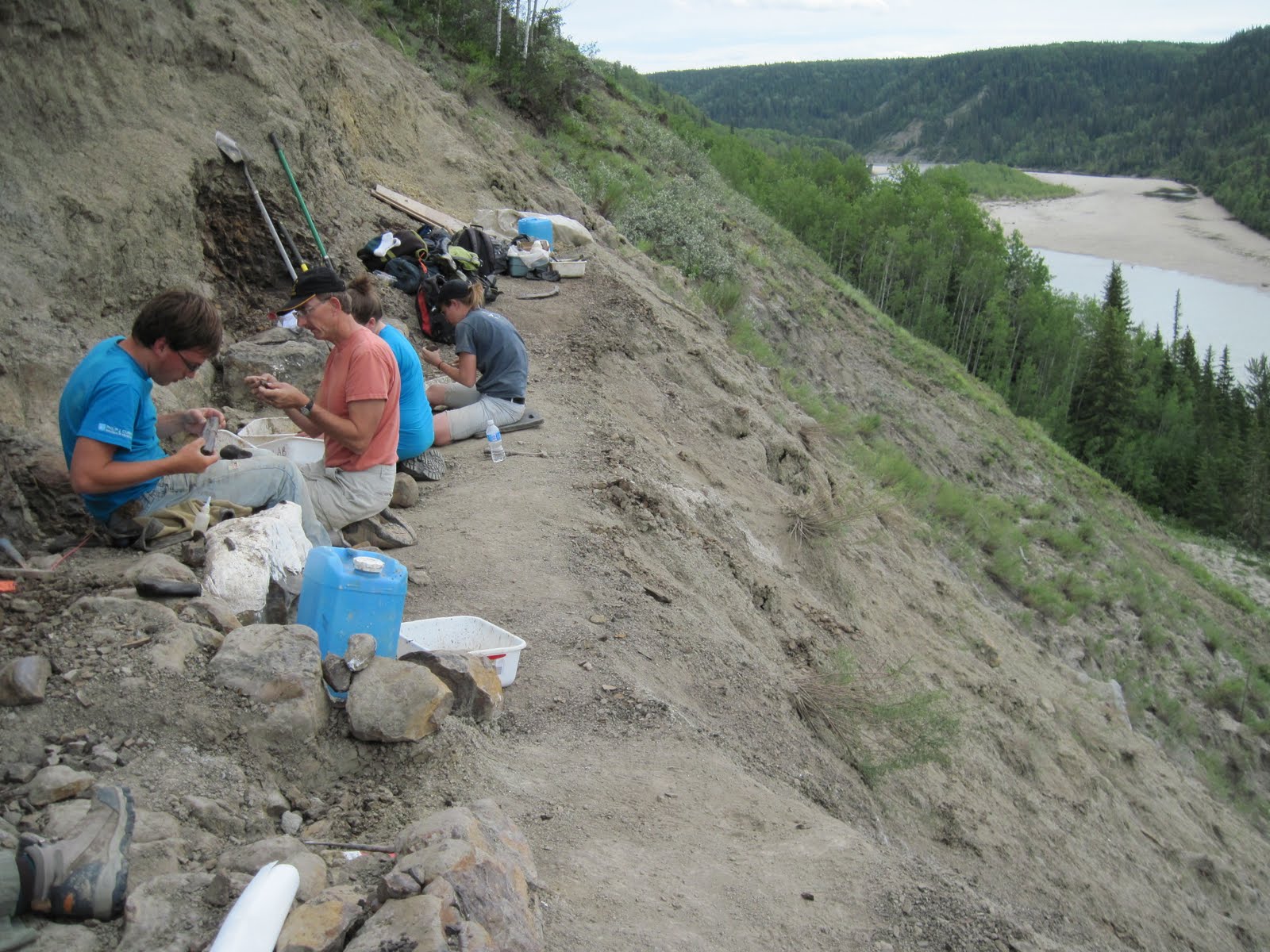
Hi everyone! It’s been a while since my last post as I catch up on research and get ready for a brief stint of fieldwork in Grande Prairie. I’ve been working at the Wapiti River bonebed for the last few days, where we are excavating a Pachyrhinosaurus bonebed. Here is a quick update of what we’ve been up to.
The bonebed is on a steep river side, and we have cut a long but narrow ledge into the cliff. The view is quite spectacular and we occasionally see deer and bears on the other side of the river.
I haven’t talked a whole lot here about the Pipestone Creek Dinosaur Initiative or the proposed River of Death and Discovery Museum. The area around Grande Prairie, Alberta, about a five hour drive northwest of Edmonton, is rich in Late Cretaceous fossils. The most famous locality is Pipestone Creek, where hundreds of the horned dinosaur Pachyrhinosaurus perished millions of years ago.
For nearly ten years, a dedicated group of folks in Grande Prairie have been trying to get their own palaeontology museum off the ground. The working name for the museum was the River of Death and Discovery Dinosaur Museum. However, the word ‘death’ in the museum name has made it difficult for the museum to get as many sponsors as they would have liked.
And so it was announced yesterday that the museum would be renamed to the Philip J. Currie Dinosaur Museum! You can read more about the name change at the Grande Prairie Daily Herald-Tribune’s article.
There are some exciting things coming up this summer for the museum foundation, including the Akroyd Family and Friends Dinosaur Ball (yes, those Akroyds!), and the University of Alberta will return to our annual excavations at the Wapiti River Pachyrhinosaurus bonebed and the newly-reopened Pipestone Creek bonebed.
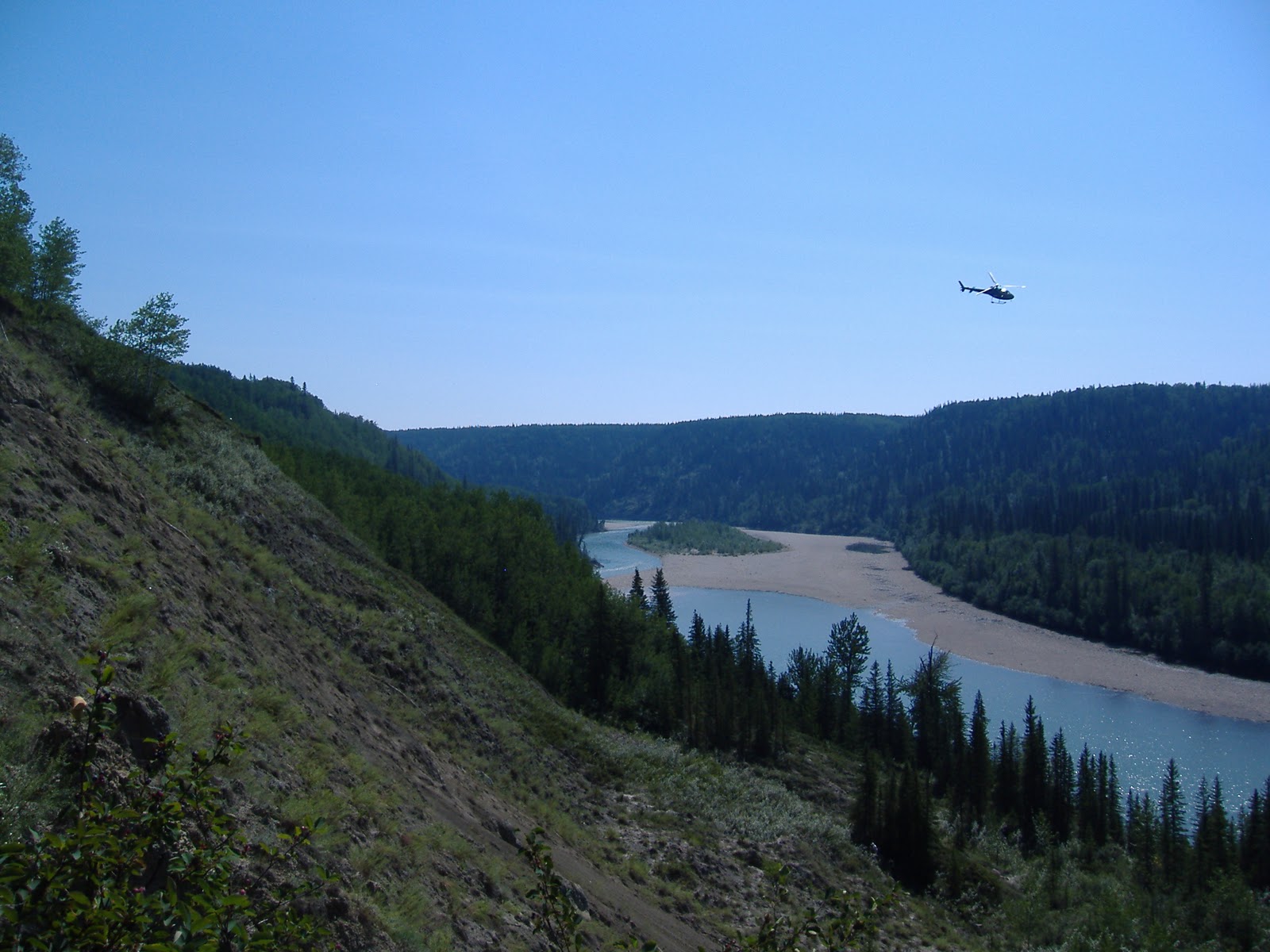
A helicopter approaches at the Wapiti River bonebed during the 2009 excavation. Helicopter lifts are the only way the large blocks can be brought up to the edge of the river valley.
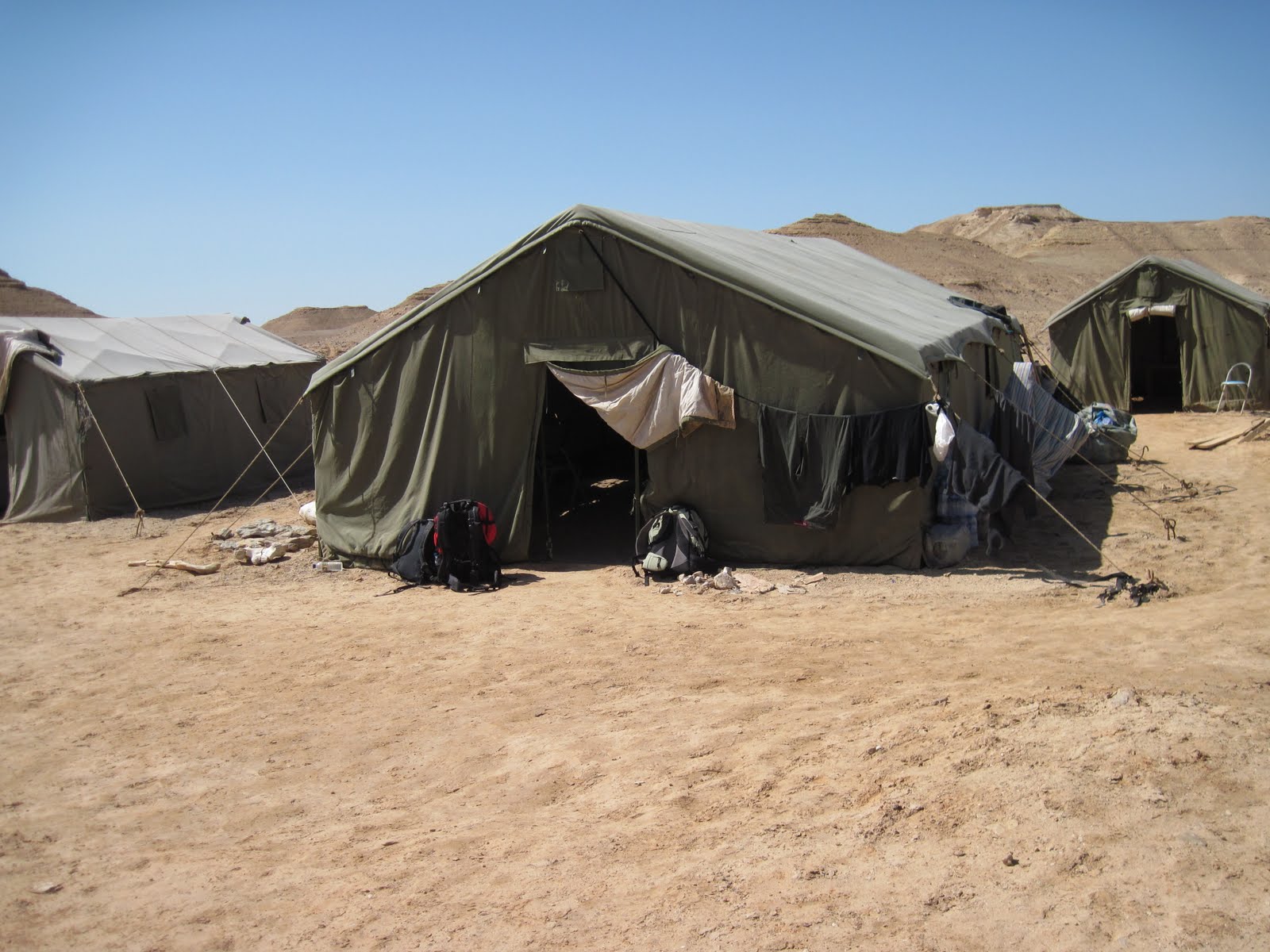
In the Gobi we tended to spend most of the day (from about 8:30 am to 7pm, with a break for lunch) out prospecting in the desert. It was nice to come home to such swanky digs each evening at Camp Bugin Tsav!

Although you wouldn’t necessarily know it from this picture, the Bactrian Camel Camelus bactrianusis is the two-humped camel found in the deserts and steppes of Mongolia. When I was growing up, the way to remember which camel was which was to turn the B of Bactrian and D of Dromedary on their sides – Bactrians have two humps, Dromedaries have one. Last winter was very harsh in Mongolia, and millions of livestock died – I wonder if this is the reason that so many camels had flopped-over humps this year.
Continue reading

In addition to dead and fossilized animals, I came across the remains of many recently dead animals while prospecting (including one tremendously large and dead camel with the skin still intact). Skulls and skull caps with horns of Altai Argali (Ovis ammon ammon), Siberian Ibex (Capra sibirica), and Goitered Gazelle (Gazella subgutturosa) were common sights, and many skulls were affixed to the fronts of our camp trucks. On one occassion we did see several Goitered Gazelles fleeing from our approaching vehicles – they are incredibly fast. Continue reading
 pseudoplocephalus