SVP Report 2: La Brea Tar Pits

Next up in the post-SVP report: the La Brea Tar Pits! This is one of those classic localities that I’m sure is on many a palaeo must-see list. I didn’t get a chance to see this on the pre-conference field trip, but a couple of us from the UofA made time to head over before our flights home.
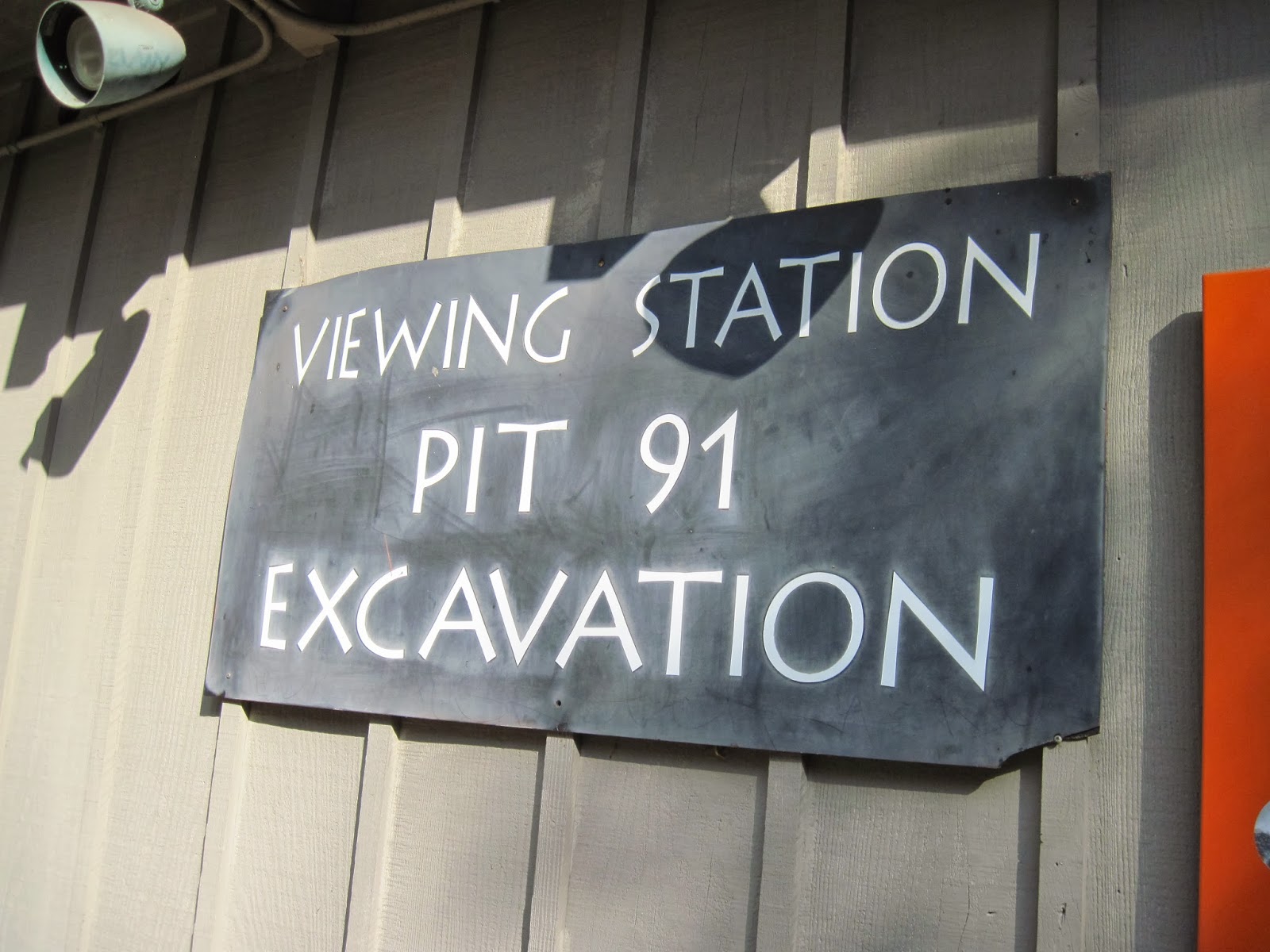
Several of the excavations have viewing stations where you can watch palaeontologists and volunteers hard at work. Pit 91 is the largest of the excavations, but digging is on hiatus while they work on another project.
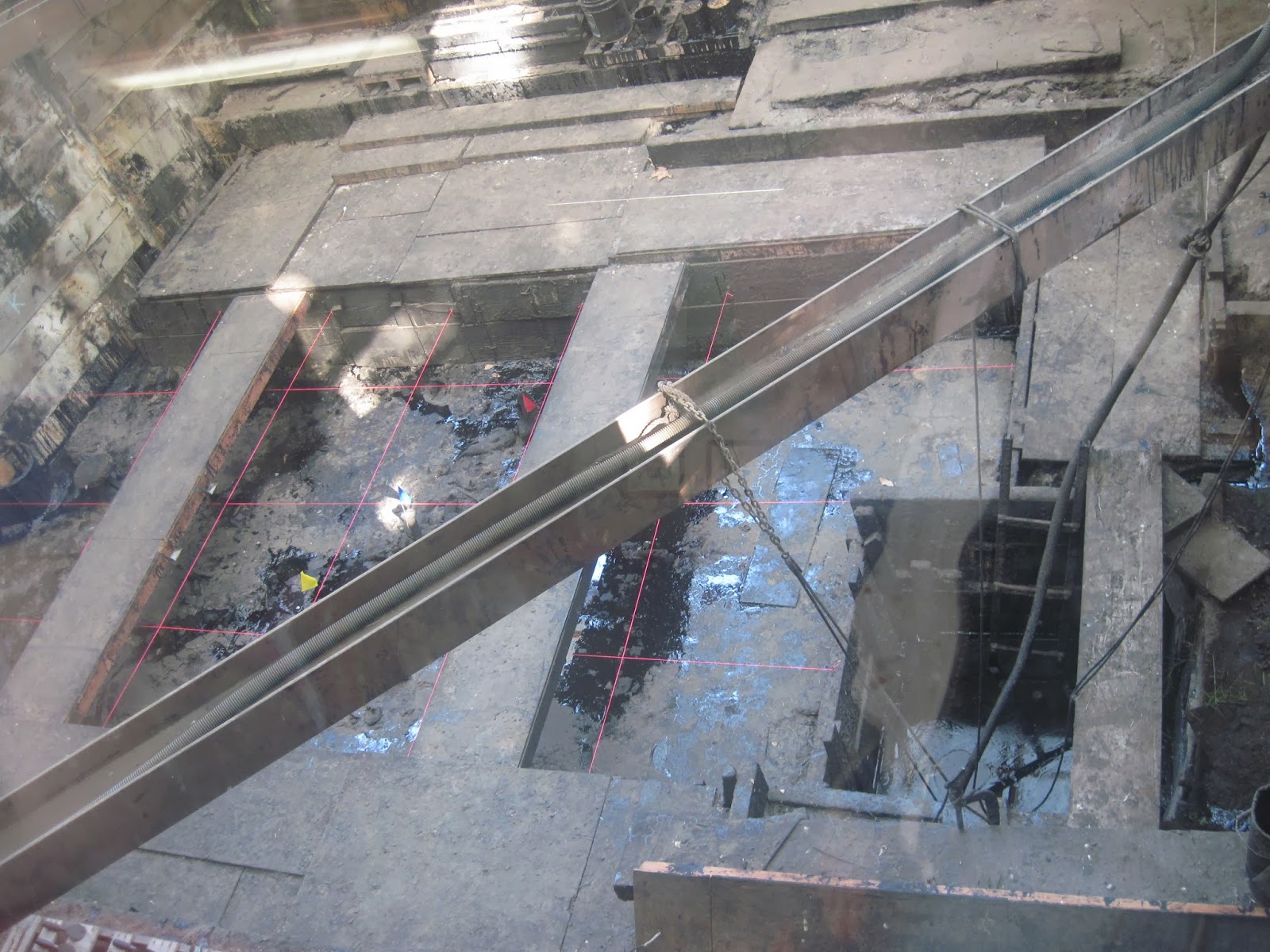
It is both so similar and so different compared to my experiences digging dinosaurs. The tar pits, or tar seeps as I think they are more accurately called, are kind of a sandy, semi-consolidated sediment with Ice Age vertebrates and asphalt. Excavators lie on the boards across the surface, and work in marked out grid squares.
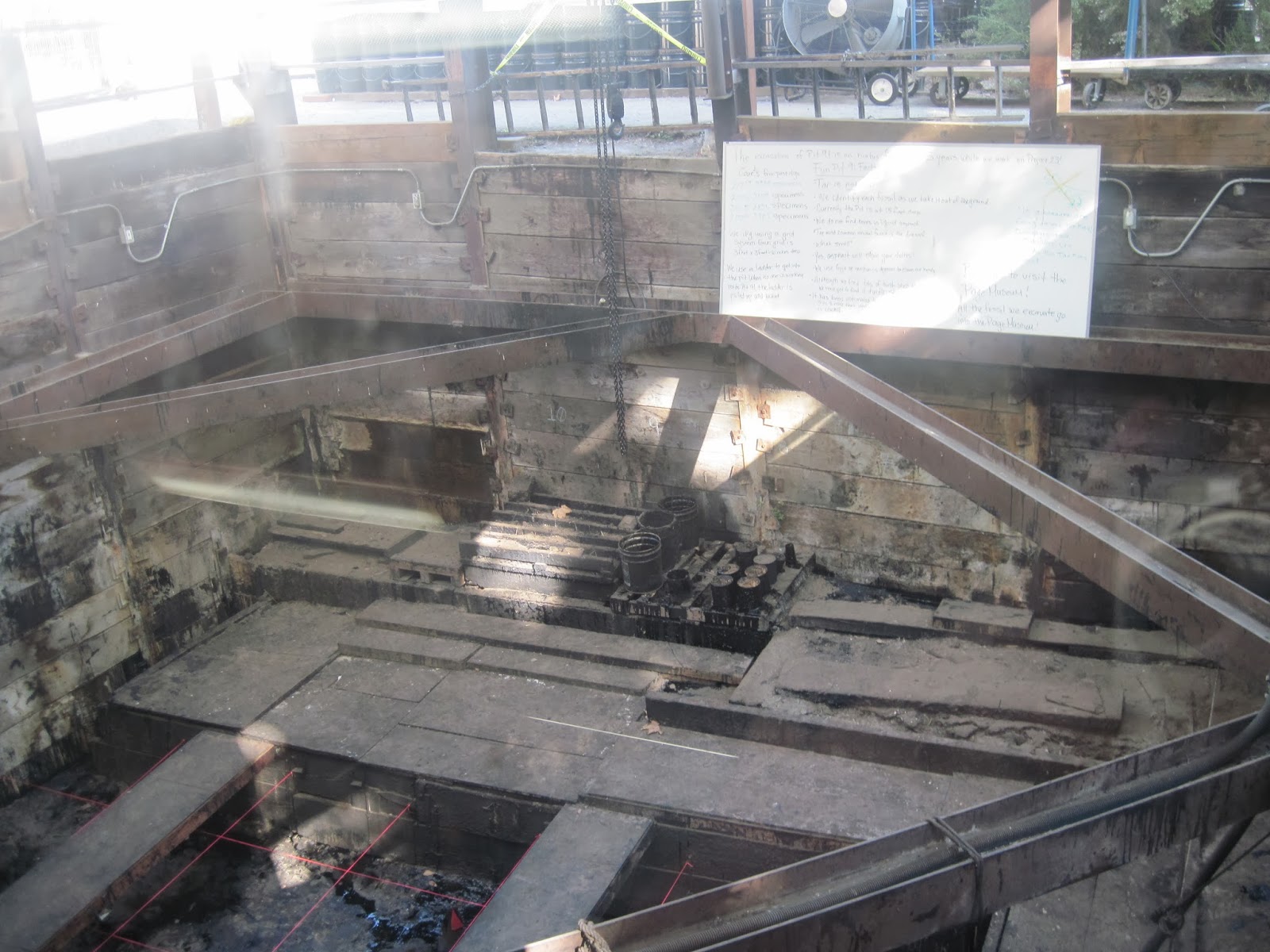
Here’s another shot of the quarry to give a sense of how deep they have gone. Pit 91 has been excavated almost continuously since the 1970s.
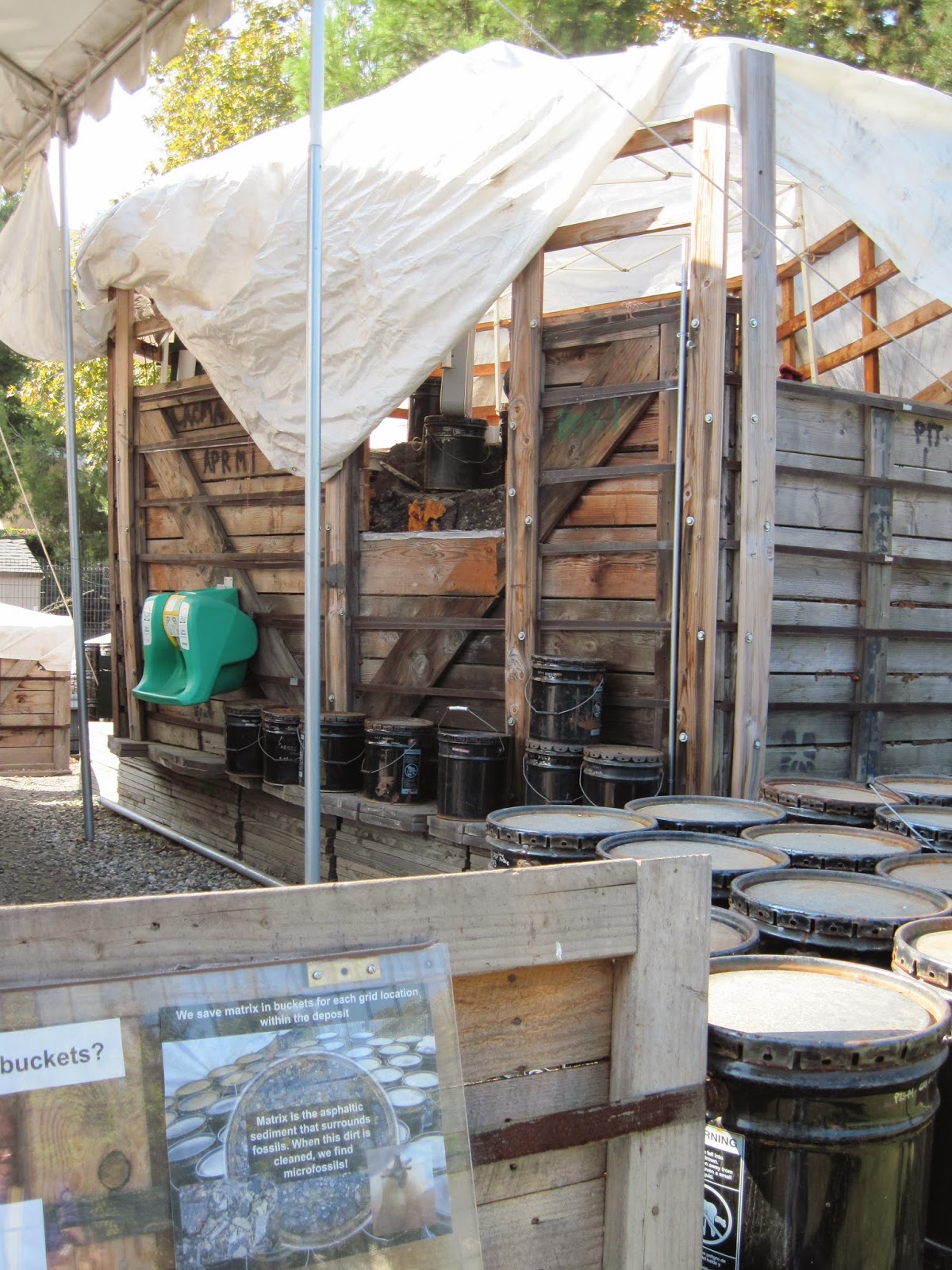
Work halted at Pit 91 a few years ago for a new dig, called Project 21. A construction project (for a parking structure, I think) down the road encountered several tar seep deposits with fossils. Instead of holding up construction for years and years, the team at the Page Museum simply scooped up the entire seep deposit and brought it over to the park to work on. The result was 21 large crates which are ‘excavated’ above ground. Apparently this is much nicer for the diggers since it isn’t quite as wet and sticky, as the tar can drain out the bottom of the crates.
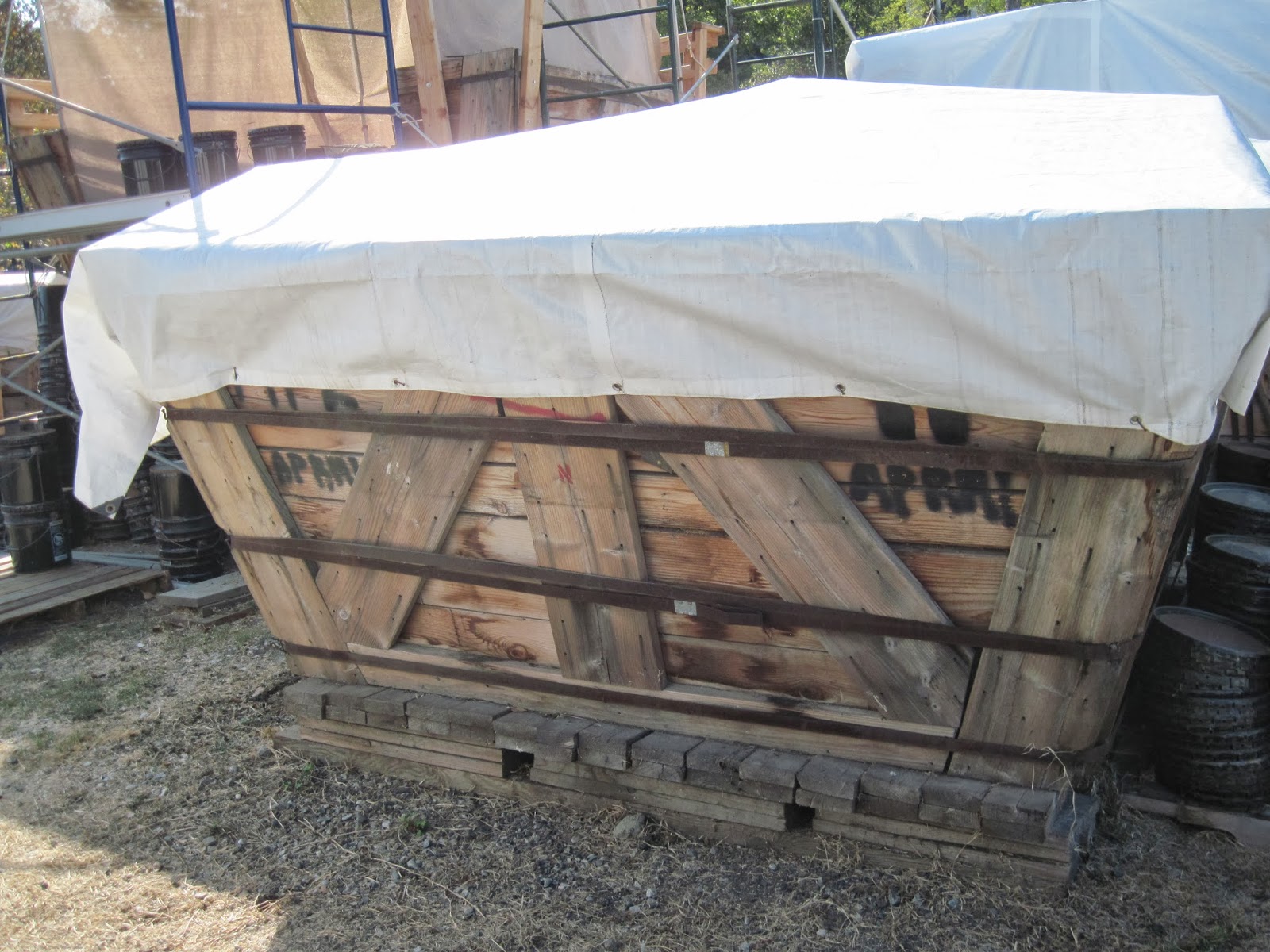
Another, slightly smaller crate waiting to be worked on.
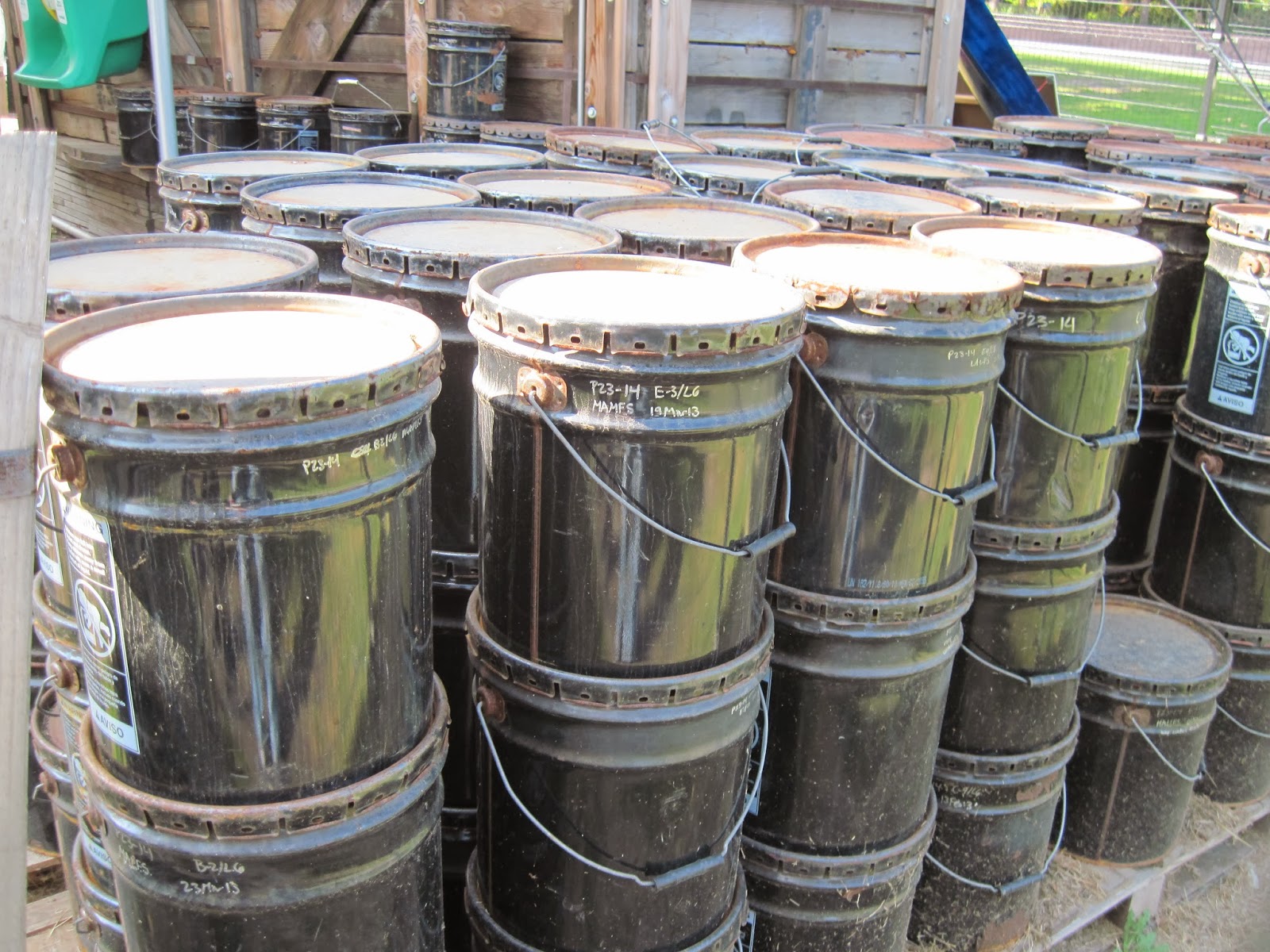
The sediment is saved in large barrels, so that technicians can look for microvertebrates – things like birds, snakes, lizards, small mammals, etc.
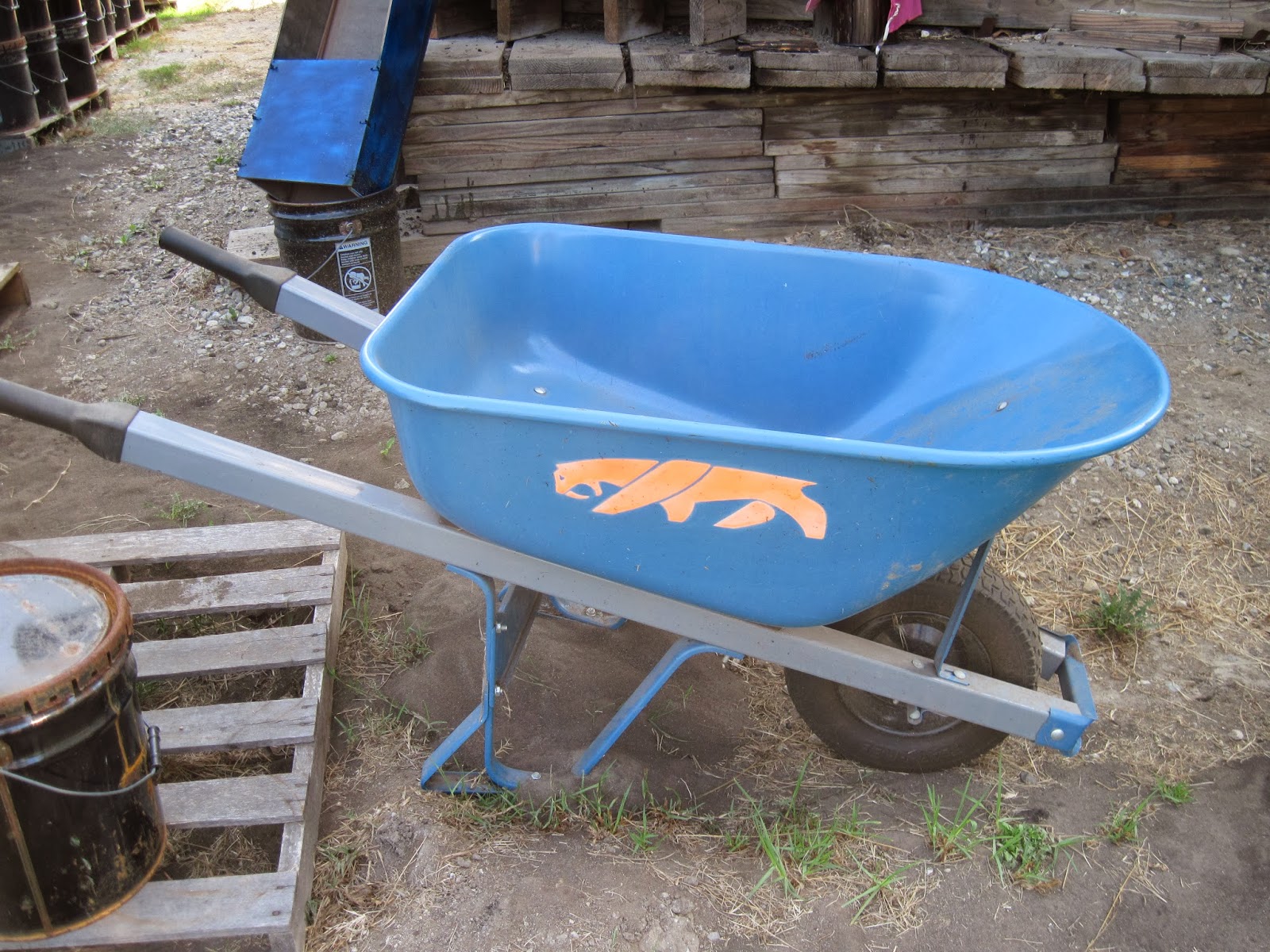
Smilodon wheelbarrow!

Just outside the entrance to the museum is the largest of the pits, the Lake Pit. There wasn’t originally a pond here – rainwater has filled in an old pit mined for asphalt. The pit bubbles and gurgles away, which is quite amusing.

Next time: the Page Museum!
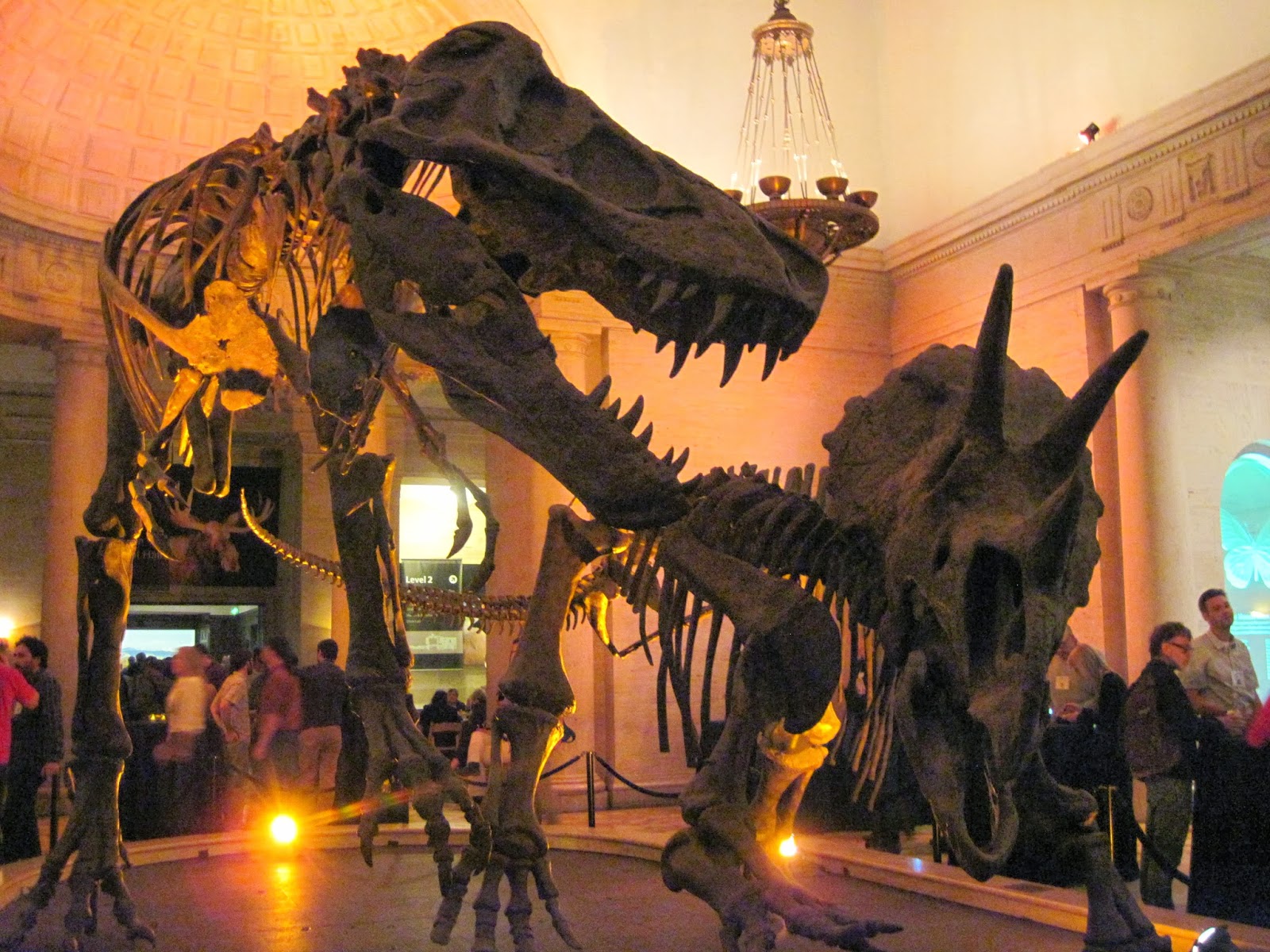
SVP Report 1: Natural History Museum of LA County

The Natural History Museum of LA County is excellent! I had a chance to visit it during the Society of Vertebrate Paleontology annual meeting in Los Angeles the week before last. A great museum with some wonderful dinosaur exhibits. Here’s a sampling!

Continue reading

You’re Invited!

The University of Alberta Laboratory for Vertebrate Paleontology is celebrating the 50th anniversary of a landmark international paleontology conference, held at the university in 1963 and which kicked off the start of our formal paleontology program here, with a symposium on Friday, August 30.

You’re invited to join us in Edmonton from August 29 to September 1. Our 50th anniversary celebrations will be held concurrently with the 2013 Canadian Paleontology Conference, and the inaugural meeting of the Canadian Society of Vertebrate Paleontology.


Abstracts for the CPC are due by August 1. You can register for both events, and find out more information, at our conference website: http://cpc2013.wordpress.com.

We hope that many of our palaeontology colleagues, and especially UALVP alumni, will be able to join us in Edmonton in August!

Thoughts on Tarbosaurus, part 4

Well, a lot has happened since the auction of a nearly complete Tarbosaurus was halted last May. At the end of December, Eric Prokopi surrendered his claim to the Tarbosaurus and other Mongolian and Chinese dinosaur fossils in his possession, and pleaded guilty to several charges surrounding the Tarbosaurus case. The Mongolian government is renewing its commitment to preserving its outstanding natural history heritage by creating a new dinosaur museum in capital city Ulaanbaatar, and several museums elsewhere in the countryside.

I hope the awesome leather Tarbosaurus makes the trip to the new digs.

Continue reading

SVP, you’re so silly.

Those chairs nearly killed me.

 The annual Society of Vertebrate Paleontology meeting wrapped up yesterday. This year we got to visit the very nice city of Raleigh, North Carolina. There were many, many interesting talks and posters which I can’t possibly cover in detail here, but I will look forward to the papers that will hopefully eventually come out of this meeting. SVP is the big-time serious palaeo conference for most of us here in North America…and yet, although at times the talks are SO SERIOUS, what I really like about SVP is how much fun everyone is having. And this brings me to the chairs. The chairs at the Raleigh Convention Centre seem to have built-in whoopie cushions. If you sat down too quickly, the result was unavoidable. (Raleigh Convention Centre: please don’t change this!) And so, during the transition between each talk as people moved in and out of the session, a low murmur of toots resonated throughout the room. This was pretty funny during the talks, but was almost unbearable during the final banquet and awards ceremony on Saturday night. As we recognized the contributions of various members of the SVP, we would rise to give standing ovations. And as about 1000 people sat down simultaneously, the squeaky chairs were that much more noticeable.  Continue reading

Let’s Build the Currie Museum!

A message from my colleague Dr. Phil Bell:

Hi all,

Some of you are already aware of the Philip J. Currie Dinosaur Museum, which is scheduled to be built in Grande Prairie, but certainly all of you are aware of Philip Currie himself. As part of the final push to raise the remaining construction funds, we have launched a crowd-fundraising campaign on www.indiegogo.com/curriemuseum. The aim is to raise $1,000,000 in 120 days. In the first hour alone, we raised $1,600!

Every donation, no matter how small, is important and donors are rewarded with a range of increasingly cool gifts including a museum logo pin, t-shirts, and original artwork by palaeo-art master Julius Csotonyi. It’s all outlined on the website, so please check it out, spread the word, and help us build a world-class museum and research institute.

Many thanks!

Phil Bell

Head Palaeontologist

Pipestone Creek Dinosaur Initiative

Continue reading

Crystal ROM

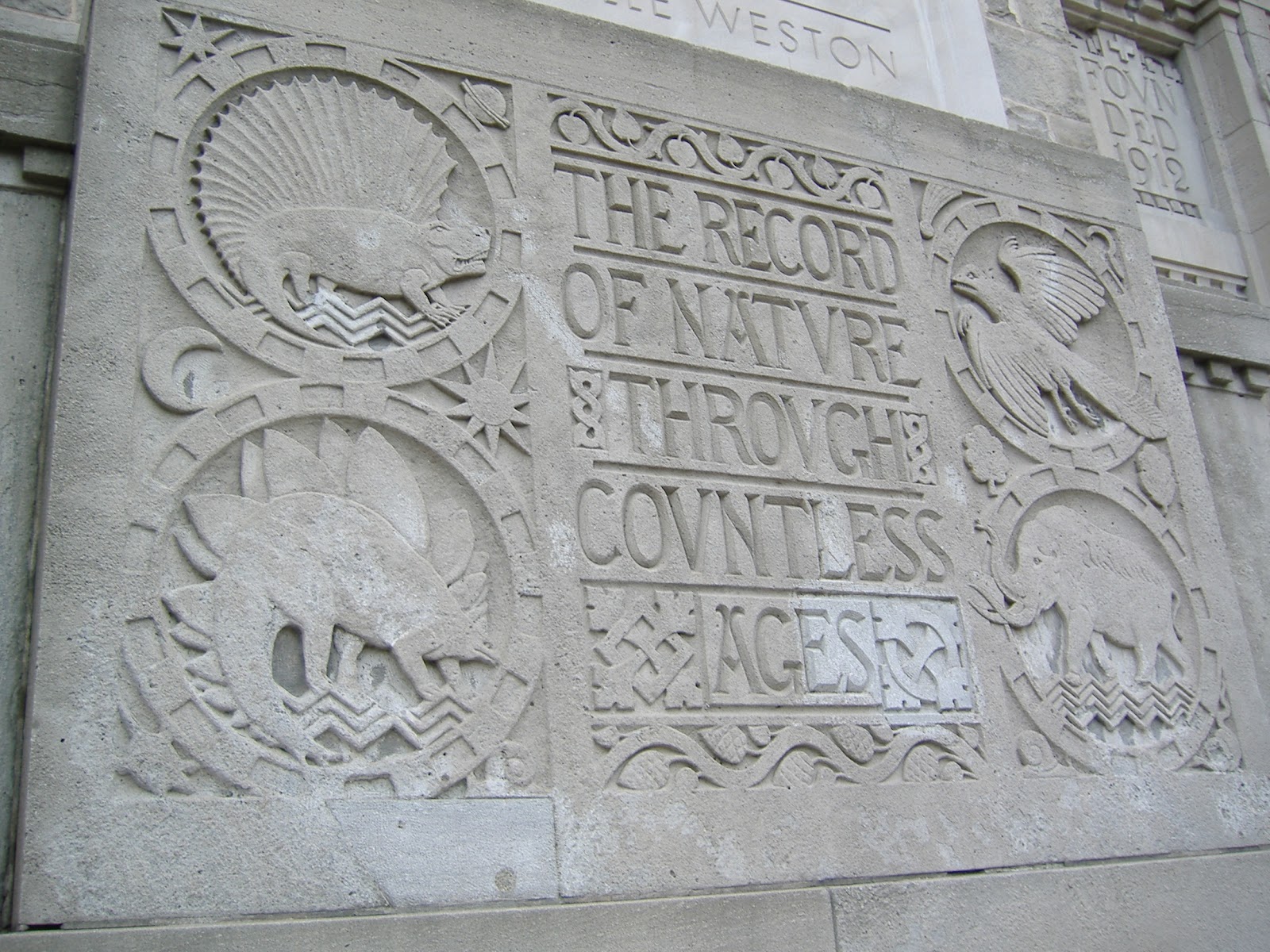
Now that I’ve talked about the ROM‘s current offerings of temporary special dinosaur exhibits, I thought I’d turn my attention to the permanent fossil galleries. The ROM has long been one of my favourite museums, and as a student of palaeontology the only museum I have visited more often for my research is the Tyrrell. The last five years have seen some major renovations at the ROM, including the construction of the Michael Lee-Chin Crystal. Continue reading

Ultimate ROM

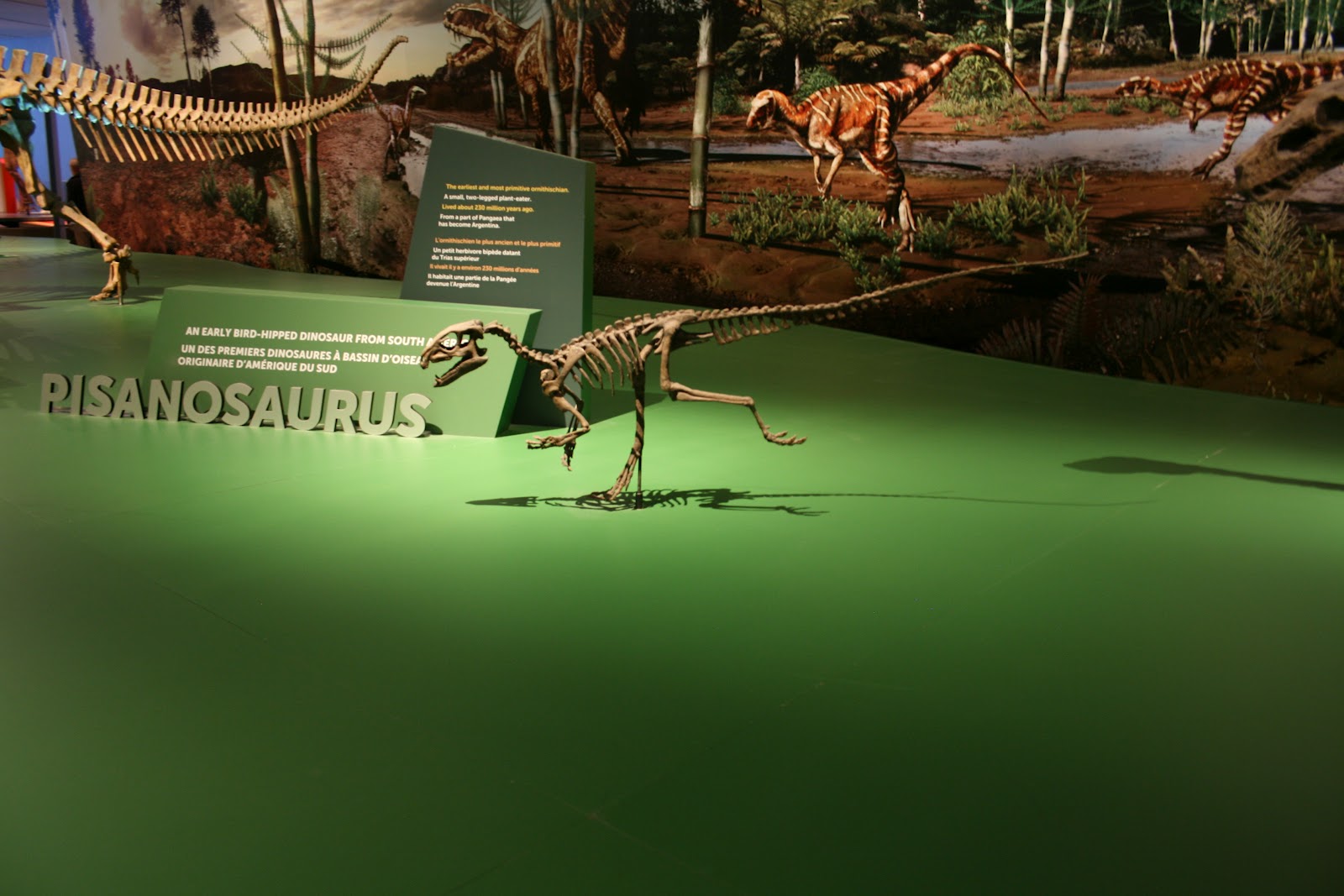
This summer, the Royal Ontario Museum unveiled a brand-new exhibit all about the dinosaurs of Gondwana. When Pangaea rifted apart during the Triassic, it split into two continents – Laurasia, represented by the modern northern continents of North America, Europe, and Asia, and Gondwana, represented by the modern southern continents of South America, Africa, Australia, and Antarctica, plus India, Madagascar, and New Zealand. The dinosaurs and other extinct terrestrial vertebrates of Gondwana differed from their northern neighbours, and we don’t often see them in exhibitions in North America.

Ultimate Dinosaurs: Giants of Gondwana features lots of interesting and sometimes obscure dinosaurs, some really great artwork, and some neat technological things (of which I am sometimes skeptical, but can wholeheartedly endorse here).

Continue reading