The area around Grande Prairie is rich with dinosaur fossils, although the setting is somewhat different than you might expect if you’re used to working in badlands like Dinosaur Provincial Park. In Grande Prairie, the only badlands outcrops are the Kleskun Hills, and most other sites are found along creeks and river valleys. I spent the bulk of my time at the Wapiti River bonebed, but helped out a little bit at the concurrent excavation at Pipestone Creek. Continue reading
Wapiti River Fieldwork, part 2
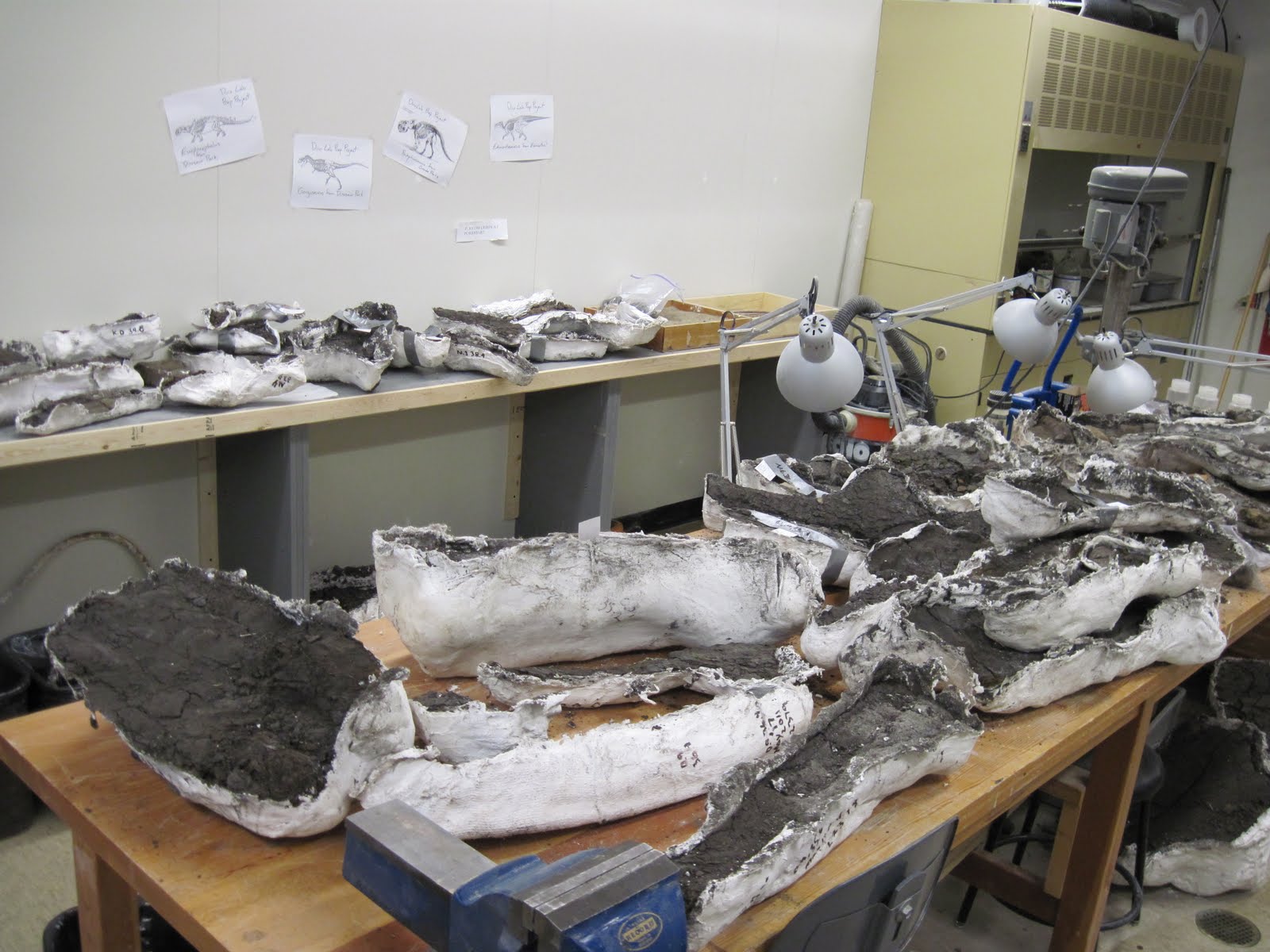
Here’s a few more shots from the University of Alberta’s fieldwork at the Wapiti River bonebed near Grande Prairie. Fieldwork wrapped up on Friday and the fossils are now at the U of A awaiting preparation.
Wapiti River fieldwork, part 1
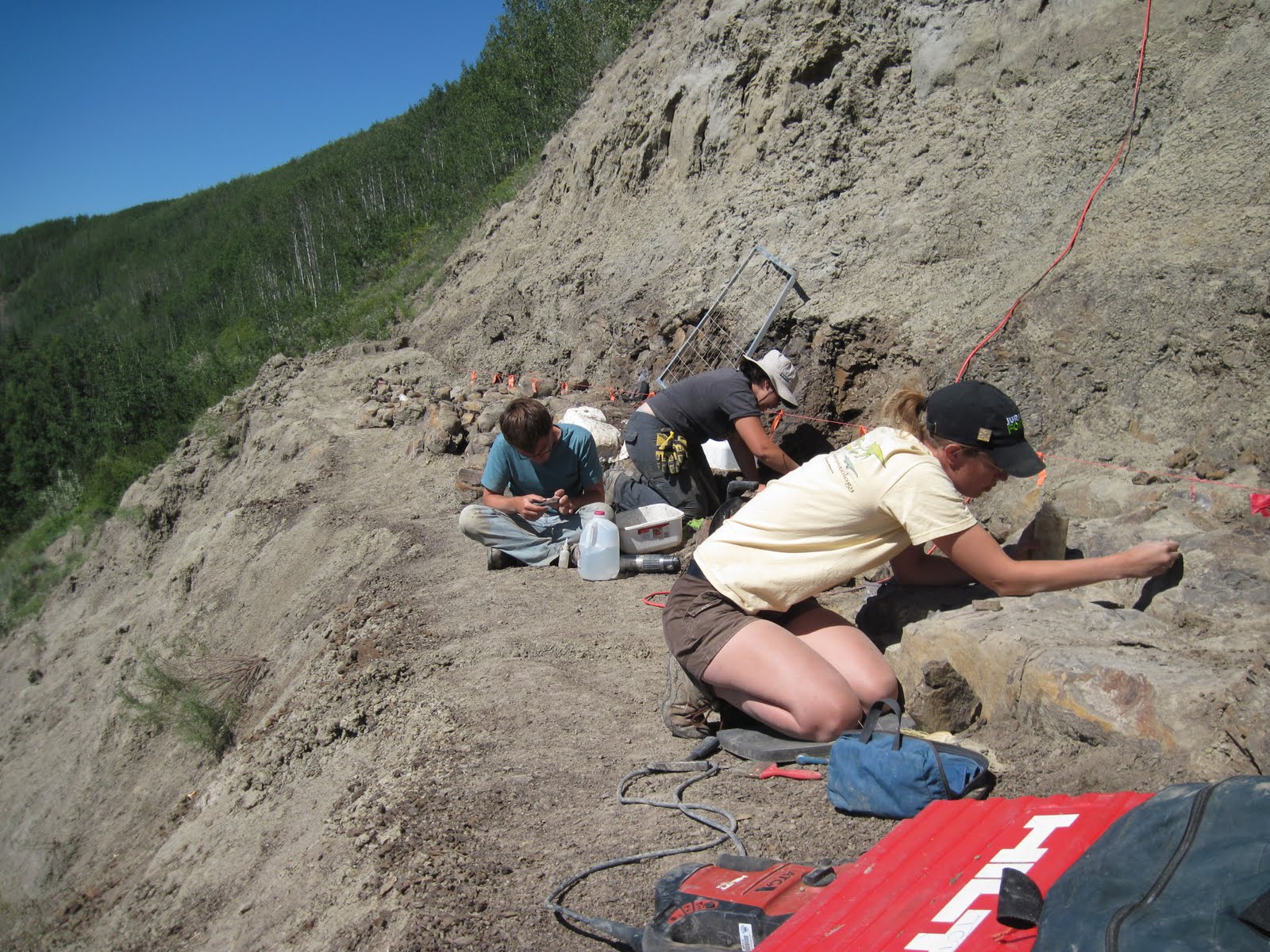
Hi everyone! It’s been a while since my last post as I catch up on research and get ready for a brief stint of fieldwork in Grande Prairie. I’ve been working at the Wapiti River bonebed for the last few days, where we are excavating a Pachyrhinosaurus bonebed. Here is a quick update of what we’ve been up to.
The bonebed is on a steep river side, and we have cut a long but narrow ledge into the cliff. The view is quite spectacular and we occasionally see deer and bears on the other side of the river.
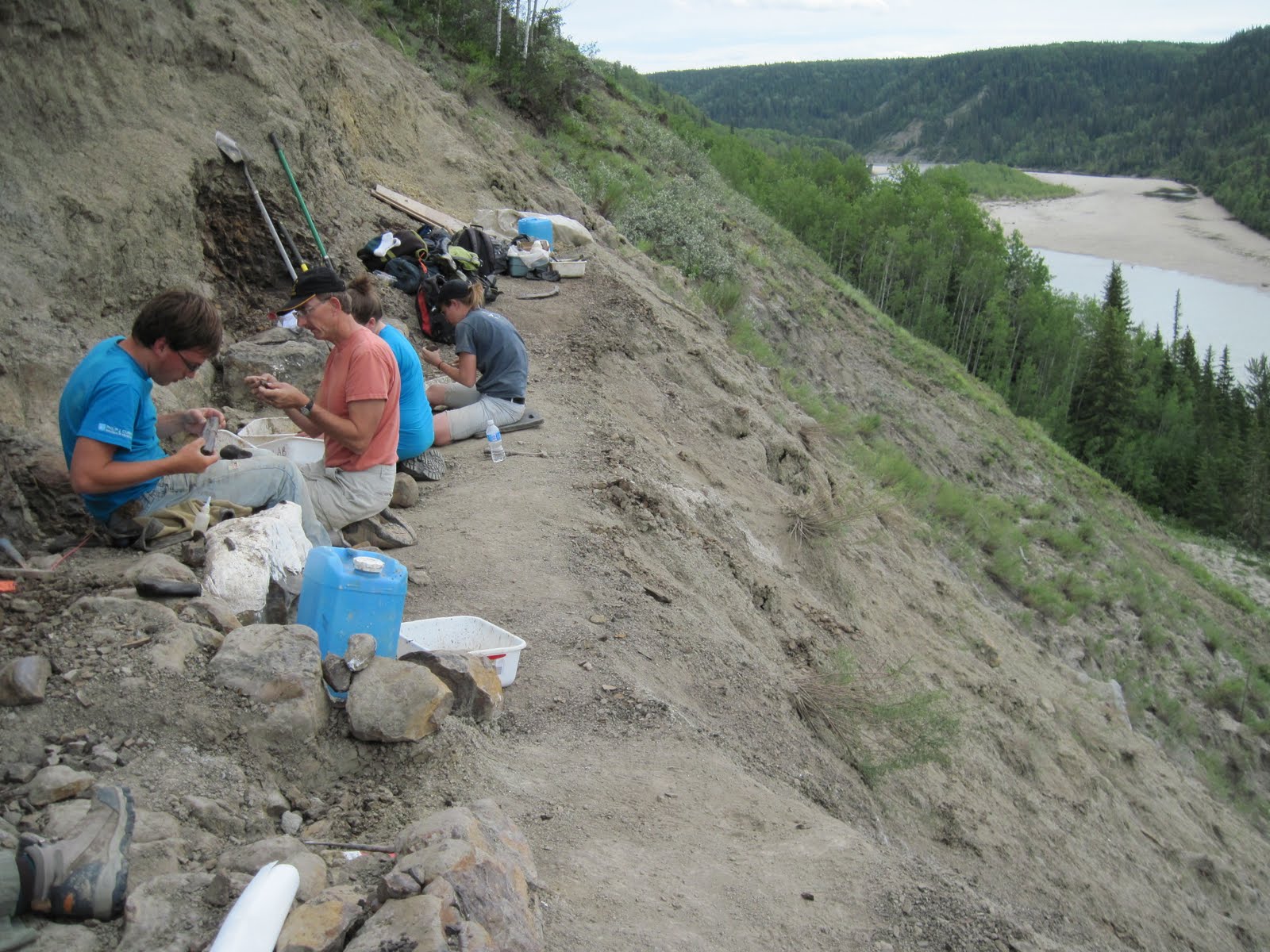
You know field season is well underway when…
Stegoceras is everywhere!
And by everywhere, I mean in two PLoS ONE papers this week. (But that’s pretty good!) Stegoceras is the focus of a study on cranial ontogeny in pachycephalosaur skulls, and in head-butting in pachycephalosaurs and artiodactyls.

A Return Visit to the Jurassic Forest
Last fall I visited the newly-opened Jurassic Forest and enjoyed it very much. However, because winter arrives early in Edmonton, the leaves had already fallen and the dinosaurs were quite snowy! Today I spent some time showing off ankylosaur fossils and casts with visitors at the forest, and had a chance to see the dinosaur trails in their summer greener. Here’s a few new photos from the forest!
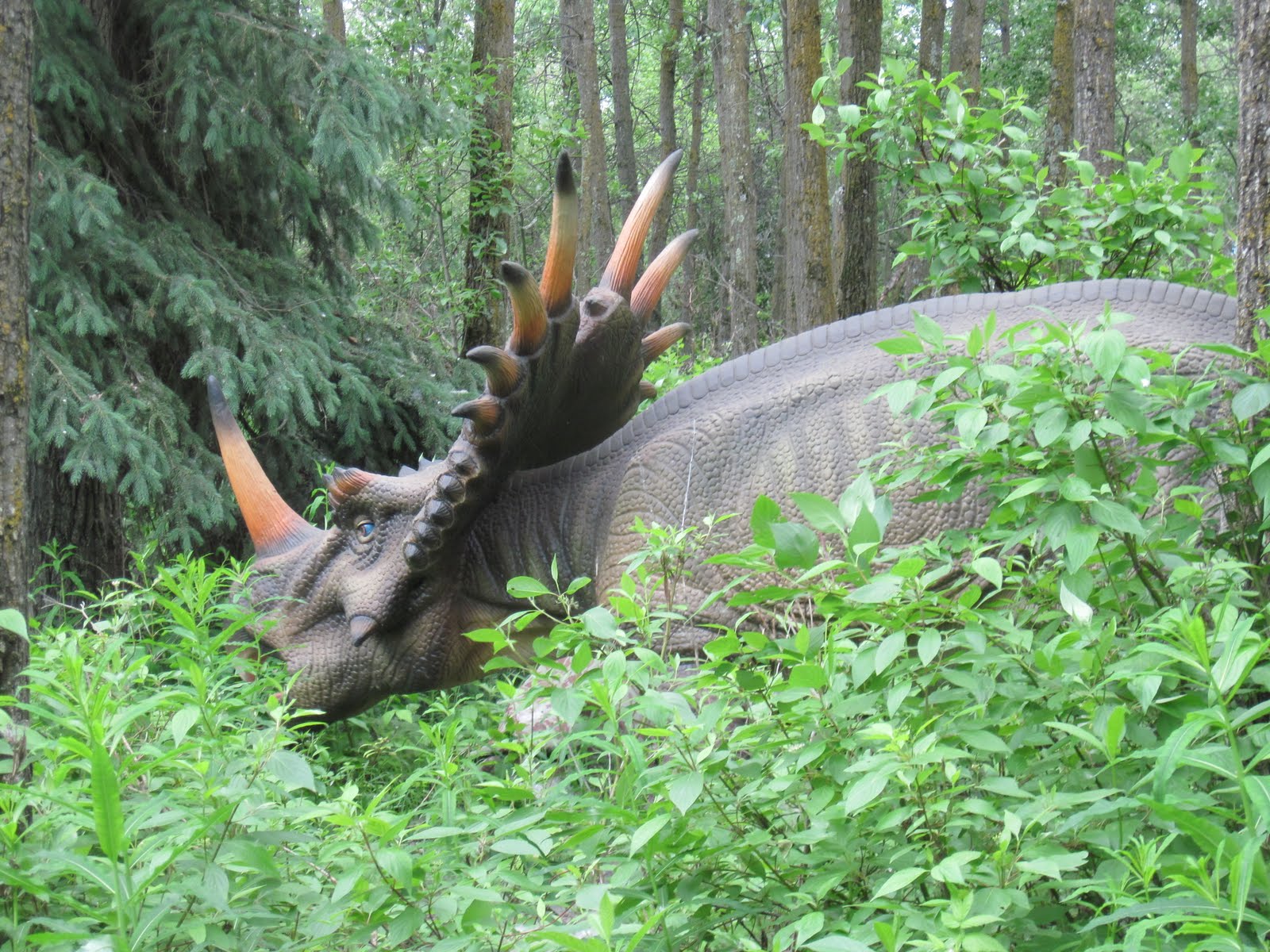 Styracosaurus looks like it’s in its natural environment. Continue reading
The Ontario Science Centre
I’m back from a vacation to visit various family members scattered around the globe, including a stop in Toronto. It was time for a long overdue visit to the Ontario Science Centre, which I hadn’t visited since I was in my early teens, but which was one of my very favourite places when I was younger.
The Ontario Science Centre was built in 1969 and was a pretty revolutionary place at the time, as instead of the stereotypical ‘static’ museum displays pretty much everything was hands-on in some way. There are great exhibits on astronomy and the human body, an indoor rainforest with some really cool poison dart frogs, a fin whale skeleton, and the Science Arcade, which is probably one of the most fun science exhibits to play in. Continue reading
Ankylosaur tail pathologies.
My most recent paper with my coauthor and supervisor Phil Currie appeared online at Historical Biology this week. It is the last of the chapters from my MSc on ankylosaur tail club biomechanics (although I am still working on ankylosaurs, the focus is now on the phylogenetic relationships within the ankylosaurids and their biogeography). However, it contains very little about the biomechanics of tail clubs…
Most of my MSc thesis used a lot of math and fancy-dancy computer modeling to look at whether it is biologically feasible for ankylosaurids to have used their tail clubs for forceful impacts (and therefore as offensive or defensive weapons). But another way to look for evidence of behaviour is to look for injuries, which can sometimes, if you’re lucky, give you clues about some of the more dramatic moments in an animal’s life. So as I was looking at specimens for my MSc (and into my PhD), I always kept an eye open for anything unusual or abnormal that could be a pathology. Continue reading
The World’s Largest Dinosaurs!
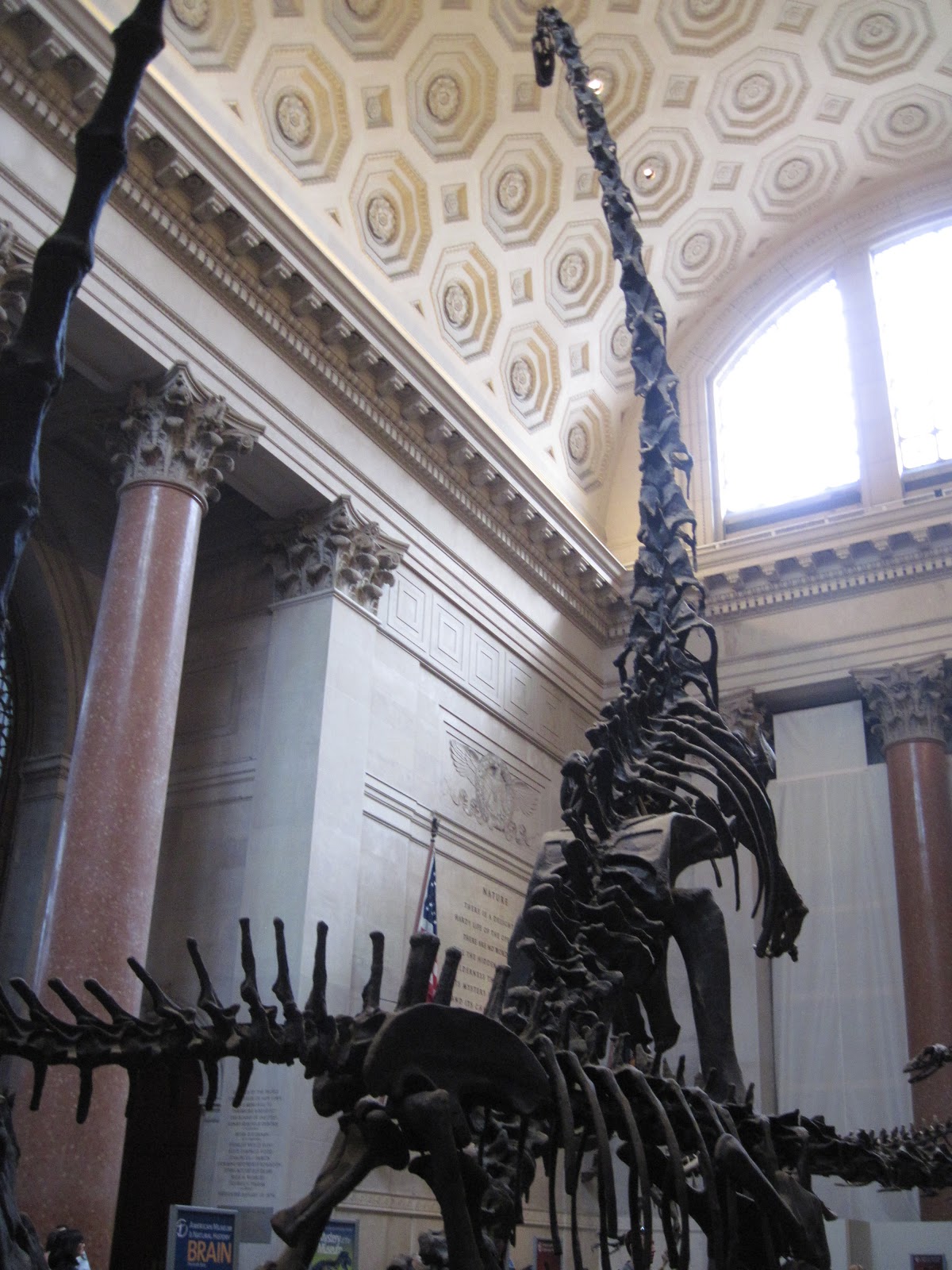
After my visit to the Smithsonian I popped over to New York to spend some time at the AMNH. As luck would have it, the special exhibit The World’s Largest Dinosaurs had just opened a few weeks ago.
Name That Specimen, Smithsonian Edition
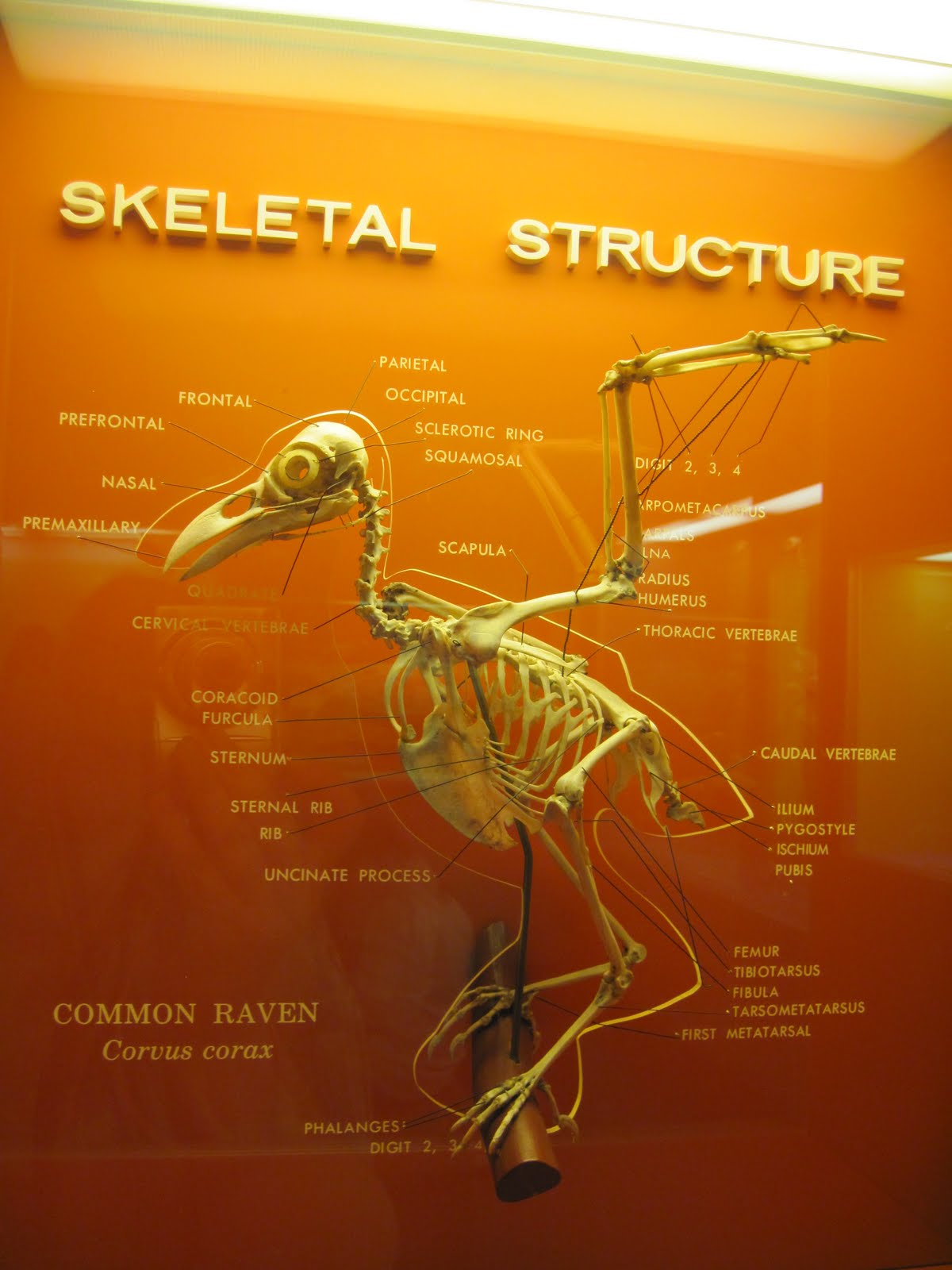
The fossil halls at the Smithsonian were great fun, but do you know what might have been my next most favourite hall? The Hall of Bones! I am not sure I have ever seen so many non-mammal skeletons on display. I also liked how a lot of the displays highlighted anatomy and functional morphology. The whole thing was just deliciously old-school museum in all the best ways: detailed, focused, and elegantly presented. In a way it was like stepping into a 3-dimensional anatomy textbook, but more fun because here are the bones right in front of you that you can see from all kinds of different angles, and compare easily.
 pseudoplocephalus