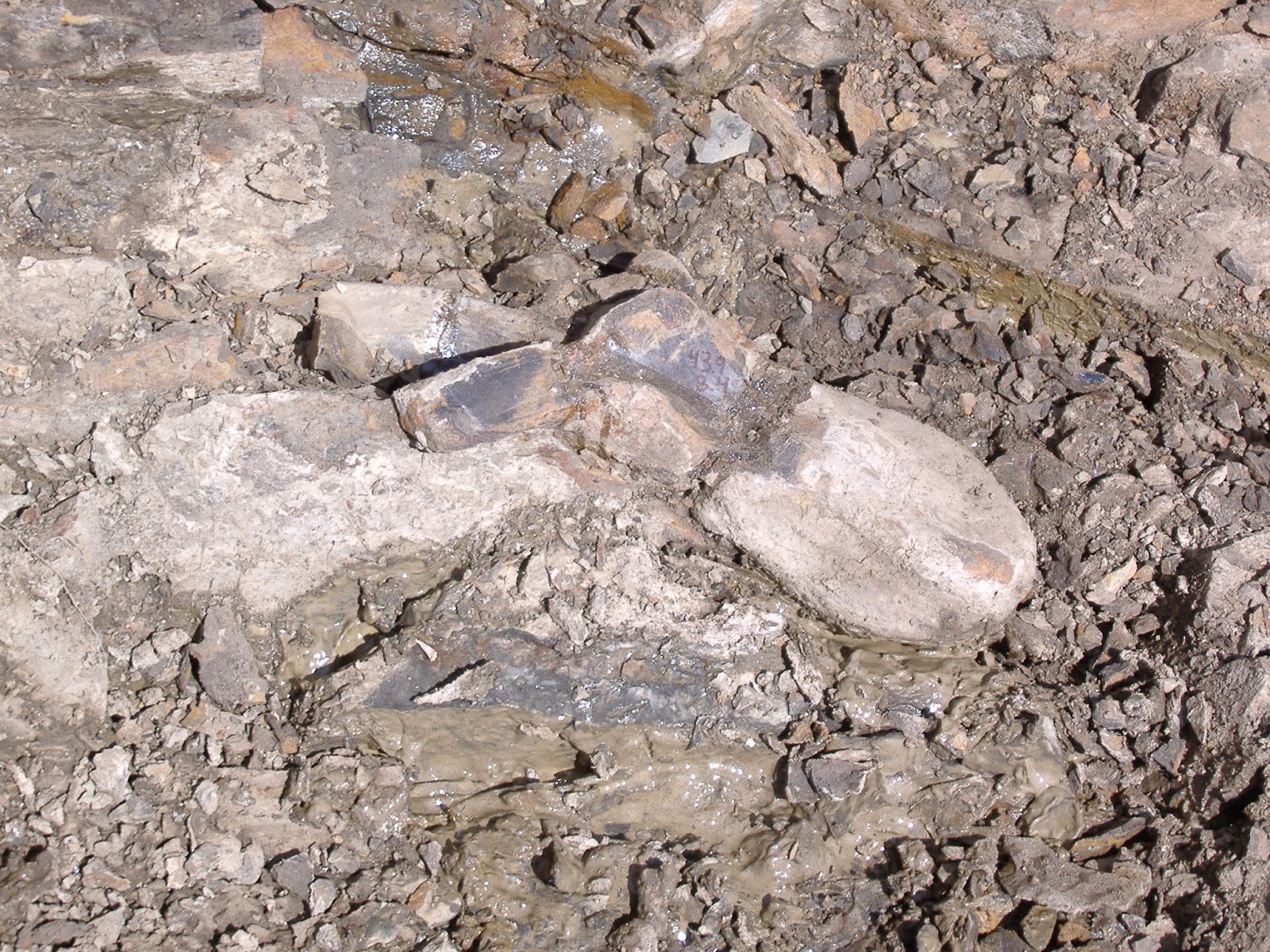
Cornelius says hello

Updated on July 8, 2015! 

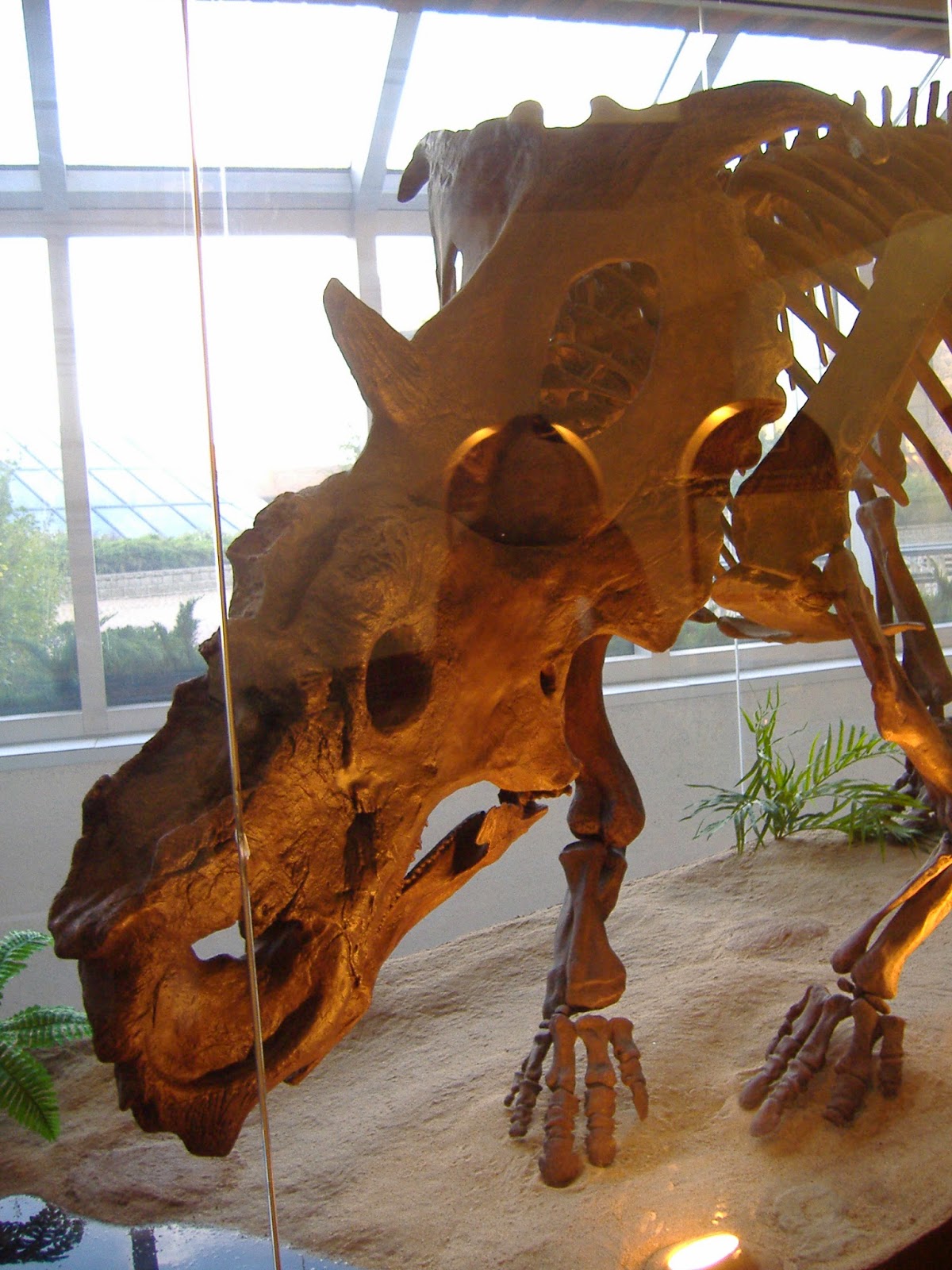
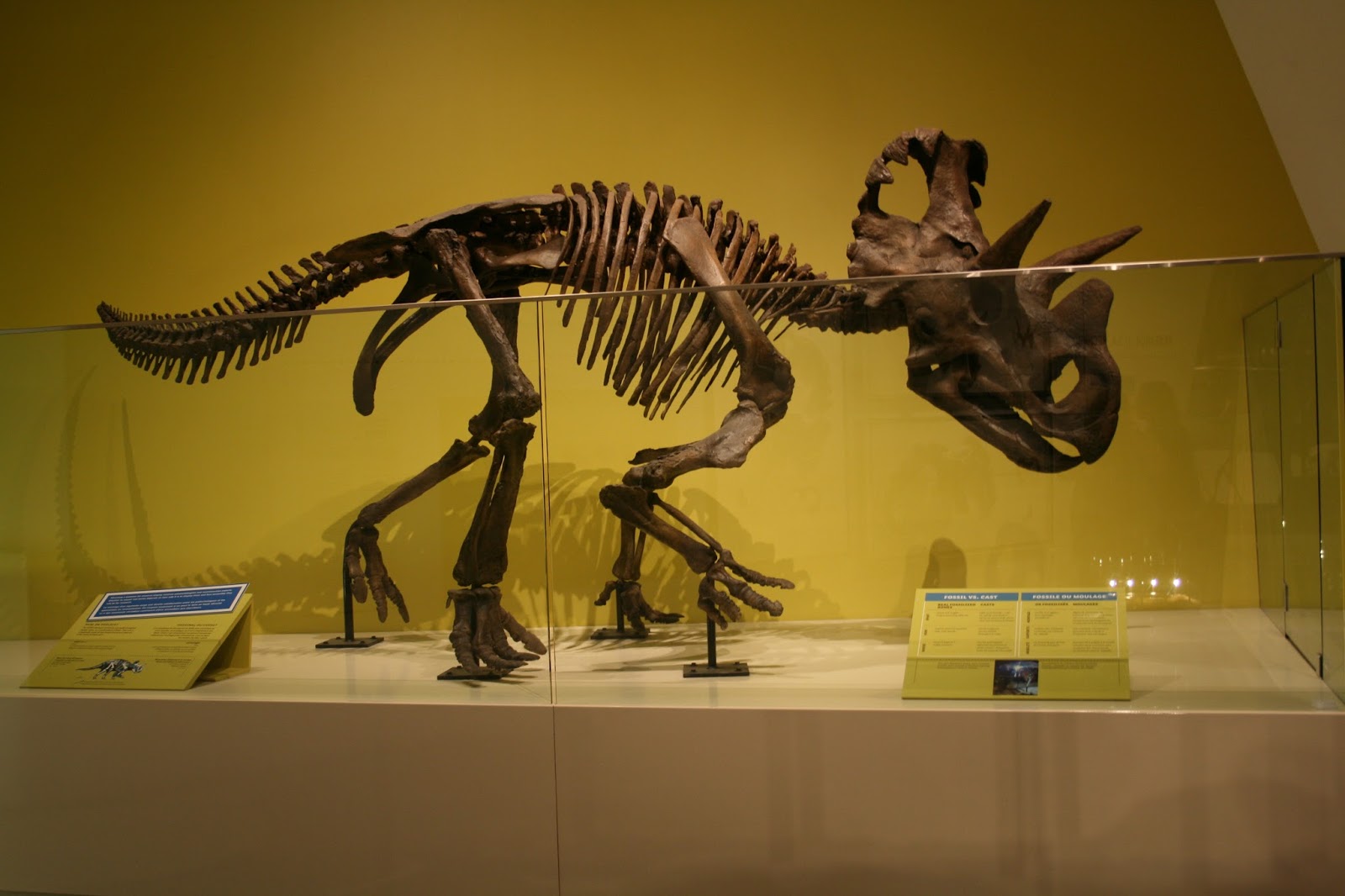
“Cornelius” now has a scientific name – Wendiceratops pinhornensis!

You can read the open access paper here:

Evans DC, Ryan MJ. 2015. Cranial anatomy of Wendiceratops pinhornensis gen. et sp. nov., a cnetrosaurine ceratopsid (Dinosauria: Ornithischia) from the Oldman Formation (Campanian), Alberta, Canada, and the evolution of ceratopsid nasal ornamentation. PLOS ONE 10:e0130007.

Say hello to Cornelius! I got to meet him during a brief visit to the ROM last week, and he seems like a pretty nice guy.

Continue reading

On Failures of Imagination

Yesterday I talked about ‘expected surprises‘ with regards to Yi qi. Yi qi is a surprise because its anatomy is so unlike other theropods, and it suggests that dinosaurs were experimenting with flight and/or gliding in some ways that were quite different from our current understanding of feather and bird wing evolution. But it was also not entirely unexpected, because scansoriopterygids had super weird anatomy to begin with that gave us enough information to speculate about possible gliding adaptations in those dinosaurs, even though the general consensus was that it was pretty far-fetched.

But today I wanted to talk about a related feeling, which I like to call the Failure of Imagination. Last summer I was working my way through a DVD set of classic sci-fi, fantasy, and adventure movies that I had picked up at some point. I wound up watching a lot of these with friends and basically Mystery Science Theatre 3000-ing the films, and in particular the old space adventure movies from the 40s-60s provided much entertainment. It’s really fun to take a look back and see what sorts of things people envisioned the future holding for us – space travel, exoplanet exploration, robots. But what also struck me was the things that the filmmakers and storywriters couldn’t even imagine.

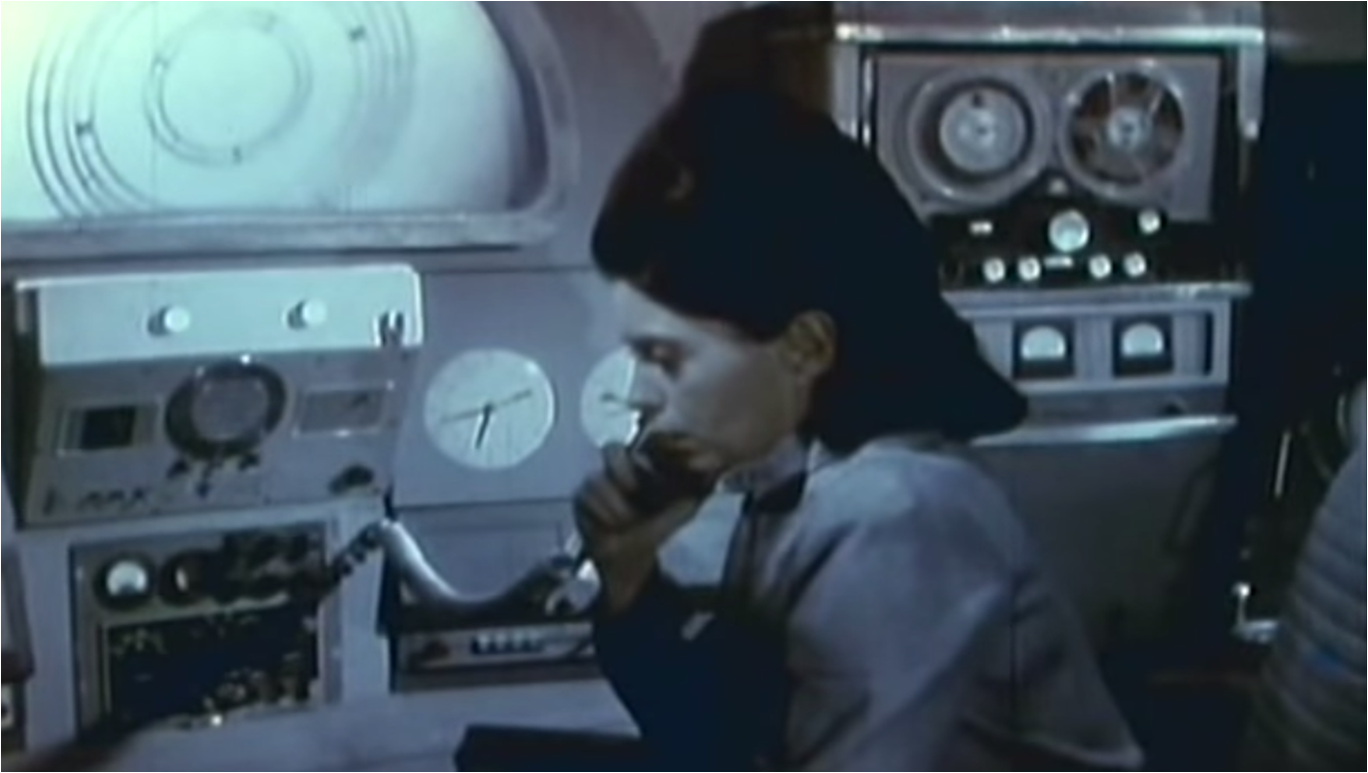
They could imagine spaceships and robots, but they couldn’t imagine wireless technology. Or storing information in digital form rather than on spools of tape.

Voyage to the Prehistoric Planet (1965) 

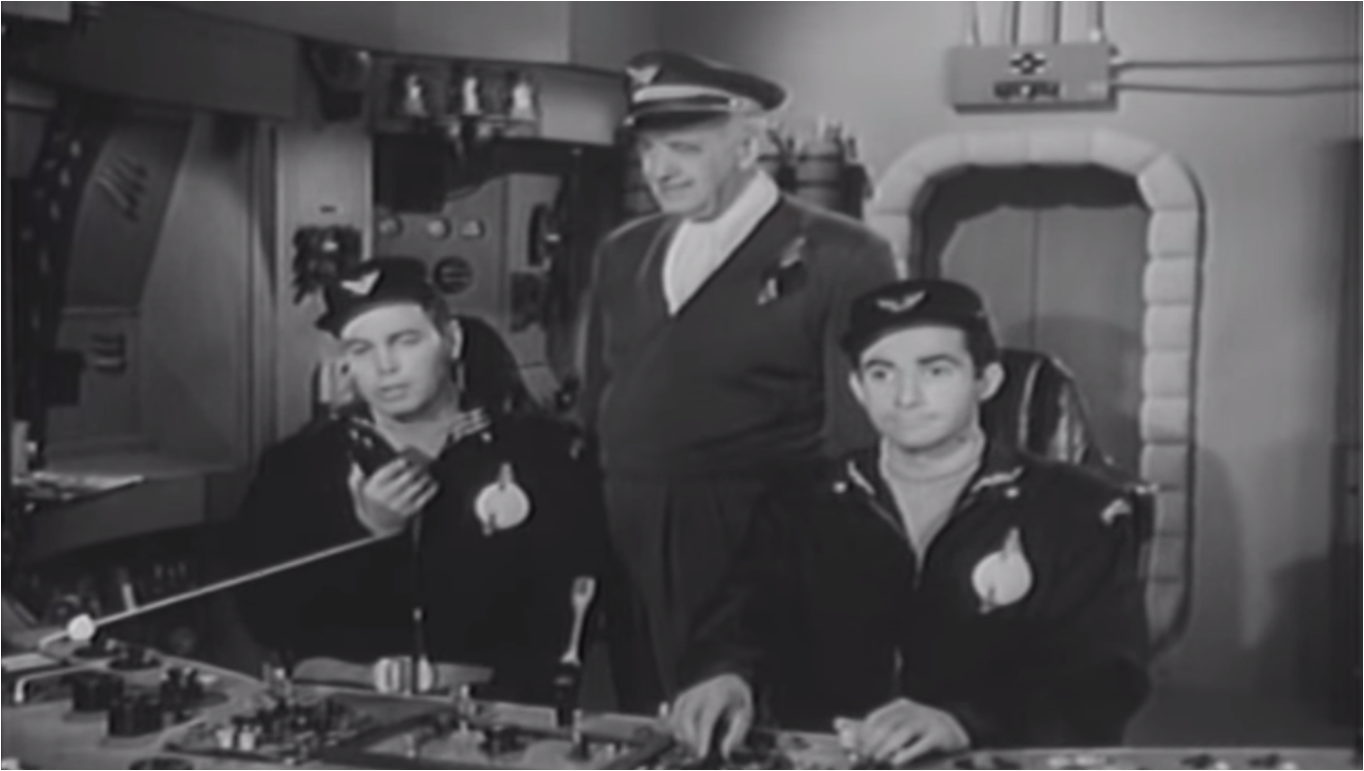
They couldn’t imagine non-button-and-dial-based instrumentation. 

Rocky Jones, Space Ranger: Crash of Moons (1954)

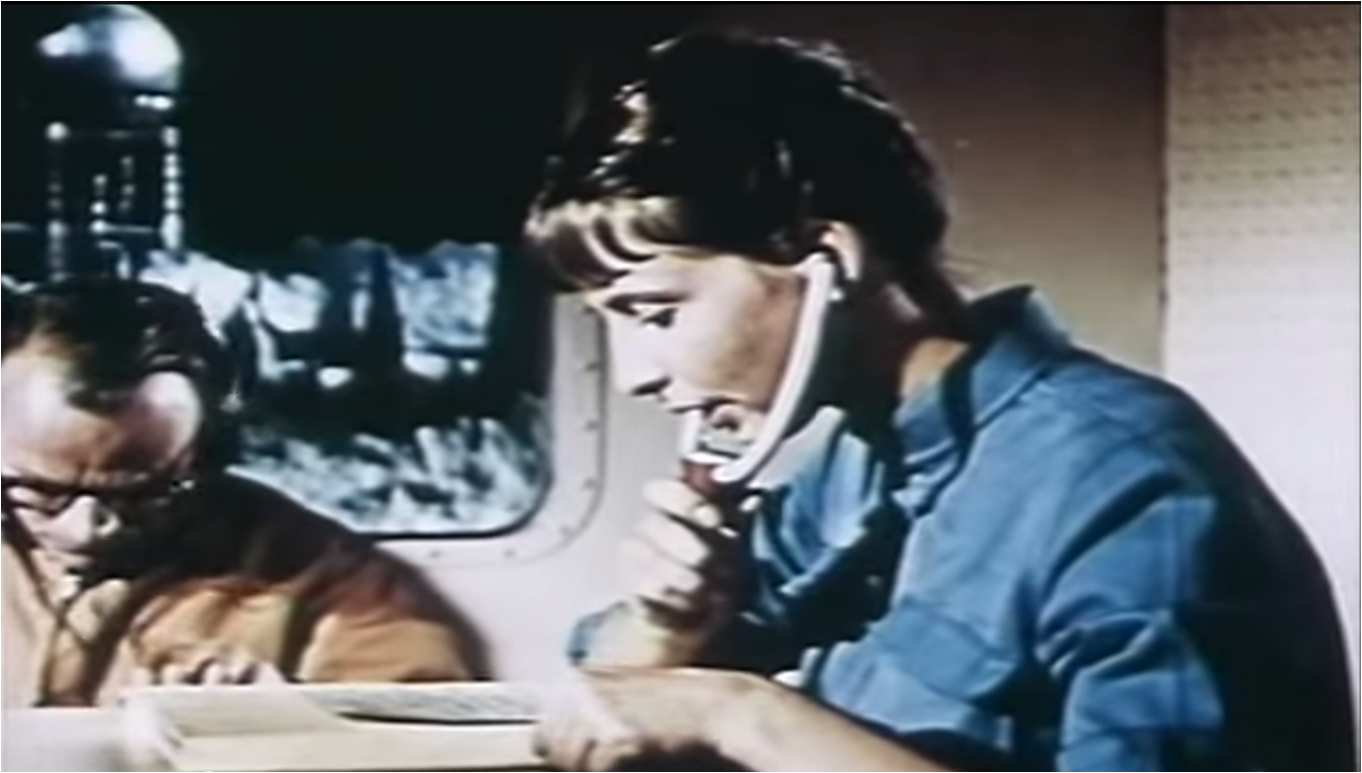
And they definitely couldn’t imagine women in roles other than administrative assistants (or as the bad guys). SO MANY SPACE SECRETARIES.

 First Spaceship on Venus (1960)

I kept thinking to myself – what sorts of failures of imagination are we having in palaeontology today? We can imagine so many things. But I wonder what kinds of things we won’t even know we don’t know. When we try our hand at speculative biology, what will scientists 80 or 100 years from now think was charming, or quaint, or ahead of its time. Failures of imagination are one of those things that make me nervous as a scientist, because I don’t like the idea that I won’t even know what I’m not imagining.

On Surprises

I love surprises. Which is unfortunate for me, because I am extremely bad at being surprised. And it’s hard to be surprised by things as you get older, and as easier access to more and more information becomes available to us every day.

But boy, when a surprise comes along that actually takes me by surprise, what a thing to be able to savour.

An extraordinary painting of Yi qi by Emily Willoughby, CC-BY.

Continue reading

May your mountains dark and dreary be.

Just wanted to give a quick shout out to some old fossil friends of mine. Horton Bluff/Blue Beach is a pretty cool place and I have fond memories of field trips out there during my Dalhousie days. Between this new paper and the recent paper describing the Permian to Jurassic assemblage of tetrapods, it’s been a good time for Nova Scotia palaeontology.

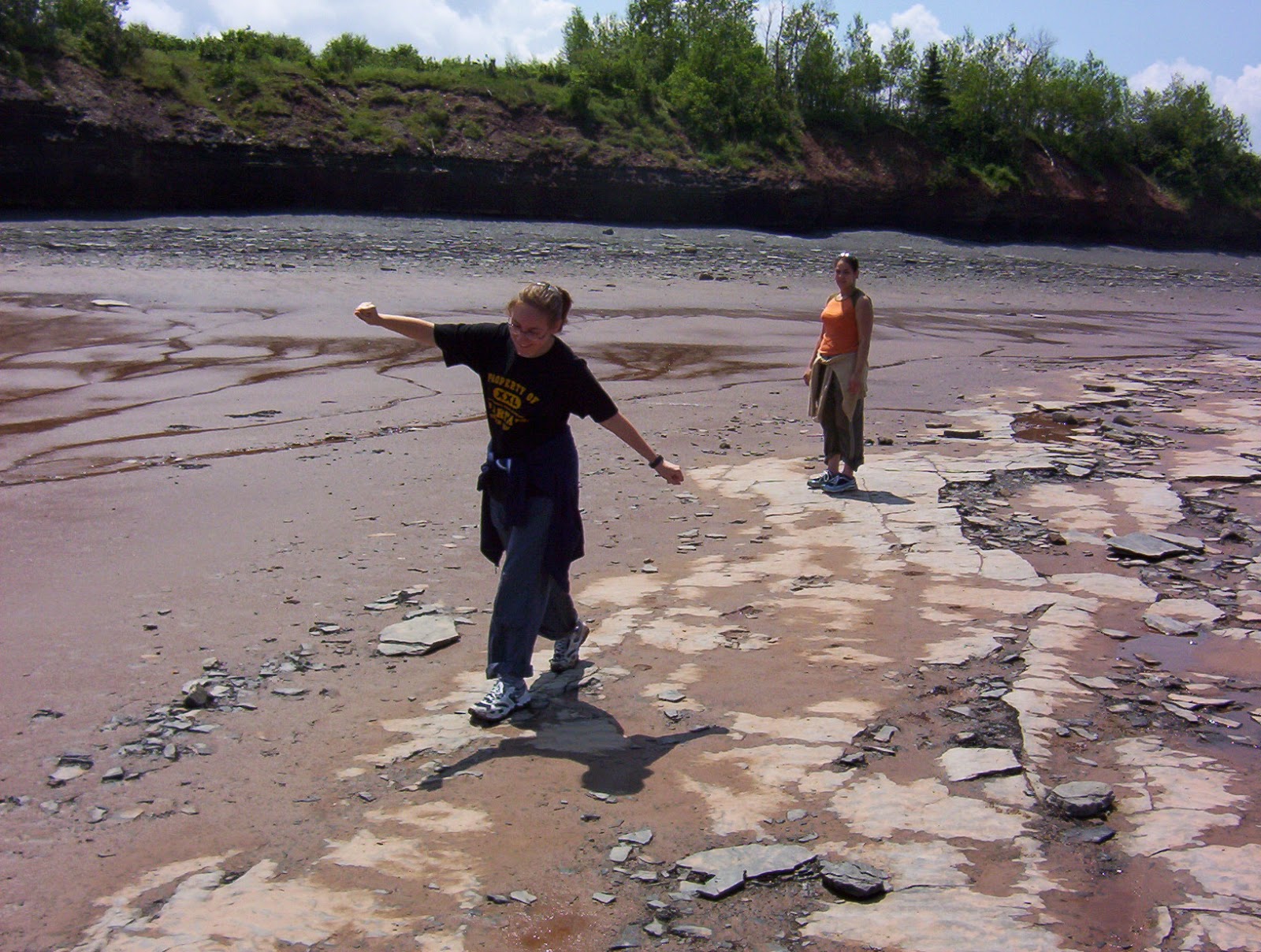
Your friendly neighbourhood ankylosaur palaeontologist, in the before time (i.e. 2003), at Horton Bluff, following in her tetrapod ancestor’s footprints. It’s goopy there.

Which of course makes me miss it all terribly.

Anderson JS, Smithson T, Mansky CF, Meyer T, Clack J. 2015. A diverse tetrapod fauna at the base of ‘Romer’s Gap’. PLOS ONE 10:e0125446.

Sues H-D, Olsen PE. 2015. Stratigraphic and temporal context and faunal diversity of Permian-Jurassic continental tetrapod assemblages from the Fundy rift basin, eastern Canada. Atlantic Geology 51:139-205.

What’s up at Wapiti River?

The world can always use some more Pachyrhinosaurus bonebeds. So hooray to my friends and colleagues Federico Fanti and Mike Burns, and my PhD supervisor Phil Currie, for publishing a description of the Wapiti River Pachyrhinosaurus bonebed (currently in ‘early view’ accepted manuscript form at the Canadian Journal of Earth Sciences).
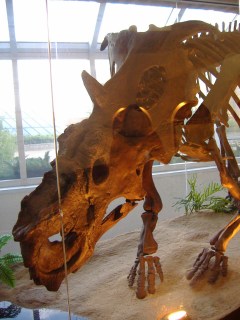
A friendly Pachyrhinosaurus lakustai greets students at Grande Prairie Regional College!

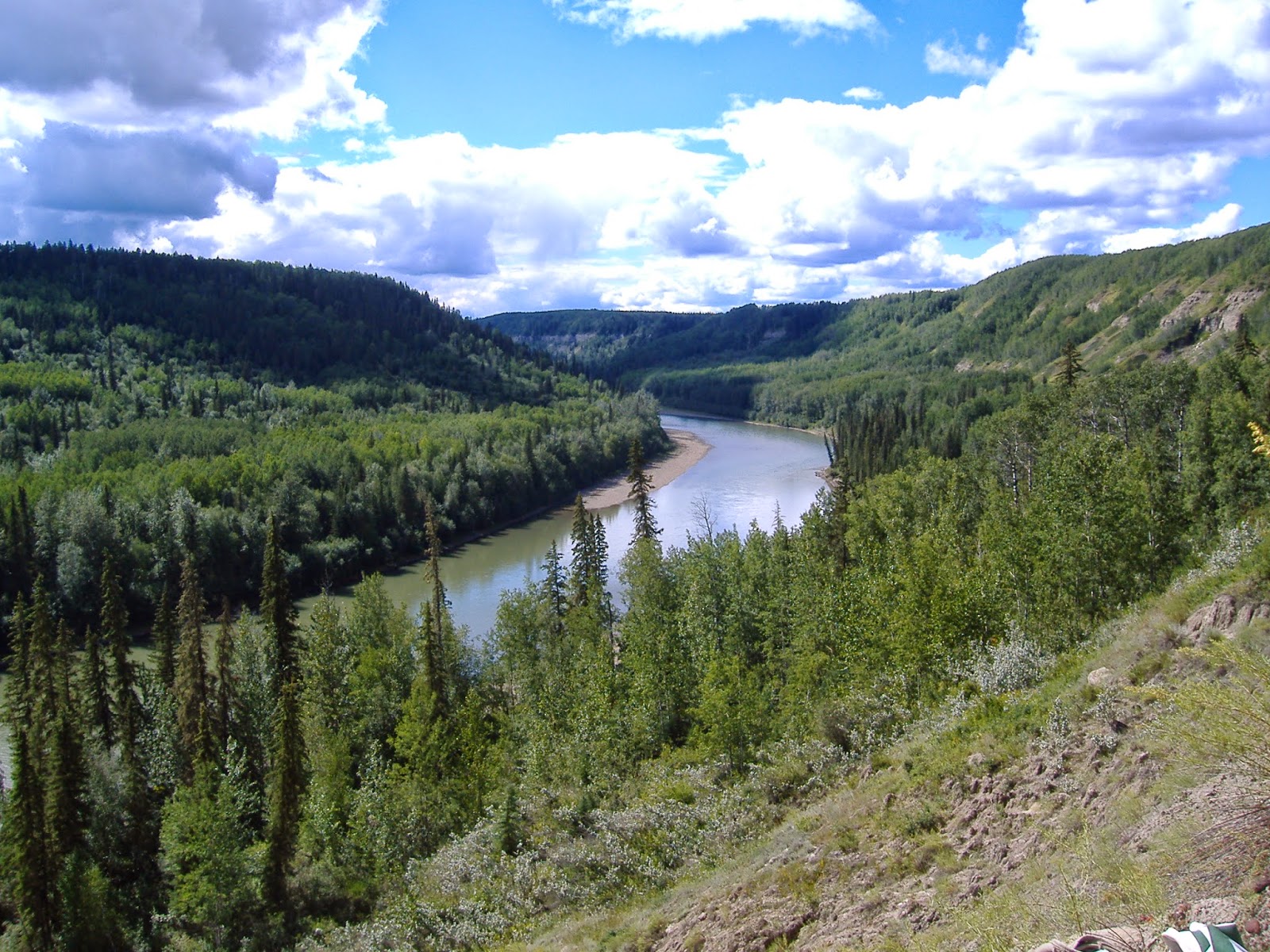
 Most of the time, dinosaur palaeontologists look for bones in dry, barren landscapes – the badlands of Alberta, the Gobi Desert, etc – places that have lots of rocks and not much covering them up, like inconvenient forests or cities. But sometimes, you don’t have vast expanses of outcrop. In Nova Scotia, we dig up dinosaurs on the beach. In the area around Grande Prairie, Alberta, you look for bones in the outcrops along rivers and streams.
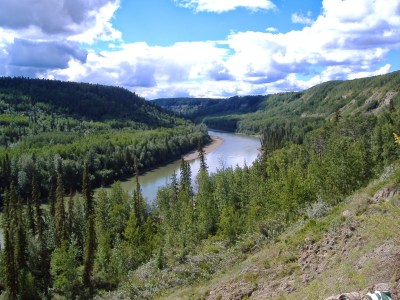
The very first summer I went out with the University of Alberta crew (way back in the halcyon days of 2007; the first Transformers movie was ‘good’, everybody read the last Harry Potter book overnight to avoid spoilers, and…apparently not much was happening in my musical spheres, but my, how time has flown), there wasn’t a Wapiti River bonebed. We knew that there were bones coming out of the riverbank somewhere, but it took the better part of a day to trace them up the hill to the bone layer. 
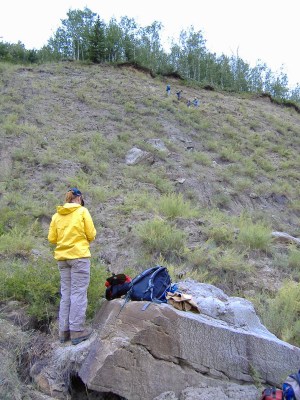
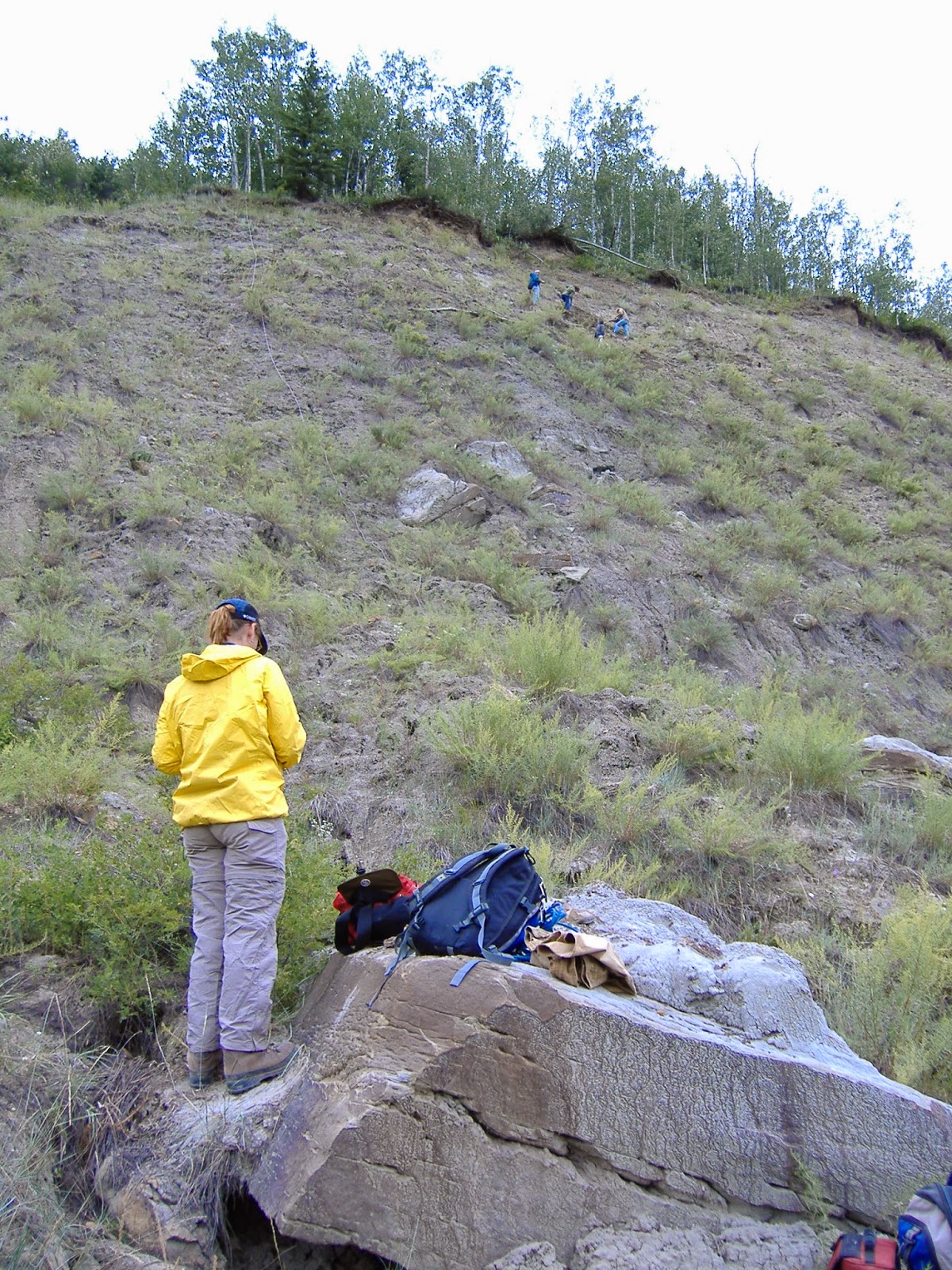
See if you can spot Phil for scale way up on the hill there, and remember that Phil is about 3x as tall as most humans. That’s where the bone layer is!

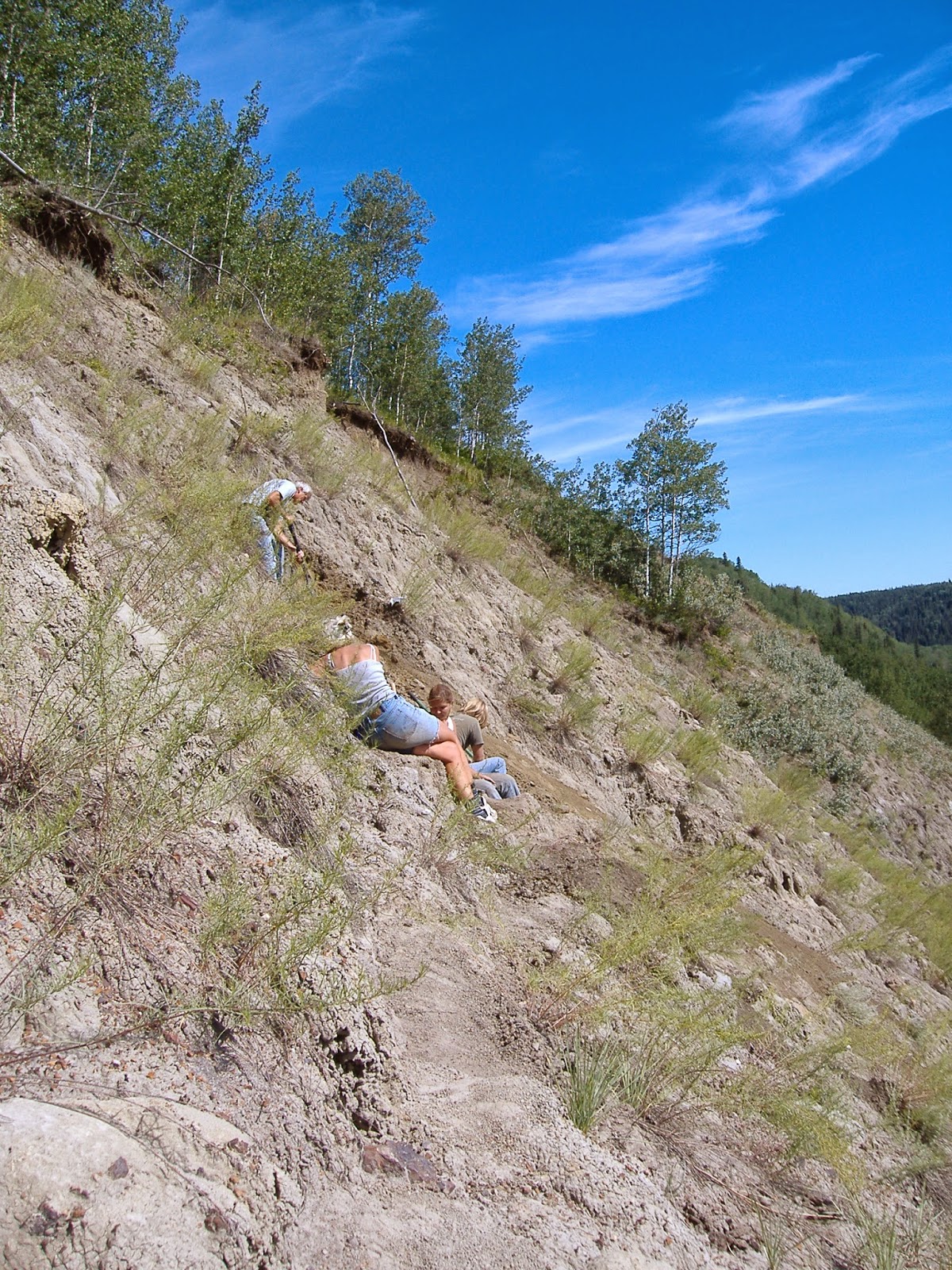
It’s a pretty steep hill, and so those first few days excavating the bone layer meant hacking out little footholds and gradually making enough of a ledge for us to sit on and walk around each other without plummeting to our death.
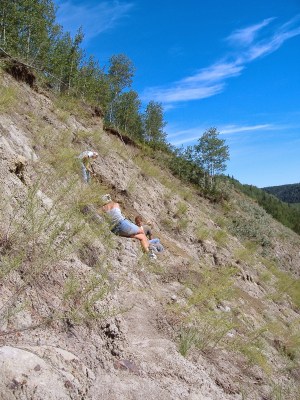
The last time I was there, in 2011, the ledge had expanded significantly, although you can see it’s still a pretty narrow slice! It’s a scenic place to work, with the river and boreal forest stretching away below; bear sightings were not uncommon (and occassionally closer than we’d all prefer), and I remember a hummingbird came down to check on us one day, buzzing around my head for a few moments!

In this bonebed, there’s a layer of bones in a crazy, mixed-up layer of folded mudstones, and those are pretty easy to excavate. 
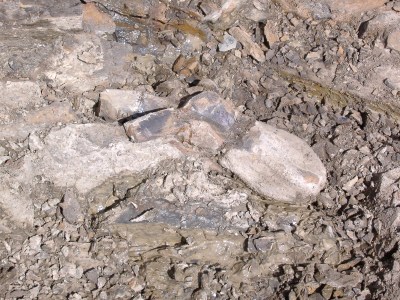
Here’s a dorsal vertebra. Nice and easy.

But down beneath that, the skulls and larger bones are encased within super hard ironstones. We can’t really do much with these in the field, so we need to take them out in huge pieces. 

And here’s what the skulls look like. The circular depression down towards my left foot is the narial opening. The UALVP has like 15 of these suckers and they each take about 2 years to prepare with a crack hammer and chisel.

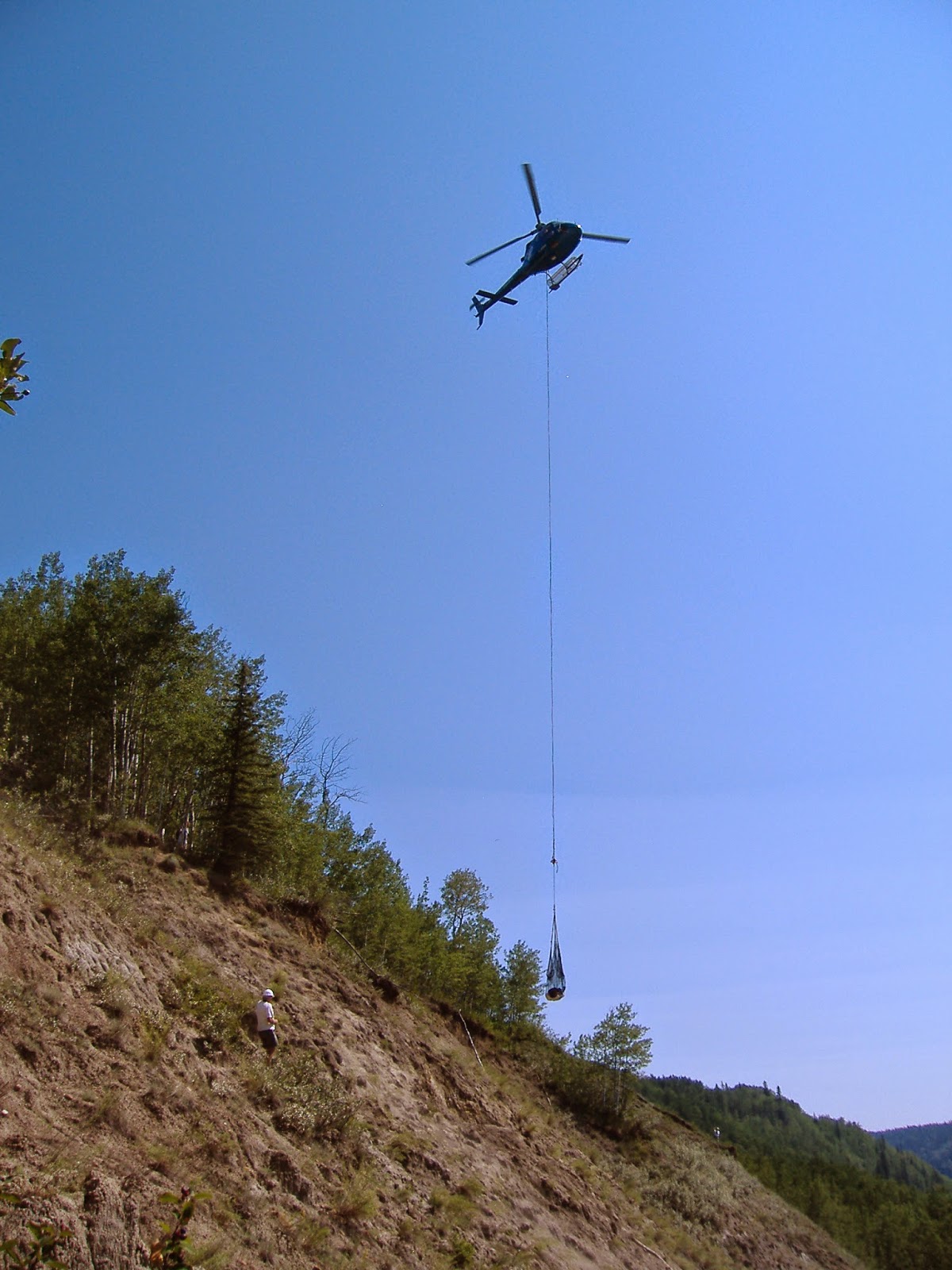
But the bonebed is also about halfway down into the river valley on a steep slope that’s hard enough to just haul yourself up, let alone a huge boulder. So we’ve been very lucky to have helicopter support to carry out some of the heaviest pieces at the end of each field season.

Up, up and away!

 Sometimes we were even visited by Aluk the Pachyrhinosaurus, mascot of the Arctic Winter Games in 2009!
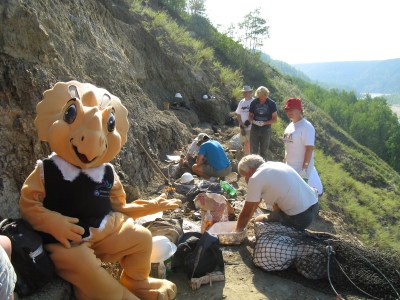
This was probably the strangest day in the field.

 There’s still much more work to be done on this bonebed – we still aren’t exactly sure what species of Pachyrhinosaurus is present. The age is right for P. canadensis, but only time will tell. And with two Pachyrhinosaurus bonebeds in Grande Prairie – the Pipestone Creek bonebed with P. lakustai, and the slightly younger Wapiti River bonebed – there’s bound to be much more to learn about the evolution and biology of this unusual ceratopsian. 

Previously in Pachyrhinosaurus:
Wapiti River Fieldwork, Part 1
Wapiti River Fieldwork, Part 2

And don’t forget to check out:
Fanti F, Currie PJ, Burns ME. 2015. Taphonomy, age, and paleoecological implication of a new Pachyrhinosaurus (Dinosauria: Ceratopsidae) bonebed from the Upper Cretaceous (Campanian) Wapiti Formation of Alberta, Canada. Canadian Journal of Earth Sciences, early view.
It’s #SciArt week on Twitter!

I think we often downplay or take for granted the role that art plays in science. High quality art is obviously a hugely important aspect of public science communication. A paper describing a new species of dinosaur will have much more impact on the public if it’s accompanied by an excellent life restoration of that dinosaur. Astronomers and their spacey kin use illustrations to show us satellites, the solar system, and far-off planets we can’t photograph. Biologists dealing with the very small need illustrators to show us the cells in our bodies, what’s inside those cells, what DNA looks like and how it works – the list is endless. Continue reading