Animal, mineral, or vegetable?

Today is World Pangolin Day! And given my fondness for armoured animals, I would be remiss in not sharing at least a little bit of information about pangolins today. I think it’s a shame that many people have never heard about pangolins. It’s weird they don’t show up in more kids books about mammals and animals in general – I recall my first encounter with them was in a high school biology textbook, where there was a little two-tone illustration of one on a page about mammal diversity. Who knew there were scaly mammals?

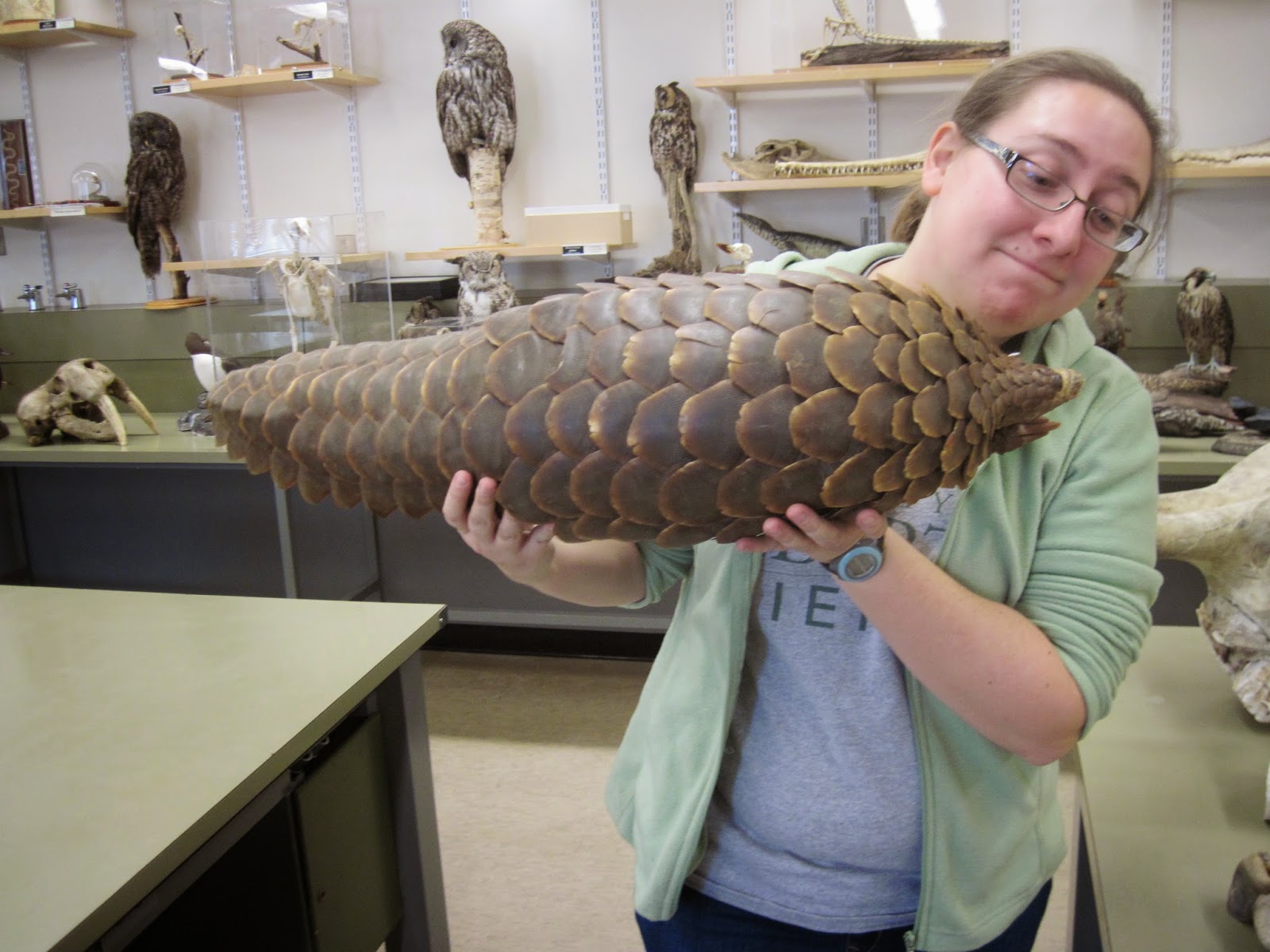
Imagine my delight when I found out that the zoology collection at the University of Alberta included a pangolin skin (and mounted skeleton!). Pangolins really look like giant walking pinecones. Their hairs are modified into tough, overlapping scales. They have massively strong arms and claws, which they use to rip open termite mounds (at least for ground pangolins). This makes their genus name, Manis (hand) appropriate, although I’m surprised they weren’t named after their scales! The pinecone pangolin I’m holding is either a ground pangolin or a giant pangolin, but there are also tree pangolins that climb and have prehensile tails. In total, there are 4 species of pangolin in Africa and 4 in Asia.

Pangolins are the closest mammalian analogues to dinosaurs I think we’ve got – ground pangolins walk on their hind feet with their tail stretched out behind them, and tuck their front legs up, maybe using them to balance occasionally as they trundle along. (In a sense, they walk like we do when we’re pretending to be velociraptors. This is a thing other people do, right?) They can also roll up into a ball. They are basically the best animal ever.

They are pretty neat little creatures, but their populations are at risk due to habitat loss, the bushmeat trade, and the pet trade. I would dearly love to see a living pangolin during my lifetime.

The Great Canadian Dinosaur Hunt

Dino Hunt Canada is almost here! Starting this Friday, History Channel Canada will be airing a series of hour-long documentaries devoted to dinosaur expeditions all across Canada – and not just in the famous badlands of Alberta! The production crew visited field localities in Nova Scotia, Saskatchewan, multiple places around Alberta, and British Columbia. It’s going to be a real who’s who and where’s where of Canadian palaeontology.

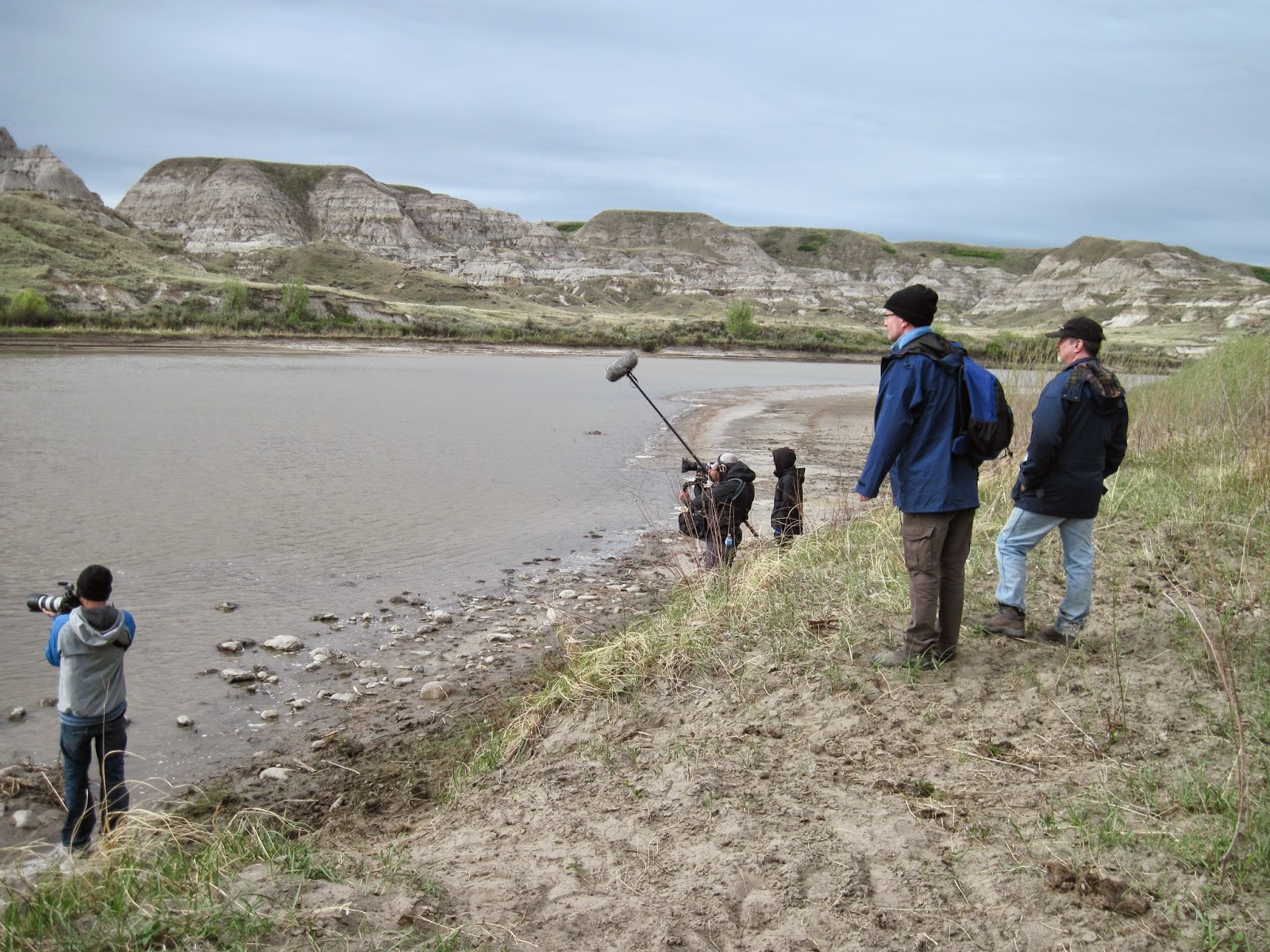
I’ll be in the second episode featuring work in Dinosaur Provincial Park, which we filmed in 2013. It was a fun if somewhat unusual experience to have such a large film crew with us, and I’m looking forward to seeing the whole shebang!

What was the crew filming in DPP? Tune in to find out!

There’s also a really excellent website to accompany the show. You can learn more about some of the dinosaurs featured in the series (including wonderful new artwork by Danielle Dufault!), see interviews with some of the palaeontologists, and submit ideas for a nickname for a new dinosaur excavated during the show by the Southern Alberta Dinosaur Project. You can even submit questions and maybe have my weirdo face answer them via Skype! All in all, it’s looking really good so far and I’m so happy to see the huge variety of dinosaur research being conducted across Canada by so many talented and hardworking people.

Edmontosaurus in Edmonton

Happy 2015, readers! So many exciting things are happening right now – the Dino Hunt Canada website launched a few weeks ago and the documentary will air on History Channel Canada later this month, things are chugging away here in North Carolina, and the Danek Edmontosaurus Bonebed special issue of the Canadian Journal of Earth Sciences was published just before Christmas. There’s already been lots of great coverage of the special issue, but I wanted to share a few thoughts here as well.

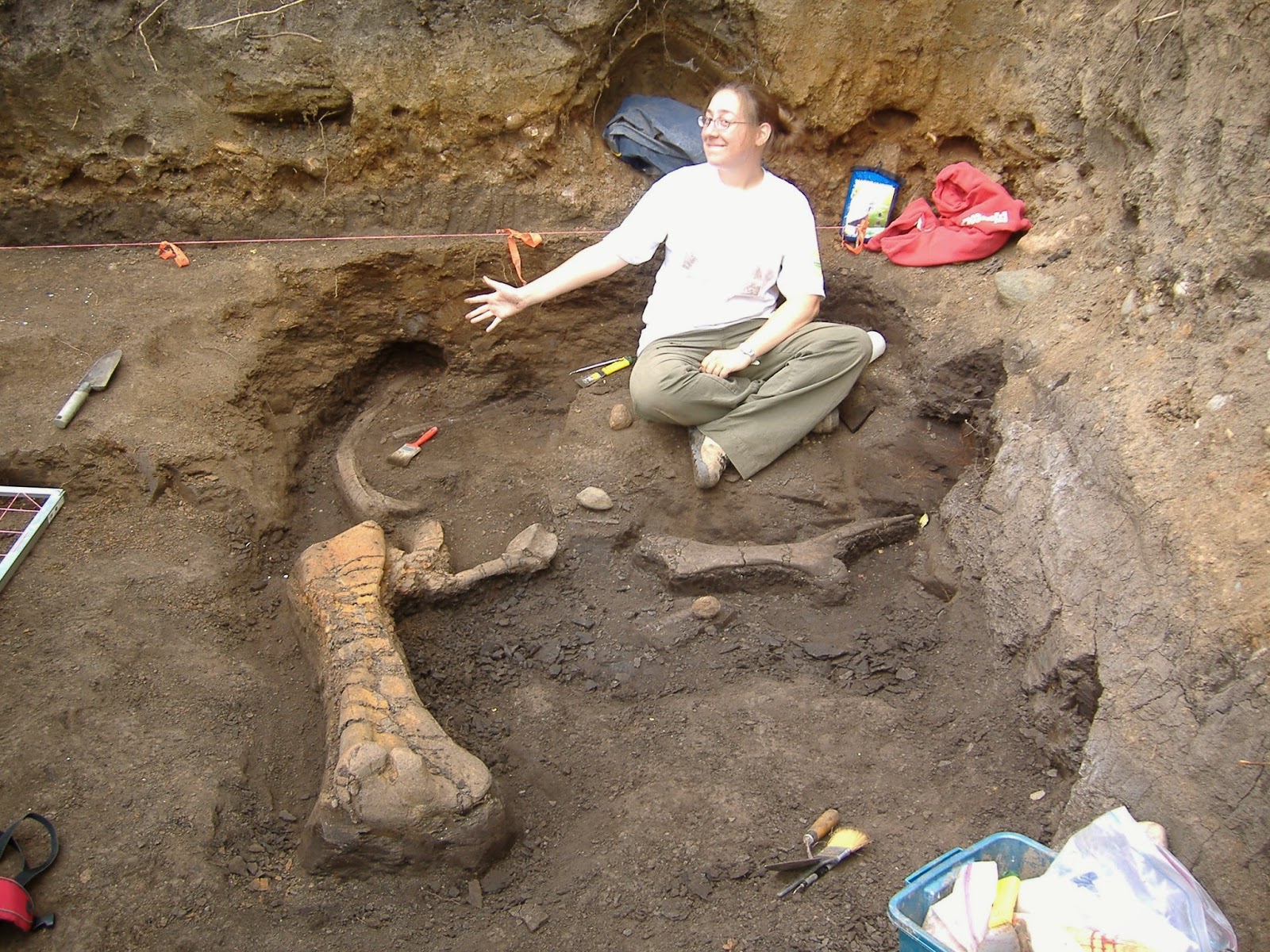
Please enjoy these very fine Edmontosaurus bones!

The special issue on this bonebed came about when Mike Burns and I got to talking about how the Albertosaurus Bonebed special issue had been such a good motivation for the lab to do some collaborative projects, and given that the PALEO 400 fieldschool students needed to develop research projects on the bonebed, wouldn’t it make sense to try to polish those into publishable form as well? This was back in 2012, and at that point there’d been 6 years of really good fieldschool students who had come up with a variety of interesting small-scale independent research projects. We put out a call to current and former students to see if anyone would be interested in expanding their project and contributing it to the volume, and also invited some of our colleagues who were working on hadrosaurs and/or bonebeds in some way to see if they would be interested in working on the material as well. Not all of the former students contributed papers, but I was really pleased by the number who did – it’s a big job to get a paper through peer-review, and I’m really proud of all the first-time papers in this issue!
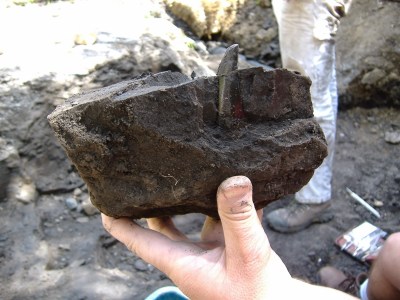
Albertosaurus tooth!

It’s also been really rewarding to watch our volunteer fossil prep program grow over the years I was at the UofA – we started with a few volunteers here and there, but in recent years we’ve had as many as 8-12 people working in the lab on a weekday evening. We run two shifts of volunteers – an evening program from 5-7pm on some combination of Mondays to Thursdays, depending on the schedules of the grad students who supervise the volunteers, and a daytime program by appointment in our larger basement laboratory with the larger and more challenging projects. Most people start in our evening lab programs, and many of the bones prepared during those hours were from the Danek bonebed. The Danek material is amazingly good for volunteers – with a bit of soaking, the surrounding shaley matrix flakes off the relatively durable bones. We would never have gotten through all of that material so quickly without the dedicated help of a very large crew of volunteers! If you’re reading this from Edmonton and are interested in volunteering in the DinoLab, follow our Facebookpage for up-to-date contact information and hours.
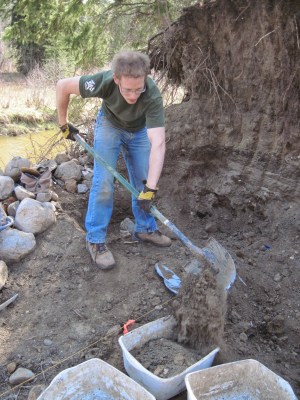
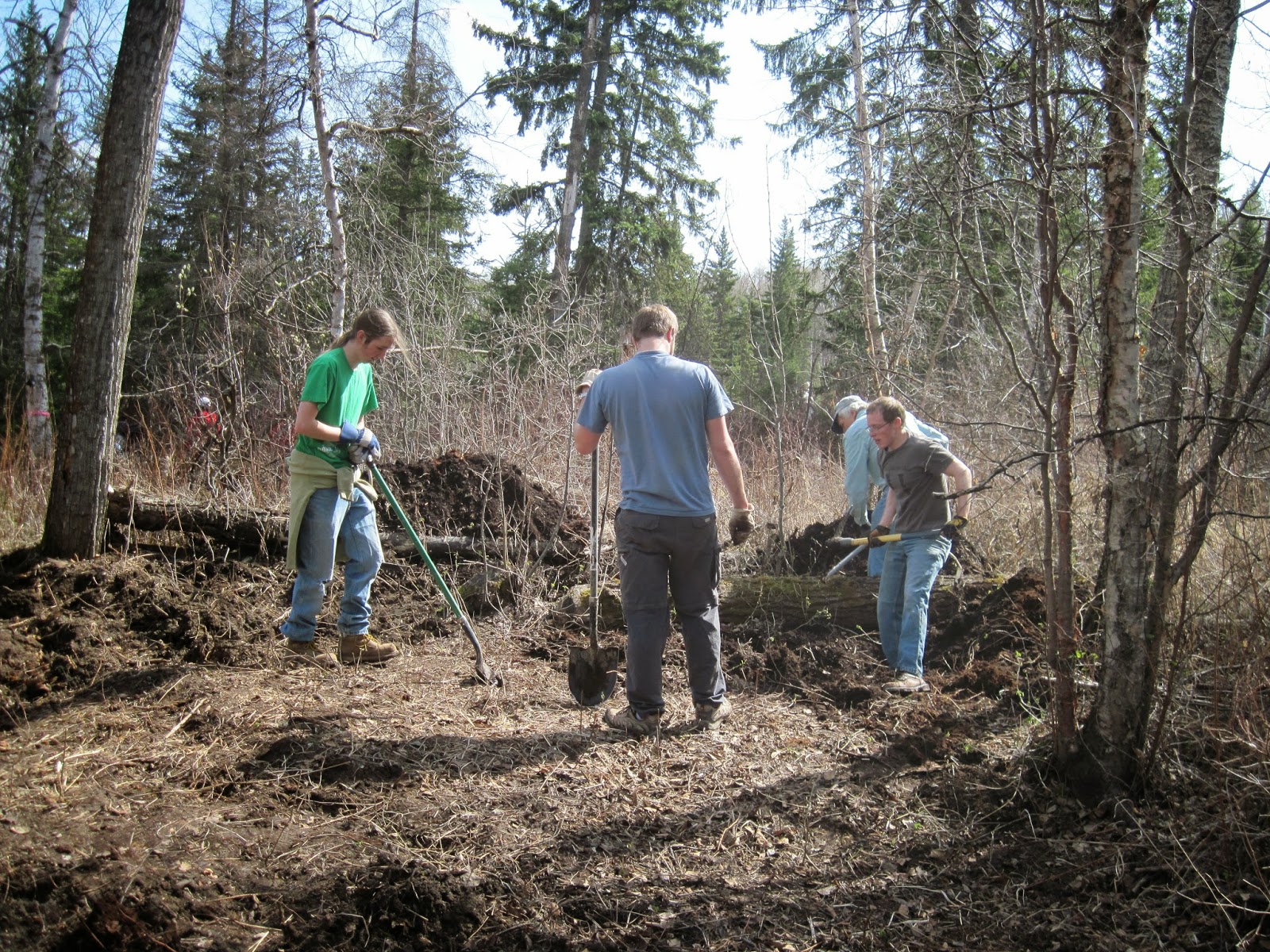
Ian is a shoveling machine!

Although I haven’t gone out to the bonebed for the full 3 weeks each year, I’ve tried to get out at least a little bit each year, even if it’s only for ‘overburden removal’ days. It’s amazing how much dirt we’ve moved since my first year there in 2007! Because the bonebed is located in a nature preserve, we need to be a bit careful with how we handle the overburden – we can’t let too much sediment get into the creek, and we also can’t just cover up existing plants. What we’ve taken to doing is removing the topsoil from a ‘meadow’ nearby, evenly spreading the relatively sterile Quaternary sands/gravels in the clearing, and then ‘replanting’ the topsoil overtop and sprinkling with local plant seeds. We dig in the early spring, and by July the area is so green you’d never even know we had disturbed it. The bonebed is a beautiful place to work – we see lots of interesting wildlife because of the stream nearby, the matrix surrounding the bones is soft and incredibly easy to work with, and the bones are plentiful.
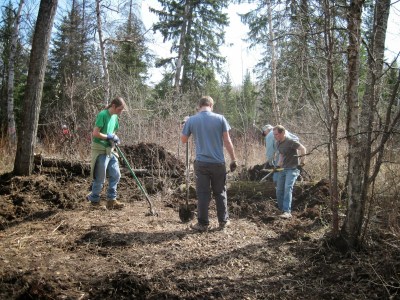
Clearing the ‘meadow’.
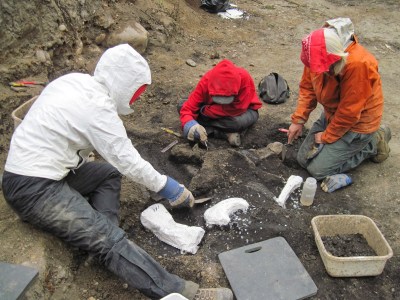
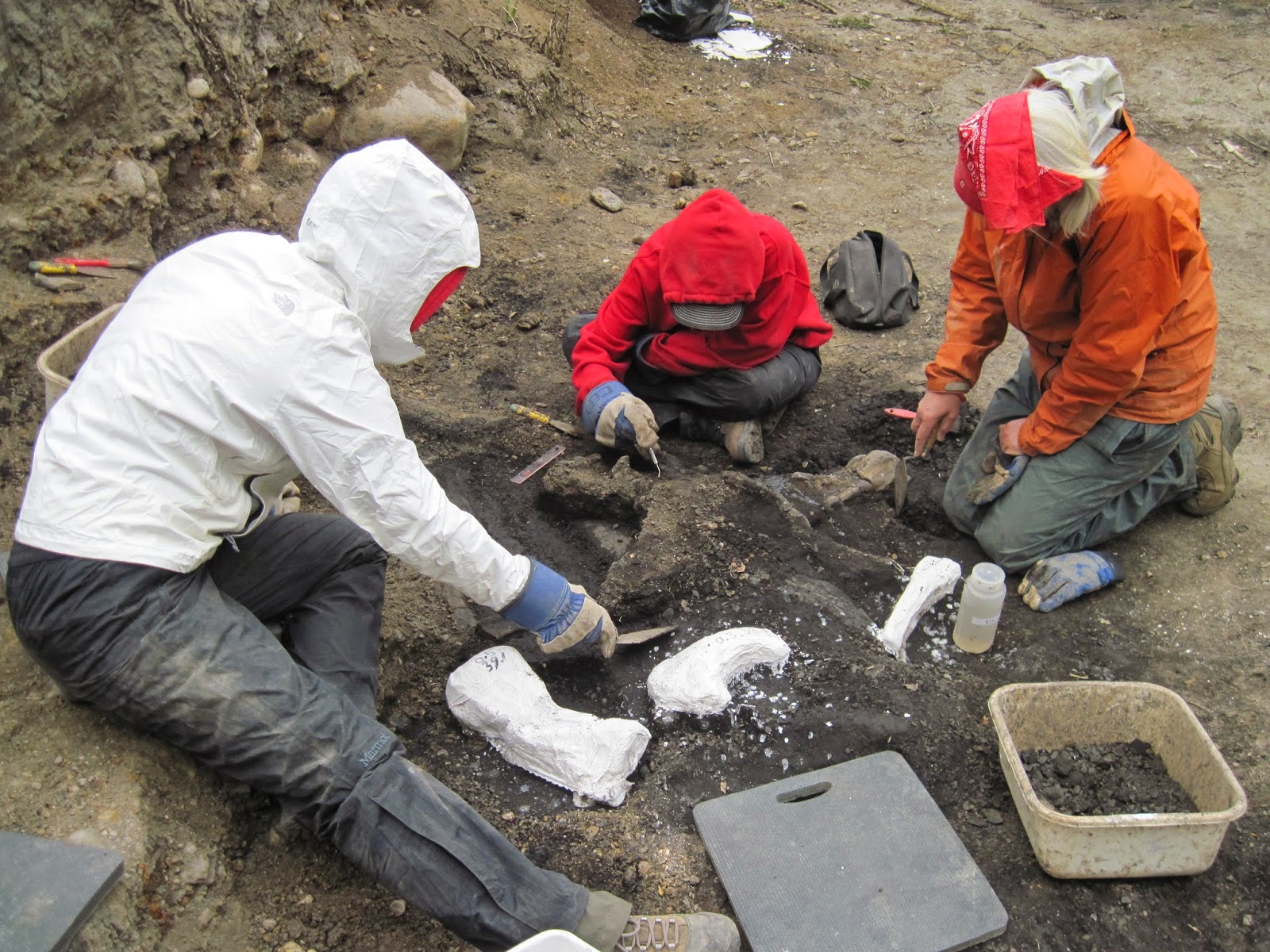
Sometimes it’s cold in April in Edmonton!

One of the things we mentioned in the press materials for the special volume is the presence of other dinosaur fossils throughout Edmonton and the surrounding areas. I have a hunch that if you dig pretty much anywhere in Edmonton, you’re probably going to hit a dinosaur bone at some point. There’ve been dinosaurs in the sewers and dinosaurs in the pipelines, and dinosaur bones pop up along the North Saskatchewan River with relative frequency. If you think you’ve found a dinosaur bone in Edmonton, make sure you understand the laws protecting fossils in Alberta – you need a permit to dig up fossils in Alberta, and fossils should be stored in accredited facilities like the Royal Tyrrell Museum of the University of Alberta Laboratory for Vertebrate Paleontology. But if you find something, tell the University of Alberta about it! Take a picture of what you found, and if you have the ability to mark the latitude and longitude with a GPS or your phone, do that too. You can get in touch with us via the DinoLab Facebook page. Maybe you will be the next person to stumble across a dinosaur in your city!

Not in Edmonton? The Danek Bonebed is where much of the taphonomy and fieldwork lesson for Dino 101 was filmed! The 4th session of Dino 101 started today, so go have a look if you’re interested in learning more about the bonebed.
A Body for Terrible Hands

It was a whirlwind year for dinosaur palaeontology, yet again. This week I’m writing about what I consider the most important news in my science field for 2014, for the Science Borealis blog carnival. There are so many great stories to choose from! Kulindadromeus and feather-like structures in ornithischians? The bizarro new reconstruction of a short-legged Spinosaurus? Both of those stories were pretty interesting, but my choice has to be the description of multiple skeletons of the Mongolian ornithomimosaur Deinocheirus. Continue reading

Know Your Ankylosaurs: Mongolia Edition!

After a whirlwind couple of weeks with a bunch of international travel, I’ve finally had a chance to sit down and write about my most recent paper on the ankylosaurs of the Baruungoyot and Nemegt formations of Mongolia. I’ve been interested in these ankylosaurs for a long time now, both because of their interesting cranial anatomy and their relationships to the ankylosaurs of North America (especially Alberta). So, here’s a plain-language summary of some complicated taxonomy! Hooray! Continue reading

Happy birthday, Dynamosaurus!

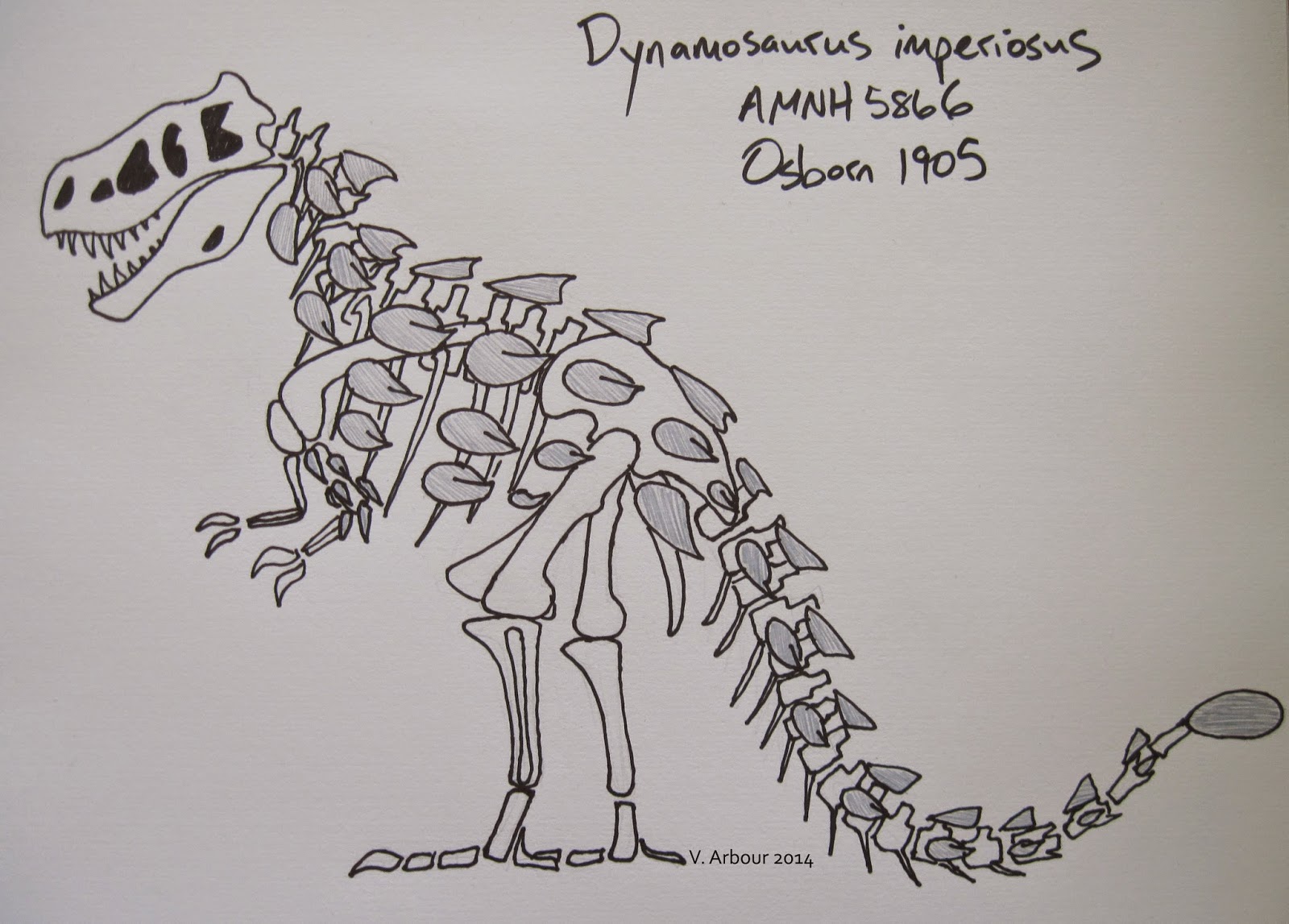
Today marks the auspicious anniversary of one of the most significant dinosaurs ever described: Dynamosaurus imperiosus! Surely one of the greatest and most fearful of all of the predatory dinosaurs, it stomped through the Maastrichtian of Wyoming and other parts of western North America. Dynamosaurus is noteworthy for its diagnostic dermal plates, which ran in transverse rows down its body and which formed a large knob of bone at the end of the tail. The function of these plates are still hotly debated, but they certainly gave Dynamosaurus a unique look among theropods.

I kid, of course, but I think Dynamosaurus deserves a mention on its more famous relative’s naming day as well. Tyrannosaurus, Dynamosaurus, and Albertosaurus were all named by Osborn in 1905 and although Tyrannosaurus and Albertosaurus have proven to be distinct from each other, Dynamosaurus turned out to be a junior synonym of Tyrannosaurus. If Tyrannosaurus hadn’t appeared first in the publication, good ol’ T. rex might not be the household name it is today and we might all stand and gape at Sue or Scotty or Stan the Dynamosaurus. The distinctive osteoderms are probably Ankylosaurus osteoderms, although I haven’t attempted to track down the specimens myself or any papers that discuss their identity, so I suppose they could also be Maastrichtian nodosaurid osteoderms. Updated 2 October 2015: Last year when I fired this off quickly I completely forgot that the Dynamosaurus osteoderms are figured in Ken Carpenter’s 2004 Ankylosaurus paper!

Anyway, happy birthday, Dynamosaurus. I still like you, even if you never existed.

Osborn HF. 1905. Tyrannosaurus and other Cretaceous carnivorous dinosaurs. Bulletin of the AMNH 21: 259-265.

Osborn HF. 1906. Tyrannosaurus, Upper Cretaceous carnivorous dinosaur (second communication). Bulletin of the AMNH 22:281-296.

Discovering Dinosaurs, Revealing Teamwork

It’s a wonderful feeling when you get to be part of something that celebrates teamwork.

Yesterday was the opening reception for the University of Alberta’s new exhibit, Discovering Dinosaurs: The Story of Alberta’s Dinosaursas told through U of A Research. The exhibit features the work of almost all of the current people in Phil Currie’s lab, as well as many of our alumni and colleagues.

Continue reading

What’s new with Dino 101?

The third offering of Dino 101 kicked off again last week, and we’re already into our 2nd lesson, on taphonomy and fossilization. Here’s a quick update for what’s new this time around!

  • A new section about the palaeobiogeography of dinosaurs was filmed, including lots of new scenes at the Royal Tyrrell Museum
  • We get to show off the Edmontosaurus with the “cock’s comb”!
  • We added in some more information on non-dinosaurian critters from the Mesozoic throughout the course, including pterosaurs, marine reptiles, and early mammals
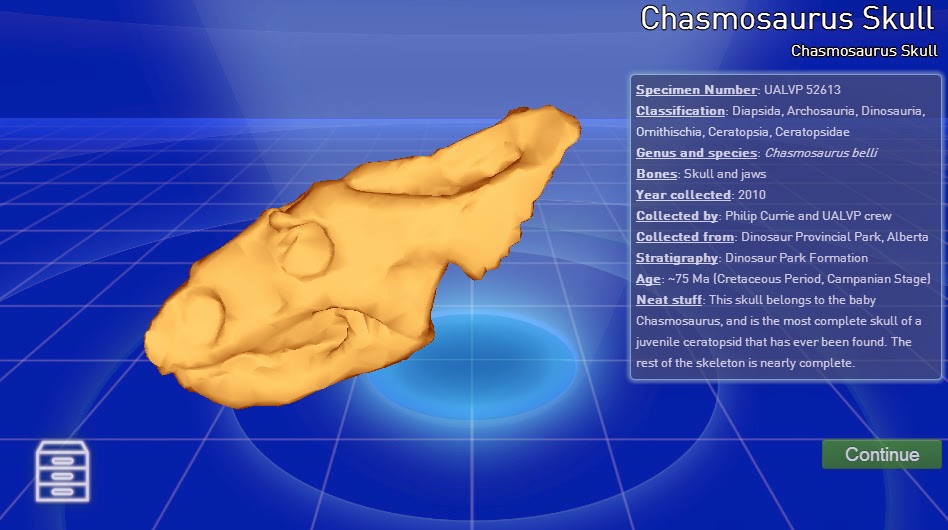
  • I made a bunch of new 3D models for our fossil viewer interactive – now you can enjoy the baby chasmosaur’s skull in three dimensions of terror and amazement!

These are all in addition to some of the snappy upgrades to version 2, like the section on the baby chasmosaur and the fancier study guides.

So far there’s more than 11 000 students registered in Dino 101 v3, which means we’ve now reached nearly 50 000 students from around the world! The on-campus versions of Dino 101, including the flipped/blended PALEO 201, are also underway, and the PALEO 201 team is making some new activities about dinosaur footprints and trackways. I’m sure they’re going to have a great time!

You can join the fun at Dino 101 for free – register now at Coursera! And you can follow the course in its various social media forms, including Facebook and Twitter.