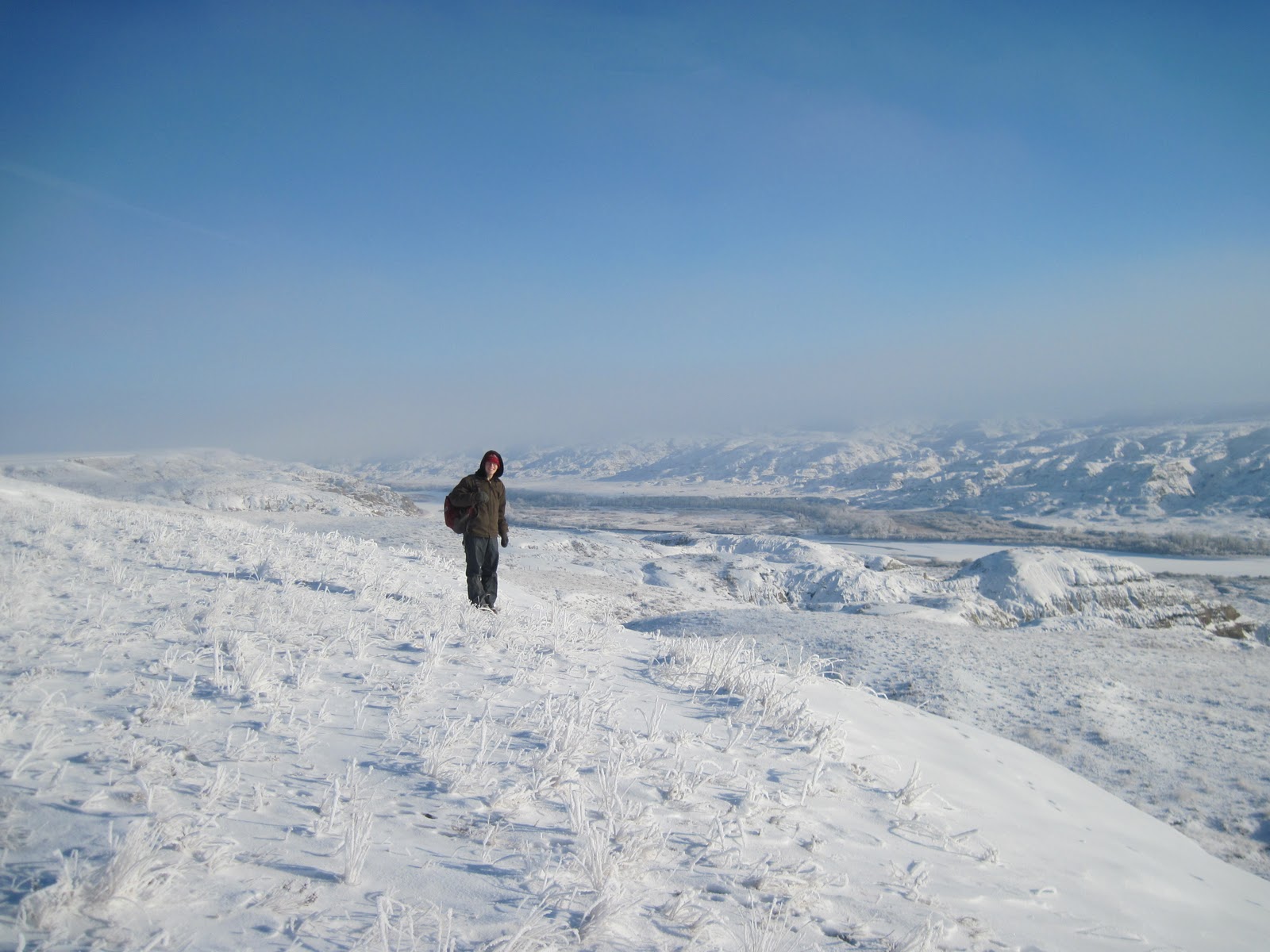
A diversion today before I finish my Argentina posts, since we did something really cool (cool! get it? ha!) yesterday. Continue reading
A diversion today before I finish my Argentina posts, since we did something really cool (cool! get it? ha!) yesterday. Continue reading
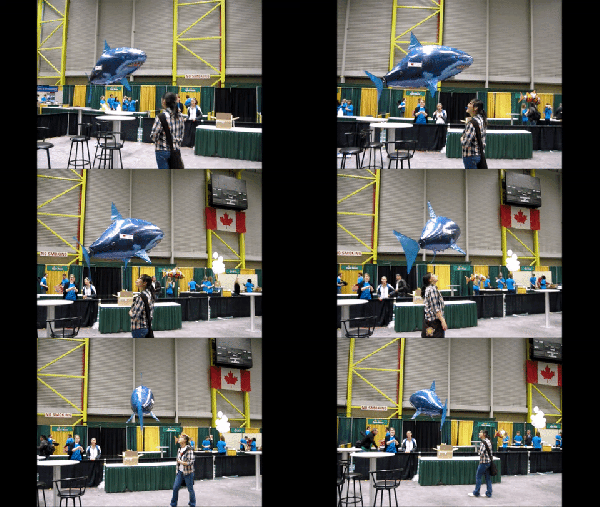
A shark flew! Continue reading

After the talks had ended on the first day of the Hadrosaur Symposium, I had a bit of free time to visit the galleries, which I hadn’t seen in about a year and a half. I was expecting the Alberta Unearthed: 25 Years of Discovery exhibit, but was delighted by this unexpected surprise: a short, but excellent, exhibit on women in palaeontology!

Located on the ramp up to the Darwin exhibit after you exit Lords of the Land, the exhibit consists of 19 or 20 profiles of female palaeontologists. Each framed image included a photo, a brief biography, and an image of a representative specimen or field locality (example above featuring Dr. Betsy Nicholls). I was particularly pleased to see that the Tyrrell had attempted to include women of many different races, nationalities, ages, and career stages, studying a variety of taxa and using many different techniques.
I was particularly intrigued the quote from Naomi Oreskes below the exhibit title, “The question is not why there haven’t been more women in science, the question is rather why we have not heard more about them.” Dr. Oreskes is a historian of science at University of California at San Diego, and her paper “Objectivity or Heroism? The Invisibility of Women in Science” is well worth a read (and really, go read it – palaeontology is all about heroism). It’s a sentiment that I share and that I’ve discussed before: although there may not be an equal ratio of women:men in palaeontology yet, we’re definitely getting closer, so why don’t we seem to be as visible as the men? It is certainly up to us to speak up for ourselves, but it’s really, really nice to see a major institution like the Tyrrell stepping up and hosting an exhibit like this.
I hope that at least some people will take the time to stop and read some of the biographies on their way to the fossils – if I had one complaint, it is that because the exhibit consists only of pictures in a hallway leading to the main exhibits, that it may be easily passed over. If specimens had been incorporated somehow, as they were with the Great Minds, Fresh Finds exhibit (showcasing the work of the museum’s scientists), that might have been able to grab more attention. Sadly, most people walking through this hallway while I was present would pause for a moment at the entrance, but then skip on through the rest of the exhibit. I realize that space constraints probably would not permit anything more than what they have done, however, and the exhibit is pleasant to look at and rewarding for those who take some time to read the biographies. In particular, I hope school groups take advantage of it and that teachers incorporate questions about female scientists into their activities.
I’ll finish here with a very nice video produced by the Tyrrell, featuring Dr. Don Brinkman discussing the work of Dr. Betsy Nicholls, who was a curator at the museum until her death in 2004 and whose work is featured in the Triassic Giant gallery.
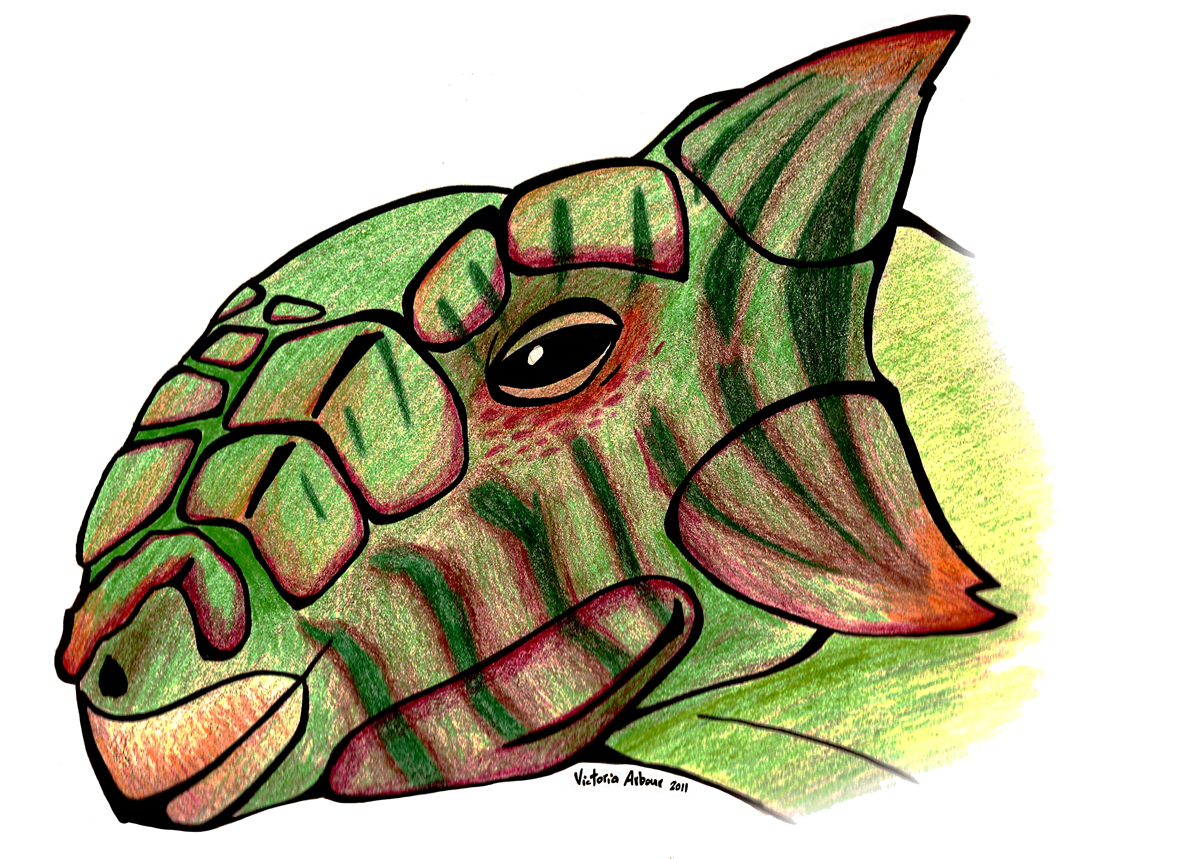
Say hello to Euoplocephalus, the best known ankylosaur you’ve never heard of. Besides Pinacosaurus from Mongolia and China, there are more specimens referred to Euoplocephalus than to any other ankylosaurid, and it is certainly the most well represented ankylosaurid from North America. Yet Euoplocephalus often gets overlooked because its younger cousin is THAT ankylosaur, the one that starred at the World’s Fair and was in Jurassic Park III and Clash of the Dinosaurs and Dinosaur Revolution and gets all the cool toys and, you know, is the namesake of the group. You know, Ankylosaurus. Well, hopefully you’ll be hearing more from me about Euoplocephalus over the coming months. Today we’ll be picking its nose. Continue reading
Living in Edmonton means I’m in close proximity to the dinosaur capital of Canada, Drumheller, and the wonderful Royal Tyrrell Museum. Last week the U of A crew headed down to the Hadrosaur Symposium, a wonderful event by all accounts with lots of interesting talks and good conversation. I won’t report on the science presented as much of the research is as yet unpublished (although look out for the eventual symposium volume), but thought I would share a few photos and links to symposium goodies. Continue reading

For the last several years, our lab has run a volunteer fossil prep program on weekday evenings. As the school year starts again, I thought I’d share our recruitment poster for this year! Continue reading
The Canadian Paleontology Conference I attended over the weekend was held at the University of British Columbia campus in Vancouver, and the public lecture, talks, posters, and banquet were all held in the Beaty Biodiversity Museum.
I’m late to the party again with the recent spate of dino documentaries, but I thought I’d review a couple here on the blog over the next few weeks. Today I wanted to take a look at Dino Gangs, a documentary featuring my PhD supervisor Dr. Phil Currie as well as several scientists from the Royal Tyrrell Museum.
I almost forgot to mention a fun bit of news coverage that happened during our Grande Prairie fieldwork. The first Pachyrhinosaurus skull to be prepared from the Wapiti River bonebed was nicknamed Hugo (for I hope obvious reasons…). It is on loan to the Grande Prairie Regional College for the next few months and is on display in a case beside their bookstore. The Grande Prairie Daily Herald-Tribune did a nice little piece on the new display and features a completely awesome photo of Phil Currie and prep technician Susan Kagan.
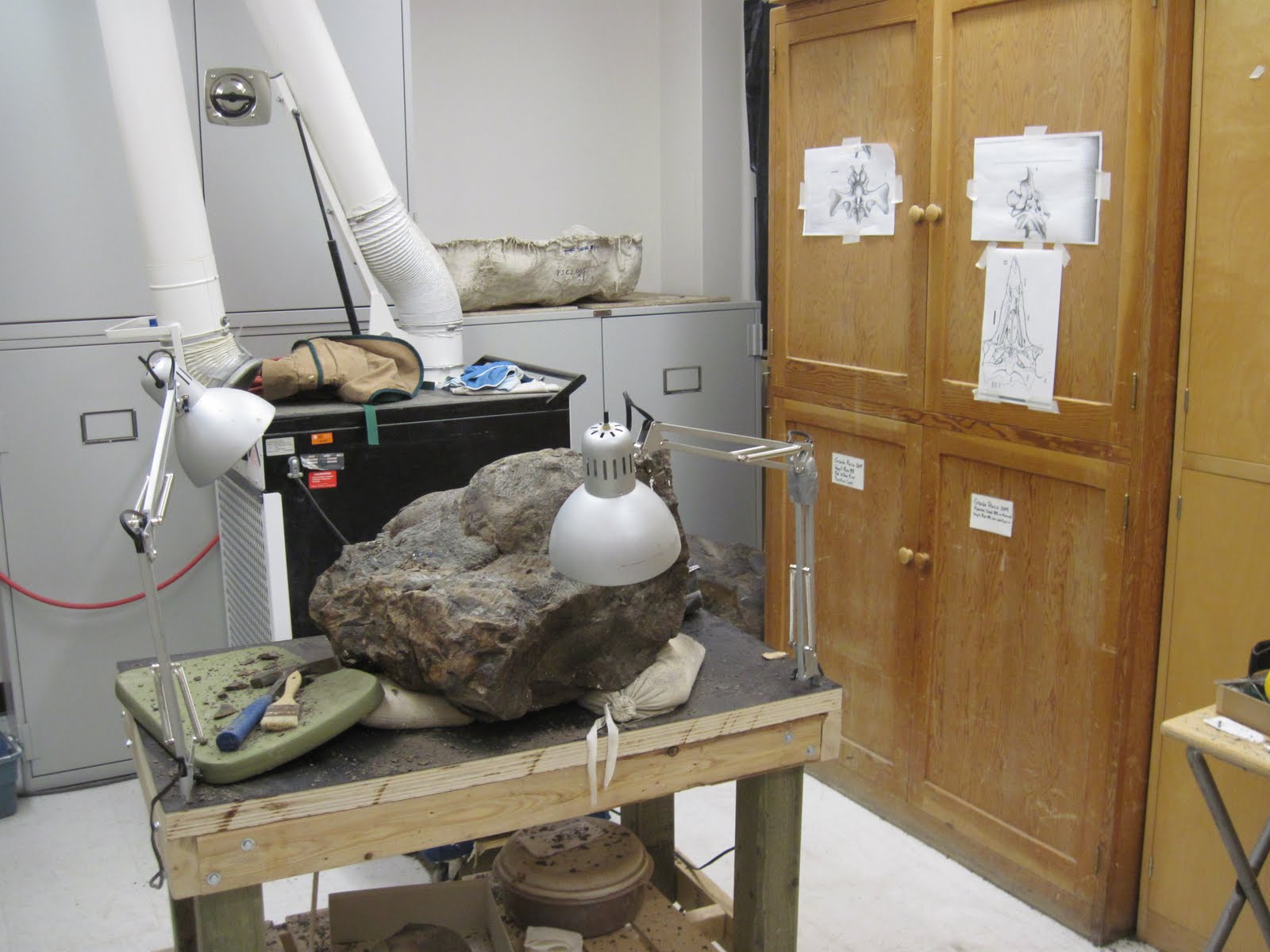
Susan has been pummeling her way through the hard ironstone nodules that enclose the Wapiti River skulls – here is a photo from last fall of progress on the next skull to be prepared. It’s come a long way since then, but it takes a long time to get these guys ready.
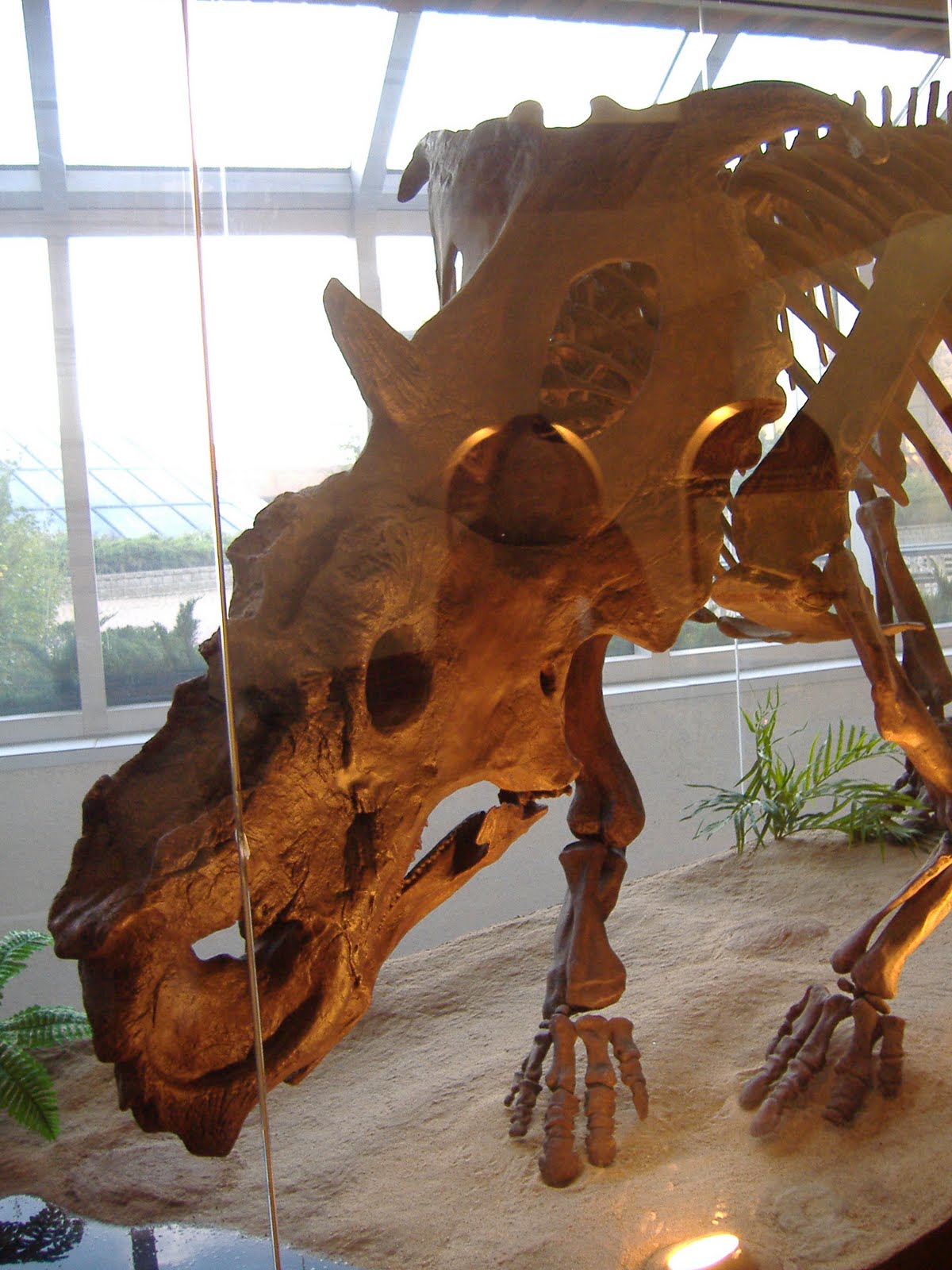
Grande Prairie Regional College also has a full skeletal mount of Pachyrhinosaurus lakustai, the species known from the Pipestone Creek bonebed.
Ok, that should actually be the end of Pachyrhinosaurus updates for the next little while…
The area around Grande Prairie is rich with dinosaur fossils, although the setting is somewhat different than you might expect if you’re used to working in badlands like Dinosaur Provincial Park. In Grande Prairie, the only badlands outcrops are the Kleskun Hills, and most other sites are found along creeks and river valleys. I spent the bulk of my time at the Wapiti River bonebed, but helped out a little bit at the concurrent excavation at Pipestone Creek. Continue reading
 pseudoplocephalus