Here’s a few more shots from the University of Alberta’s fieldwork at the Wapiti River bonebed near Grande Prairie. Fieldwork wrapped up on Friday and the fossils are now at the U of A awaiting preparation.
Alberta
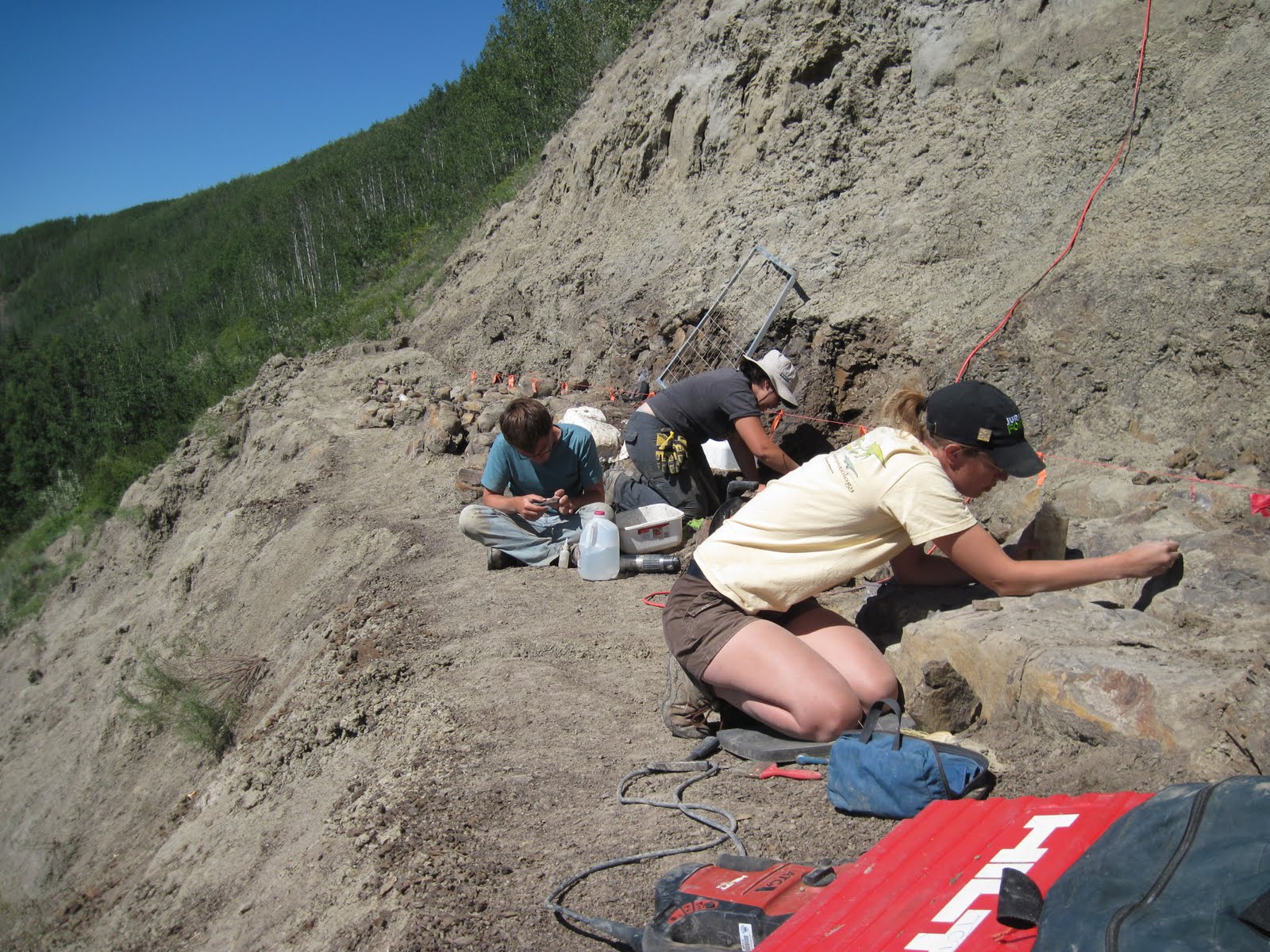
Wapiti River fieldwork, part 1
Hi everyone! It’s been a while since my last post as I catch up on research and get ready for a brief stint of fieldwork in Grande Prairie. I’ve been working at the Wapiti River bonebed for the last few days, where we are excavating a Pachyrhinosaurus bonebed. Here is a quick update of what we’ve been up to.
The bonebed is on a steep river side, and we have cut a long but narrow ledge into the cliff. The view is quite spectacular and we occasionally see deer and bears on the other side of the river.
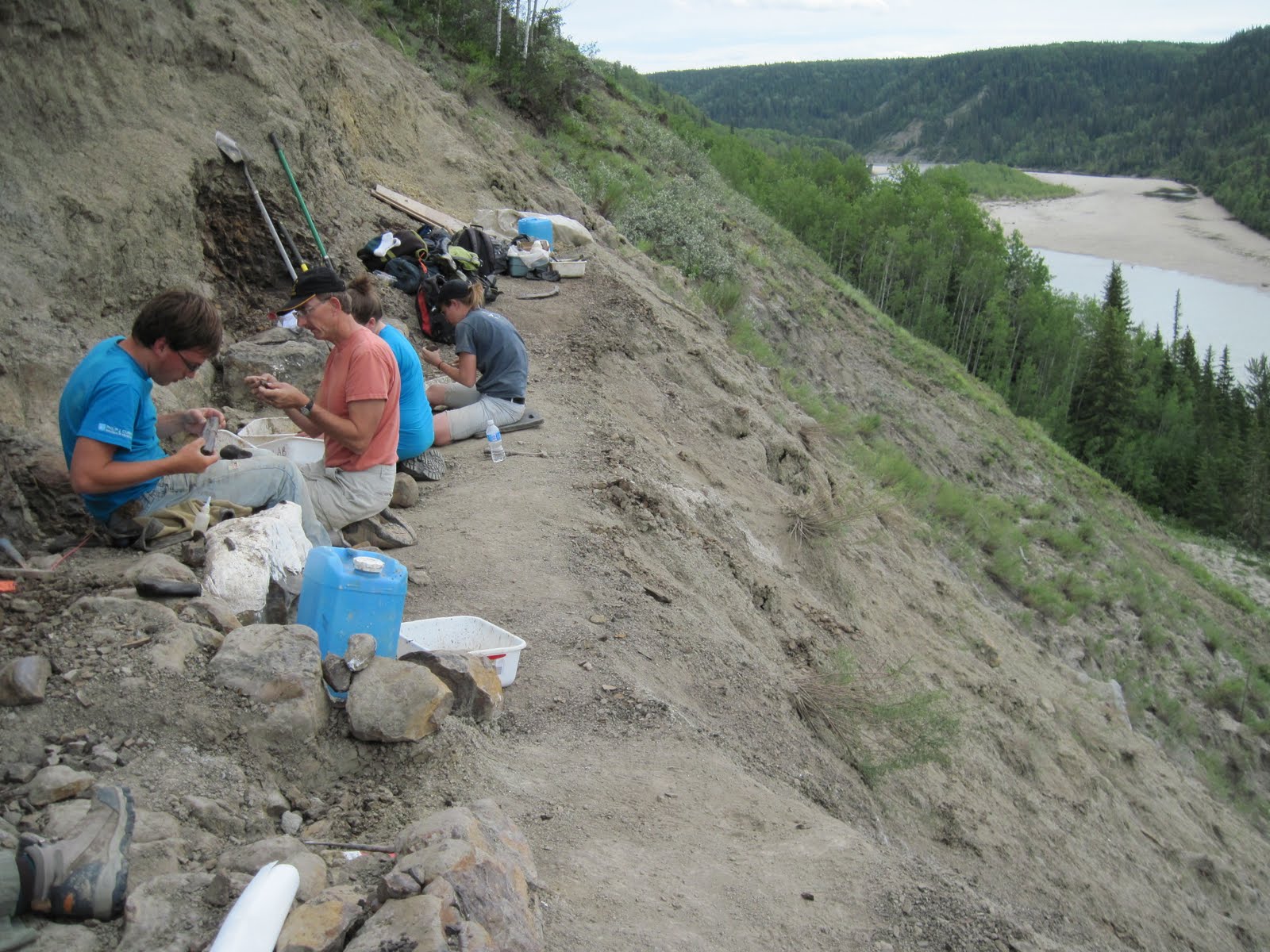
You know field season is well underway when…
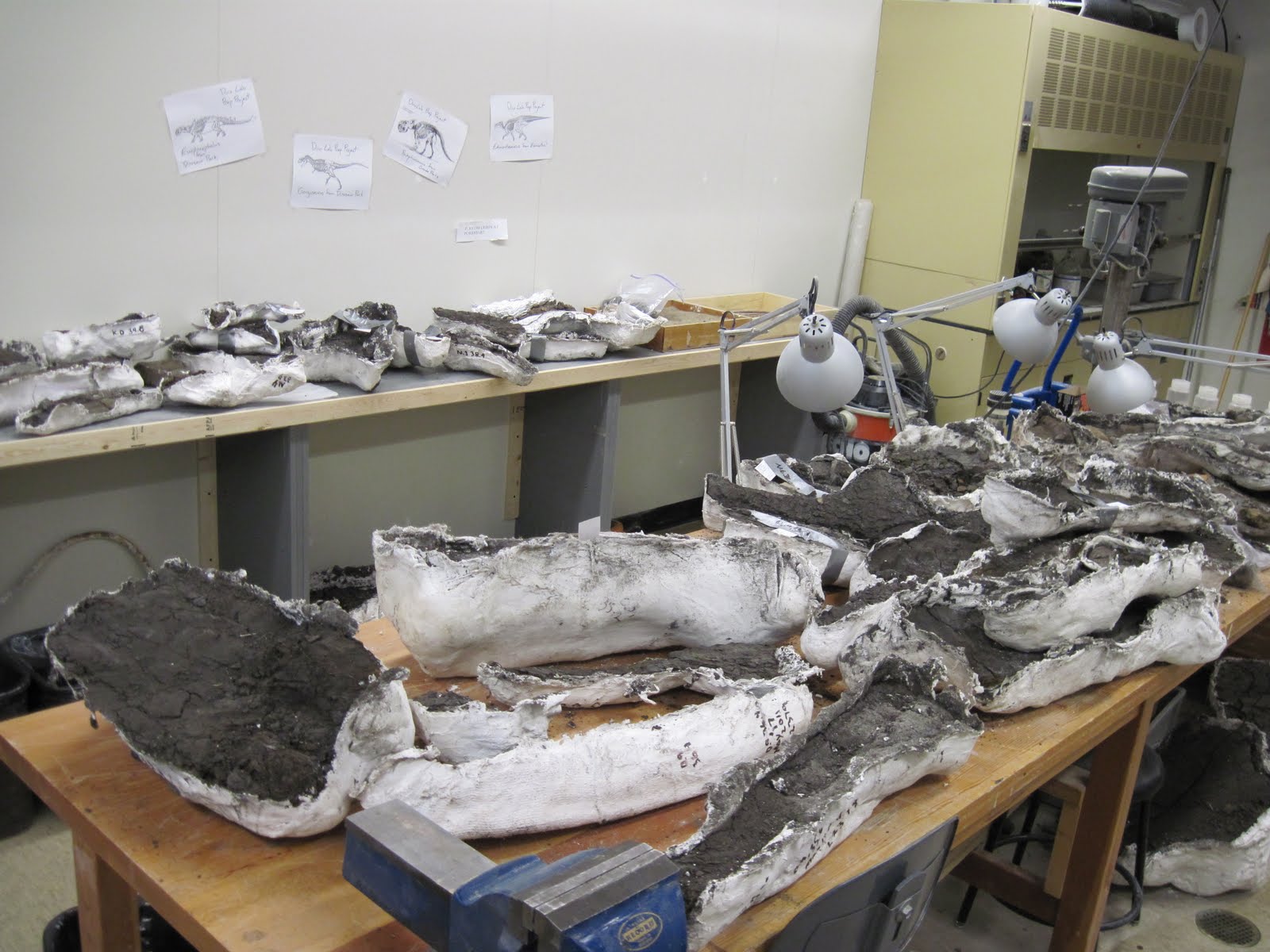
Stegoceras is everywhere!
And by everywhere, I mean in two PLoS ONE papers this week. (But that’s pretty good!) Stegoceras is the focus of a study on cranial ontogeny in pachycephalosaur skulls, and in head-butting in pachycephalosaurs and artiodactyls.

A Return Visit to the Jurassic Forest
Last fall I visited the newly-opened Jurassic Forest and enjoyed it very much. However, because winter arrives early in Edmonton, the leaves had already fallen and the dinosaurs were quite snowy! Today I spent some time showing off ankylosaur fossils and casts with visitors at the forest, and had a chance to see the dinosaur trails in their summer greener. Here’s a few new photos from the forest!
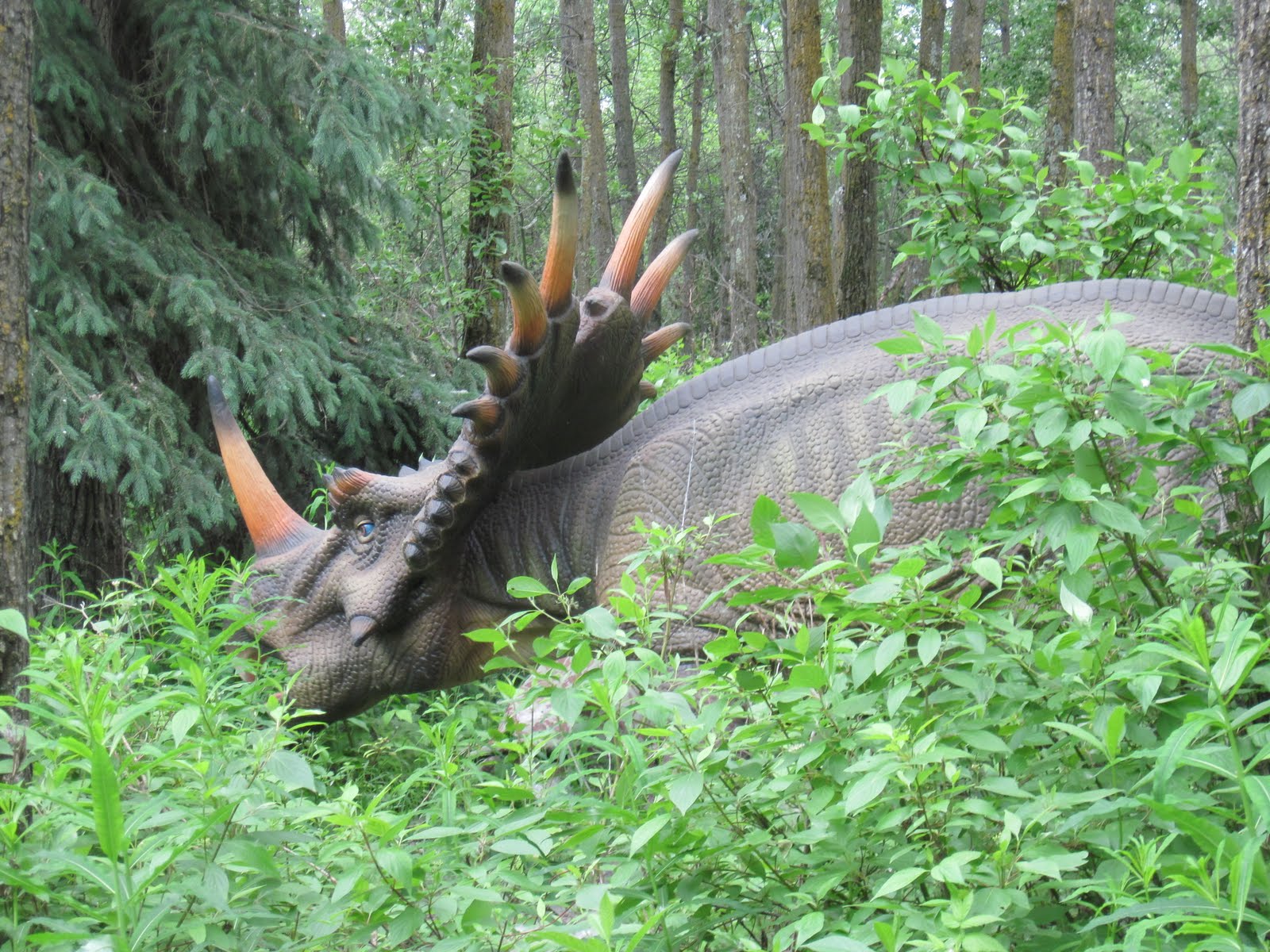 Styracosaurus looks like it’s in its natural environment. Continue reading
River of Death gets a name change.
I haven’t talked a whole lot here about the Pipestone Creek Dinosaur Initiative or the proposed River of Death and Discovery Museum. The area around Grande Prairie, Alberta, about a five hour drive northwest of Edmonton, is rich in Late Cretaceous fossils. The most famous locality is Pipestone Creek, where hundreds of the horned dinosaur Pachyrhinosaurus perished millions of years ago.
For nearly ten years, a dedicated group of folks in Grande Prairie have been trying to get their own palaeontology museum off the ground. The working name for the museum was the River of Death and Discovery Dinosaur Museum. However, the word ‘death’ in the museum name has made it difficult for the museum to get as many sponsors as they would have liked.
And so it was announced yesterday that the museum would be renamed to the Philip J. Currie Dinosaur Museum! You can read more about the name change at the Grande Prairie Daily Herald-Tribune’s article.
There are some exciting things coming up this summer for the museum foundation, including the Akroyd Family and Friends Dinosaur Ball (yes, those Akroyds!), and the University of Alberta will return to our annual excavations at the Wapiti River Pachyrhinosaurus bonebed and the newly-reopened Pipestone Creek bonebed.
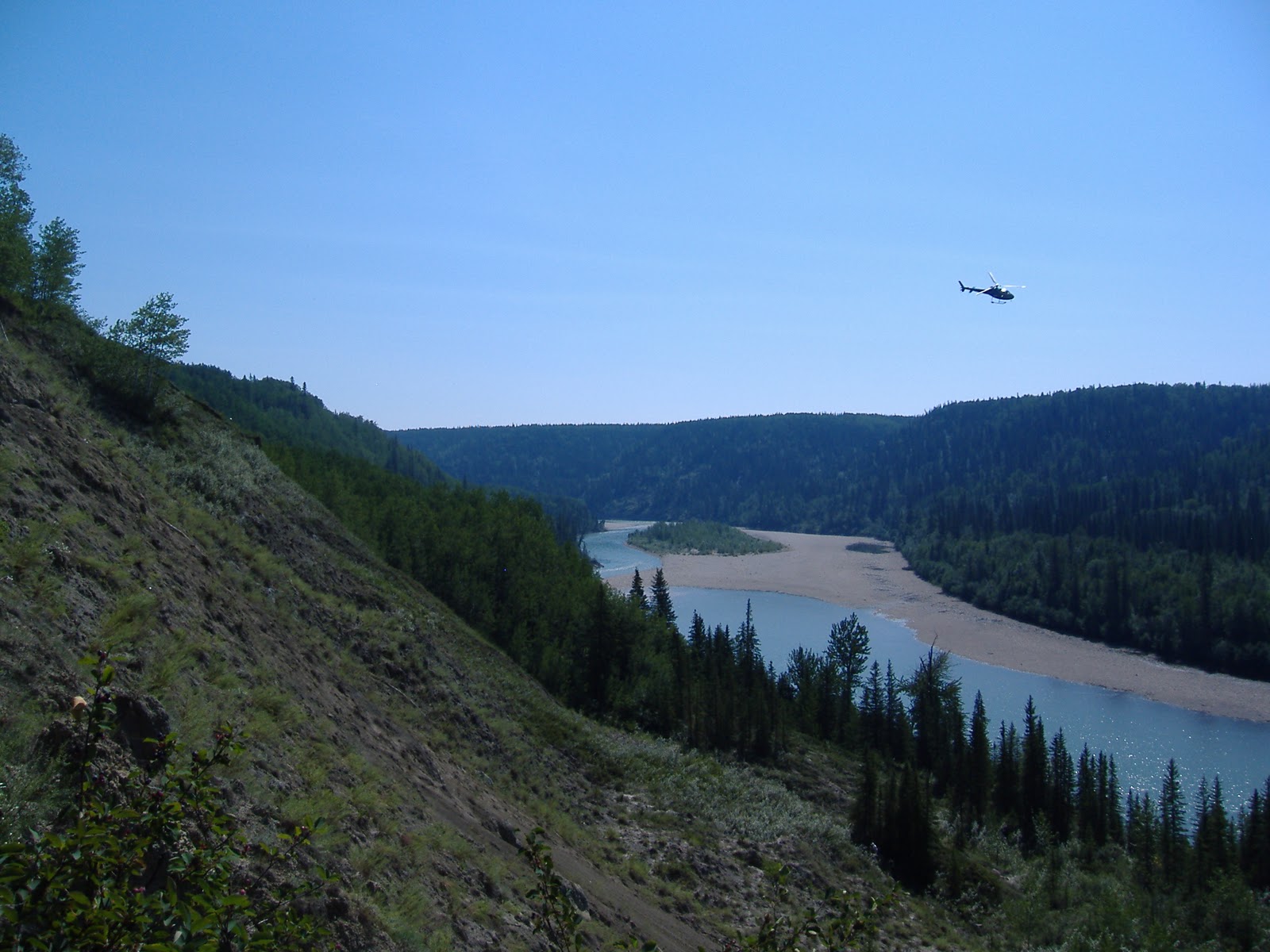
A helicopter approaches at the Wapiti River bonebed during the 2009 excavation. Helicopter lifts are the only way the large blocks can be brought up to the edge of the river valley.
Fossils in the Tar Sands.
A short but exciting post today!
“More fossils than fuel: dinosaur bones discovered.”
Shawn Funk, a shovel operator at Suncor Energy Mine near Fort McMurray, Alberta, found the remains of a possible ankylosaur earlier this week. The Royal Tyrrell Museum has been up to investigate and has posted some tantalizing photos on their Facebook page.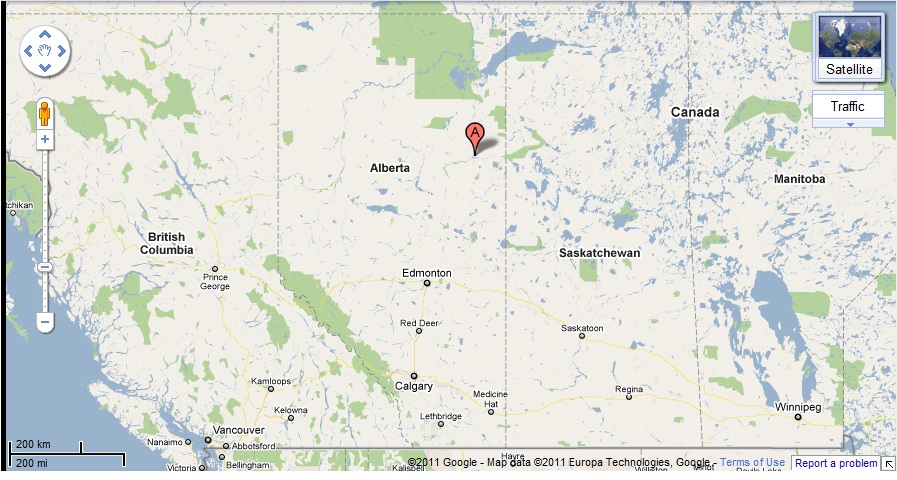 Fort McMurray, for non-Canadians, is where all of the oil comes from.
This would not be the first vertebrate fossil discovered in the oil sands. The ichthyosaur Athabascasaurus bitumineus was named in 2010 by Patrick Druckenmiller and Erin Maxwell, and was found in a Syncrude Mine near Fort McMurray. The specimen was featured in the Royal Tyrrell Museum’s 25th Anniversary exhibition Alberta Unearthed – it is still oozing tar. It’s a beautiful specimen.
The well-known dinosaur-bearing formations of Alberta, like the Horseshoe Canyon Formation, Wapiti Formation, and of course the Dinosaur Park Formation, are all Late Cretaceous deposits. This new dinosaur, however, is from the Early Cretaceous, and is therefore likely to be quite different from the ankylosaurs known from southern Alberta. Ankylosaurs from this time period include lots of nodosaurs, like Sauropelta from Wyoming and Utah, Pawpawsaurus and Texasetes from Texas, and Cedarpelta (which may actually be a shamosaurine ankylosaurid – see Carpenter et al. 2008) from Utah. I will certainly be very interested to hear more about this new find! And great job to the folks at Suncor who spotted the fossil and called in the Tyrrell so quickly.
Papers!
Druckenmiller PS, Maxwell EE. 2010. A new Lower Cretaceous (lower Albian) ichthyosaur genus from the Clearwater Formation, Alberta, Canada. Canadian Journal of Earth Sciences 47: 1037–1053.
Carpenter K, Bartlett J, Bird J, Barrick R. 2008. Ankylosaurs from the Price River Quarries, Cedar Mountain Formation (Lower Cretaceous), east-central Utah. Journal of Vertebrate Paleontology 28: 1089–1101.
 pseudoplocephalus