It was a whirlwind year for dinosaur palaeontology, yet again. This week I’m writing about what I consider the most important news in my science field for 2014, for the Science Borealis blog carnival. There are so many great stories to choose from! Kulindadromeus and feather-like structures in ornithischians? The bizarro new reconstruction of a short-legged Spinosaurus? Both of those stories were pretty interesting, but my choice has to be the description of multiple skeletons of the Mongolian ornithomimosaur Deinocheirus. Continue reading
http://schemas.google.com/blogger/2008/kind#post
Know Your Ankylosaurs: Mongolia Edition!
After a whirlwind couple of weeks with a bunch of international travel, I’ve finally had a chance to sit down and write about my most recent paper on the ankylosaurs of the Baruungoyot and Nemegt formations of Mongolia. I’ve been interested in these ankylosaurs for a long time now, both because of their interesting cranial anatomy and their relationships to the ankylosaurs of North America (especially Alberta). So, here’s a plain-language summary of some complicated taxonomy! Hooray! Continue reading
Meeting the Urvogel

Greetings from Deutschland! I’ve returned from the Society of Vertebrate Paleontology annual meeting in Berlin. Here’s a couple of snapshots from the Museum fur Naturkunde, where the welcome reception was held last week. Giraffatitan (nee Brachiosaurus) brancai supervised the shenanigans in the main entrance hall.
Did the sauropod Leinkupal survive the End Cretaceous mass extinction?
No.
Discovery News has a short video up discussing a new paper in PLOS ONE, Gallina et al.’s “A diplodocid sauropod survivor from the Early Cretaceous of South America“. I think it is really great that they want to showcase this interesting new find! But the DNews report leaves an awful lot to be desired. Continue reading
The Systematic Position of the King of the Monsters
A few weeks ago I was really excited to be contacted by Danielle Venton, a freelance writer working on a piece for Popular Mechanics about the biology of Godzilla! With a new big-screen appearance by Godzilla right around the corner, I thought this was a fun exercise in speculative biology. The piece is out now at Popular Mechanics and I highly recommend checking out “The Impossible Anatomy of Godzilla“. Continue reading
Nitpicking Euoplocephalus
A friend of mine posted this amazing video on Facebook, and I must share it!
I really like how the Geek Group have obviously put a lot of time into researching the anatomy of the dinosaurs they’re featuring, and the stylized animations are super cool. I’m obviously biased towards this episode, but I’m looking forward to seeing more!
For those who are interested in learning more about the anatomy of Euoplocephalus, may I offer these blog posts?:
Baron von Nopcsa, Scolosaurus, and the spiky-clubbed ankylosaur.
Who-oplocephalus
Who-oplocephalus: Is Euoplocephalus ‘real’?
Who-oplocephalus: Heads for tails.
Who-oplocephalus: The Fellowship of the Half Ring
Who-oplocephalus: Everything old is new again.
And for the keeners, you can also check out a lecture I did for the Royal Tyrrell Museum’s lecture series via their YouTube page!
Bonus: The Dinosaur Toy Blog also enjoys nitpicking the accuracy of dinosaur toys!
Scaling Up
Let’s turn our attention from hadrosaur skin to ankylosaur skin, a topic which has received surprisingly less attention in the published literature than I would have thought. I should qualify that statement, however, by saying that by ‘ankylosaur skin’ I mean ankylosaur skin impressions, because ankylosaur dermal elements are well known and the focus of many a paper – I refer of course to osteoderms, which form within the dermis of the skin and which give ankylosaurs their spiky and armoured appearance.
For a couple of years now I’ve been keeping notes about occurrences of skin impressions in ankylosaurs, which eventually lead to a paper by myself, Mike Burns, Phil Bell, and Phil Currie. We reviewed the morphology of scale patterns in the few specimens that preserve skin, and found that there were some intriguing differences in scalation between different ankylosaurs.
Cock-a-doodle-doo
I’ve finally got the time and gumption to sit down and write again, so let’s do some research blogging! And let’s show some skin while we’re at it!
The first paper I’ll talk about is not one that I’m lead author on, but which was a really fun project to be involved in. This was the description of a super cool specimen of a hadrosaur from the area around Grande Prairie with some impressive skin impressions. UALVP 53722 was collected as a large block that had fallen along the creekside. Unfortunately, the rest of the skeleton could not be located, which might mean it’s still in situ somewhere with nothing visible, or it had already broken apart into unrecognizable pieces. The block preserves the back of the skull with the neck arched over the shoulders, the classic ‘death pose’ seen in many dinosaur skeletons. Most of the skull is missing, but what is present shows that it is an Edmontosaurus regalis, the slightly older species of Edmontosaurus.

Flat-headed Edmontosaurus at the Denver Museum of Nature and Science.
Back to Hwaseong
This week I’ve been in Hwaseong city, Korea for the Hwaseong International Dinosaurs Expedition Symposium. I started this blog back in 2010 as a way to document my experiences working in the dino lab in Hwaseong, and so it was wonderful to be able to return more than three years later and see what’s new. The symposium highlights research following the conclusion of the five-year Korea-Mongolia International Dinosaur Project. Many thanks to Dr. Yuong-Nam Lee, the city of Hwaseong, and all of the other organizers and staff who invited us to present our work at this excellent conference!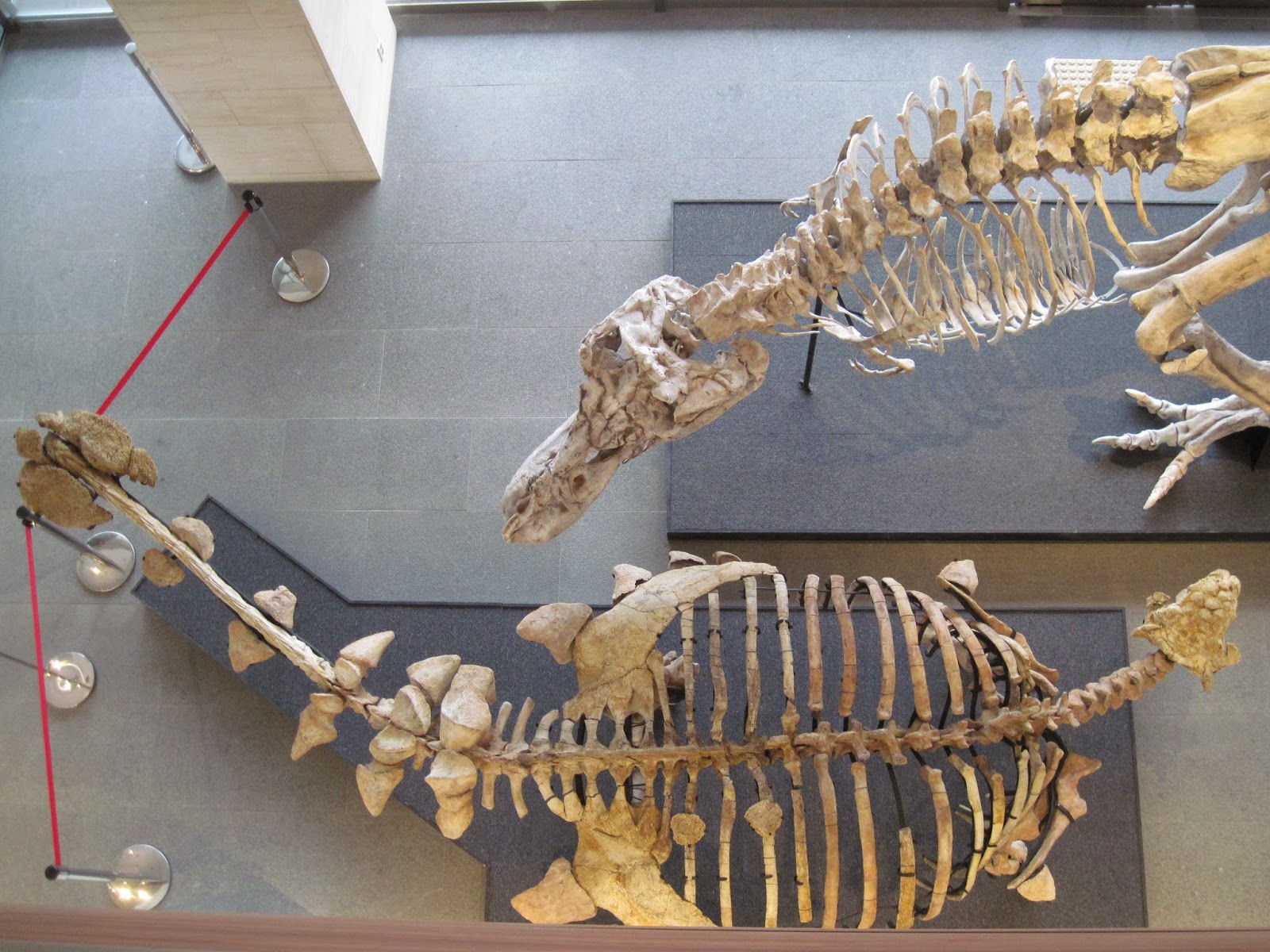 It was a special treat to see the new ankylosaur skeleton prepared and mounted in the lobby of our hotel! Watch out Tarbosaurus, you’re about to get a face full of tail club.
SVP Report 3: the Page Museum
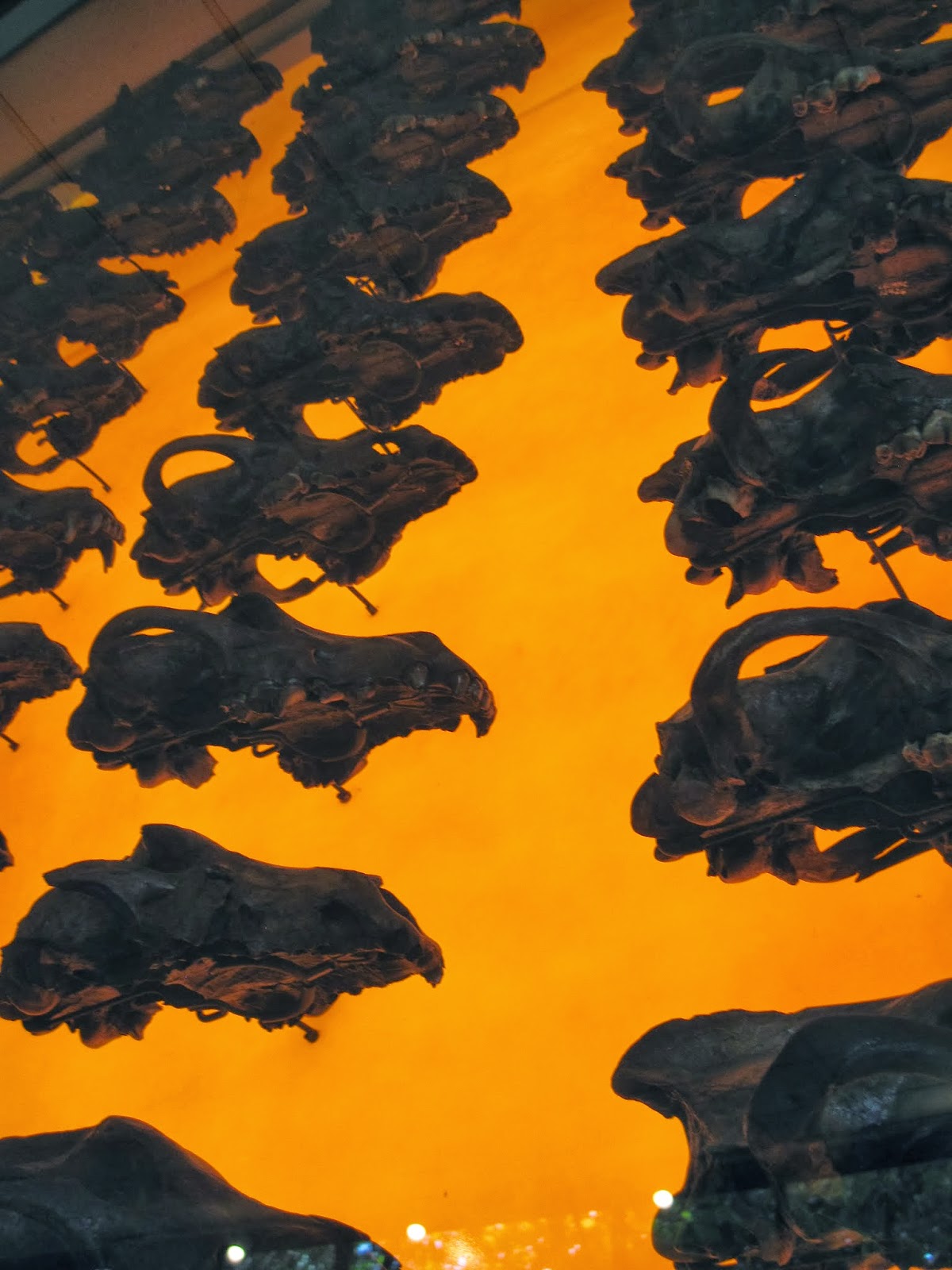
For the final entry in this year’s SVP recap, let’s head over to the Page Museum, which showcases specimens collected right outside its front doors in the La Brea tar seeps. Continue reading
 pseudoplocephalus