Big screaming hairy dinosaurs.

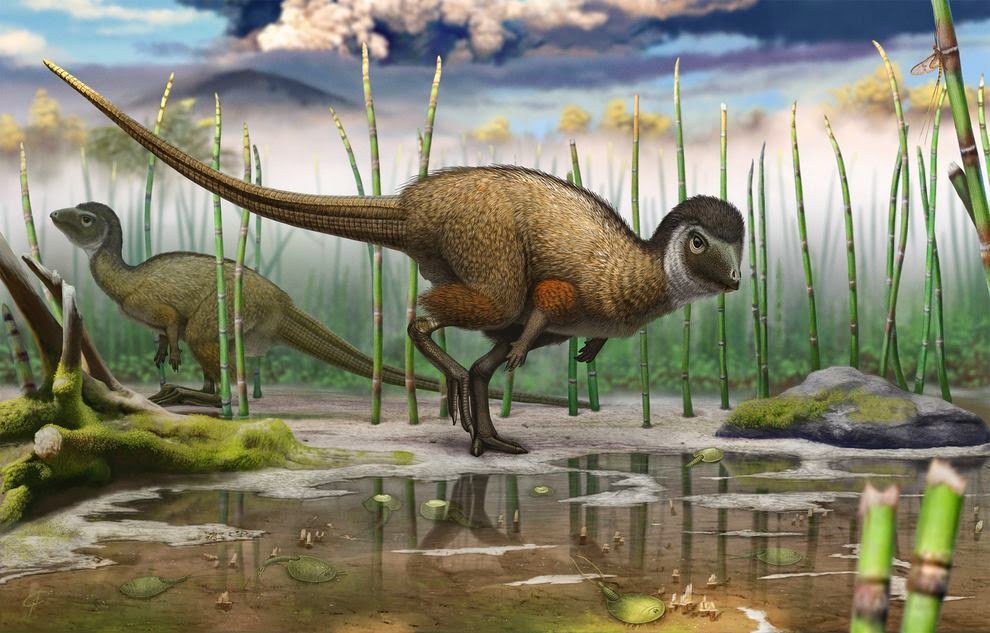
Kulindadromeus, a little ornithischian from the Jurassic of Siberia, has the palaeosphere abuzz with talk of fluff, feathers, scales, and all kinds of interesting integumentary goodness. Kulindadromeus has scales on its feet, hands, and tail, but the head, body, and upper limbs are covered in three different kinds of filamentous integument. 

Beautiful restoration of Kulindadromeus by Andrey Atuchin, via National Geographic. Continue reading

Did the sauropod Leinkupal survive the End Cretaceous mass extinction?

No.

Discovery News has a short video up discussing a new paper in PLOS ONE, Gallina et al.’s “A diplodocid sauropod survivor from the Early Cretaceous of South America“. I think it is really great that they want to showcase this interesting new find! But the DNews report leaves an awful lot to be desired. Continue reading

Many animals have skeletons besides dinosaurs.

I was reminded of an old post on this blog today when someone brought up the all too common question of “Is that real?” in museums. In 2011 I had visited the Smithsonian natural history museum for some of my Euoplocephalus research, and spent a day browsing the galleries and shamelessly eavesdropping on people’s conversations. I was dismayed by the number of people saying things like “What’s that!” and then walking away without finding out, or saying “Look, a T. rex!” to things that were patently not T. rex. In the comments on that post, there was some discussion of the fact that visitors to museums often mistake any skeleton as a dinosaur skeleton.

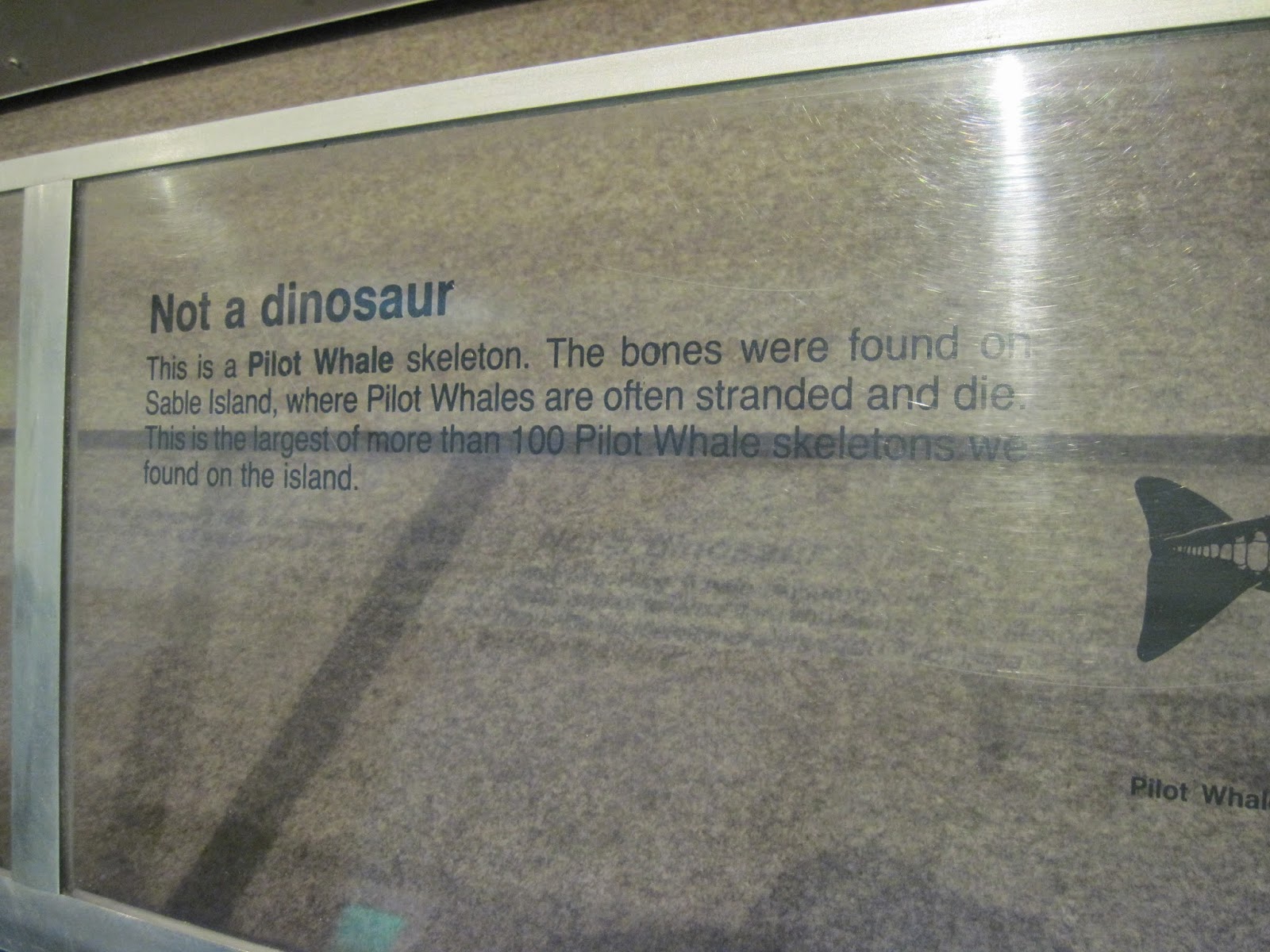
Anyway, that in turn reminded me of a photo I took in the Nova Scotia Museum of Natural History‘s marine gallery a while ago:
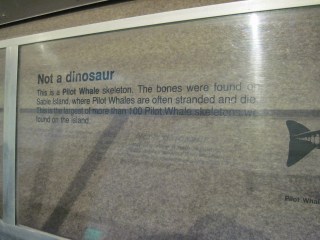
Despite being surrounded by all manner of marine specimens, including a fleshed out model of a sei whale up above, the museum has to explicitly say that a pilot whale is not a dinosaur. In fairness, the museum (sadly!) does not have any dinosaur skeletons, what with Halifax being located on top of the Cambrian-Ordovician Meguma Terrane, and with the Fundy Geological Museum fulfilling the role of the dinosaur-having museum in Nova Scotia.

What lessons can we learn from this?
1. Museum people: put a dinosaur in your museum. There’s no excuse not to have one.

2. Everybody else: many animals have skeletons besides dinosaurs.

3. ????

*Bonus! Sable Island is a super neat place that not many people have heard about outside of the maritime provinces – you can read more about it at their National Park page!
The Systematic Position of the King of the Monsters

A few weeks ago I was really excited to be contacted by Danielle Venton, a freelance writer working on a piece for Popular Mechanics about the biology of Godzilla! With a new big-screen appearance by Godzilla right around the corner, I thought this was a fun exercise in speculative biology. The piece is out now at Popular Mechanics and I highly recommend checking out “The Impossible Anatomy of Godzilla“. Continue reading

Nitpicking Euoplocephalus

A friend of mine posted this amazing video on Facebook, and I must share it!

I really like how the Geek Group have obviously put a lot of time into researching the anatomy of the dinosaurs they’re featuring, and the stylized animations are super cool. I’m obviously biased towards this episode, but I’m looking forward to seeing more!

For those who are interested in learning more about the anatomy of Euoplocephalus, may I offer these blog posts?:

Baron von Nopcsa, Scolosaurus, and the spiky-clubbed ankylosaur.

You can pick your friends, and you can pick your nose…and you can definitely pick your ankylosaur’s nose.

Who-oplocephalus
Who-oplocephalus: Is Euoplocephalus ‘real’?
Who-oplocephalus: Heads for tails.
Who-oplocephalus: The Fellowship of the Half Ring
Who-oplocephalus: Everything old is new again.

Scaling up

And for the keeners, you can also check out a lecture I did for the Royal Tyrrell Museum’s lecture series via their YouTube page!

Bonus: The Dinosaur Toy Blog also enjoys nitpicking the accuracy of dinosaur toys!

Scaling Up

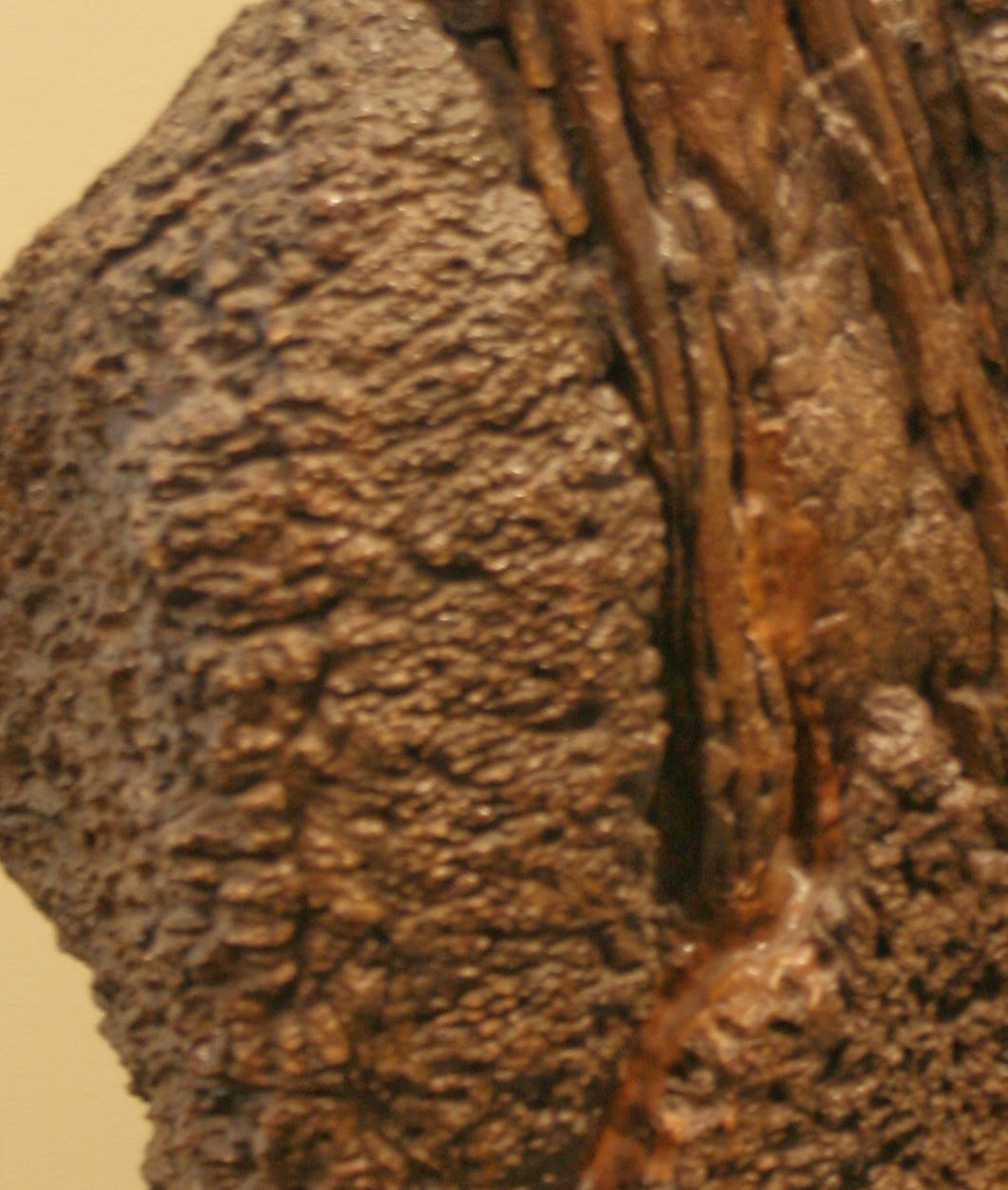
Let’s turn our attention from hadrosaur skin to ankylosaur skin, a topic which has received surprisingly less attention in the published literature than I would have thought. I should qualify that statement, however, by saying that by ‘ankylosaur skin’ I mean ankylosaur skin impressions, because ankylosaur dermal elements are well known and the focus of many a paper – I refer of course to osteoderms, which form within the dermis of the skin and which give ankylosaurs their spiky and armoured appearance.

For a couple of years now I’ve been keeping notes about occurrences of skin impressions in ankylosaurs, which eventually lead to a paper by myself, Mike Burns, Phil Bell, and Phil Currie. We reviewed the morphology of scale patterns in the few specimens that preserve skin, and found that there were some intriguing differences in scalation between different ankylosaurs.

Continue reading

Cock-a-doodle-doo

I’ve finally got the time and gumption to sit down and write again, so let’s do some research blogging! And let’s show some skin while we’re at it!

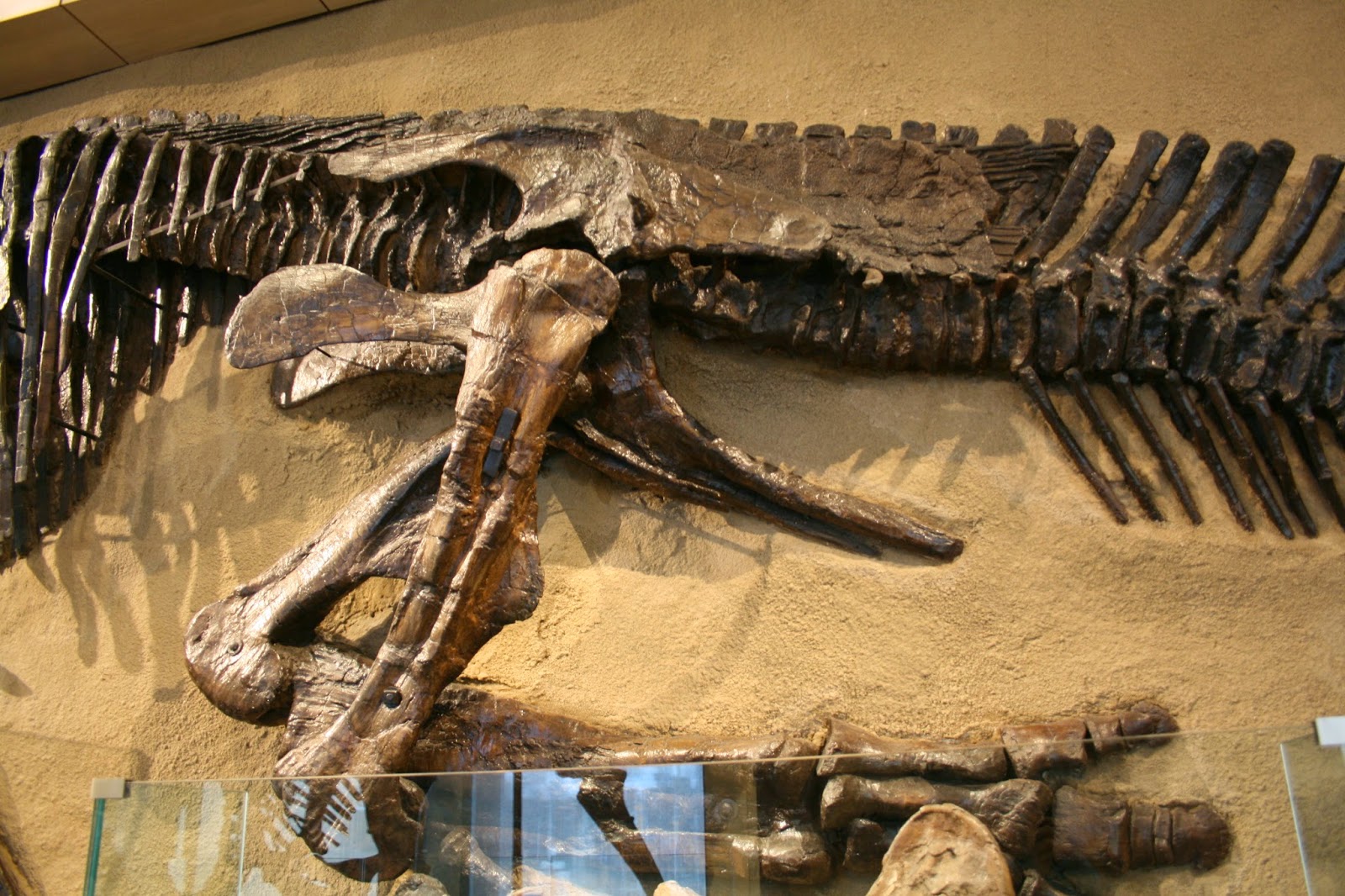
The first paper I’ll talk about is not one that I’m lead author on, but which was a really fun project to be involved in. This was the description of a super cool specimen of a hadrosaur from the area around Grande Prairie with some impressive skin impressions. UALVP 53722 was collected as a large block that had fallen along the creekside. Unfortunately, the rest of the skeleton could not be located, which might mean it’s still in situ somewhere with nothing visible, or it had already broken apart into unrecognizable pieces. The block preserves the back of the skull with the neck arched over the shoulders, the classic ‘death pose’ seen in many dinosaur skeletons. Most of the skull is missing, but what is present shows that it is an Edmontosaurus regalis, the slightly older species of Edmontosaurus

Flat-headed Edmontosaurus at the Denver Museum of Nature and Science.

Continue reading

Back to Hwaseong

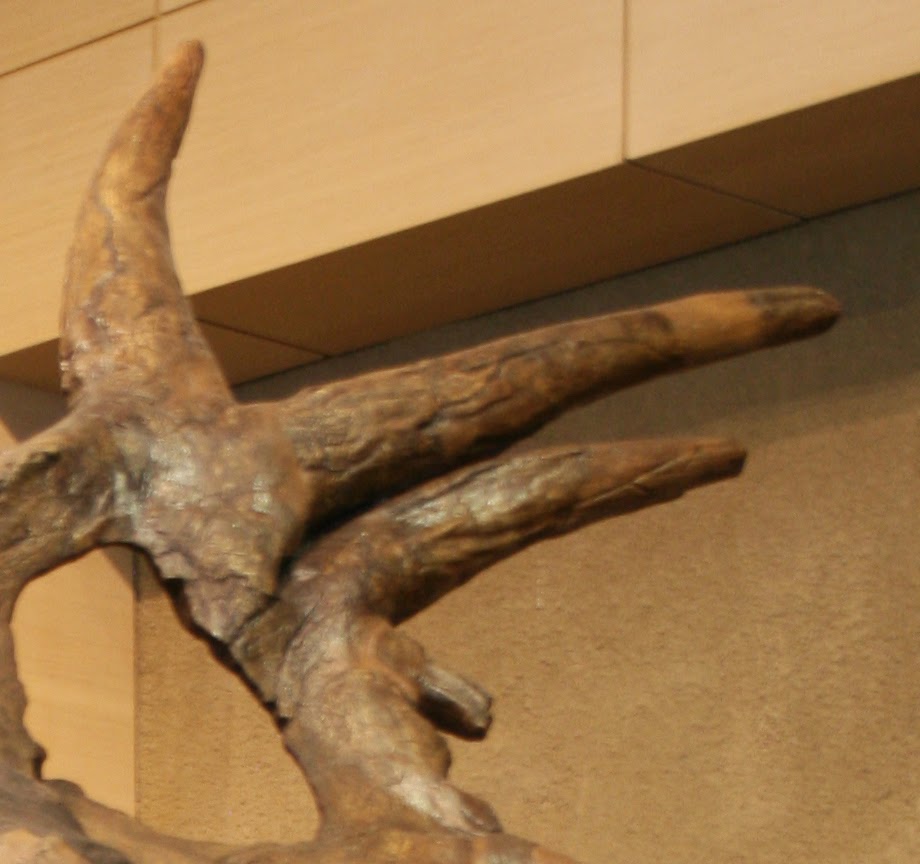
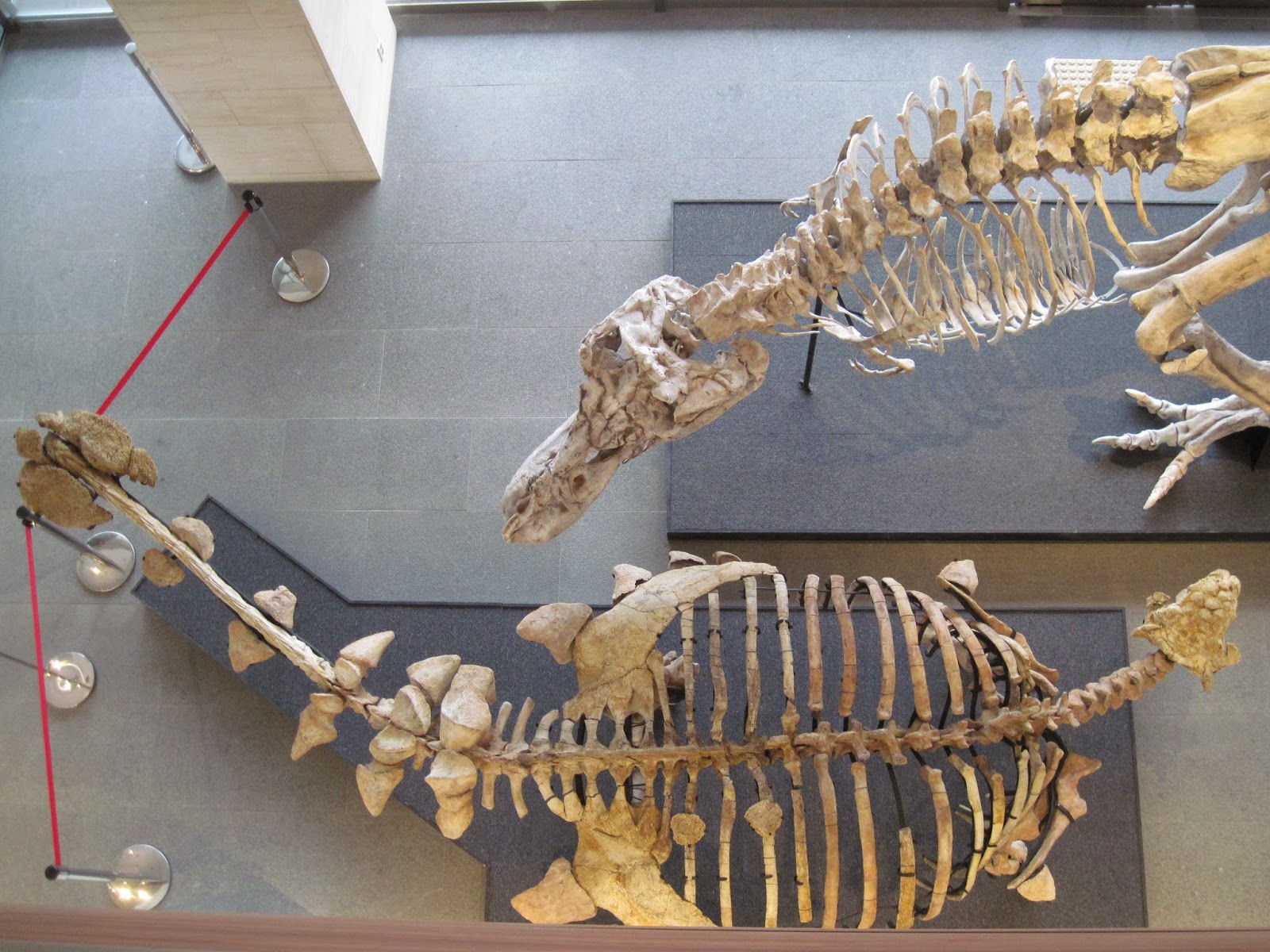
This week I’ve been in Hwaseong city, Korea for the Hwaseong International Dinosaurs Expedition Symposium. I started this blog back in 2010 as a way to document my experiences working in the dino lab in Hwaseong, and so it was wonderful to be able to return more than three years later and see what’s new. The symposium highlights research following the conclusion of the five-year Korea-Mongolia International Dinosaur Project. Many thanks to Dr. Yuong-Nam Lee, the city of Hwaseong, and all of the other organizers and staff who invited us to present our work at this excellent conference!It was a special treat to see the new ankylosaur skeleton prepared and mounted in the lobby of our hotel! Watch out Tarbosaurus, you’re about to get a face full of tail club.

Continue reading

Paleo201 comes to an end

The first offering of Paleo201, Dinosaurs in the Fossil Record, essentially comes to an end today with the final field trip of the semester. The students will have their exam later in December.

Even though it is a lot of work to be involved in the creation of a new course, I think Paleo201 is a great addition to the University of Alberta’s paleontology offerings. Using the Dino101 content on Coursera, and pitched at an essentially first-year level (despite its 200 designation) for students from all faculties, Paleo201 is what’s called a blended learning course. We rely on the Dino101 course videos to deliver the base lecture content for the course, which means we typically only meet once per week for an in-class lesson. These lessons have included research talks by grad students in our labs on topics relevant to each week’s lesson. However, we also tried to break away from the lecture format for at least some of the in class lessons, to take advantage of some of the resources available on campus. One week we learned the basics of the rock cycle and general Canadian geology using the Department of Earth and Atmospheric Sciences Geoscience Garden, an installation of rocks from around Canada arranged in a particular fashion for students to learn basic mapping skills. And last week we did tours of the Paleontology Museum and our prep labs, including sneak peeks of some cool up and coming research projects. FUN FACT: Our Dunkleosteus skull cast was ranked higher than the dinosaur specimens in my highly scientific ‘what did you find most interesting’ poll. Blindingly obvious take-home message for instructors: Students like new things and surprises, and dinosaurs are not necessarily the be-all and end-all!

Continue reading