How the ankylosaur got its tail club

Ankylosaur tail clubs are odd structures, odder than they are usually given credit for. They represent substantial modifications to two different skeletal systems – the endoskeleton, in the form of the caudal vertebrae, and the dermal skeleton, in the form of the caudal osteoderms. The centra of the caudal vertebrae lengthen but stay robust, and the neural arches undergo huge changes, such that the prezygapophyses, postzygapophyses, and neural spine become a robust, V-shaped structure on the top of the centrum, and which creates a tightly interlocking vertebral series with almost no flexibility. We call this the handle of the tail club. The osteoderms at the tip of the tail smush together and two of them become huge: although the tail club knob is small in some species, there are colossal knobs exceeding 60 cm in width. The ankylosaur tail club represents one of the most extreme modifications to the tail in terrestrial tetrapods.

Look at that thing. That is a weird thing.

(This is UALVP 47273, a really nice club that I studied for my MSc work on tail club biomechanics.)

Continue reading

Know Your Ankylosaurs: Everybody’s in this Together Edition

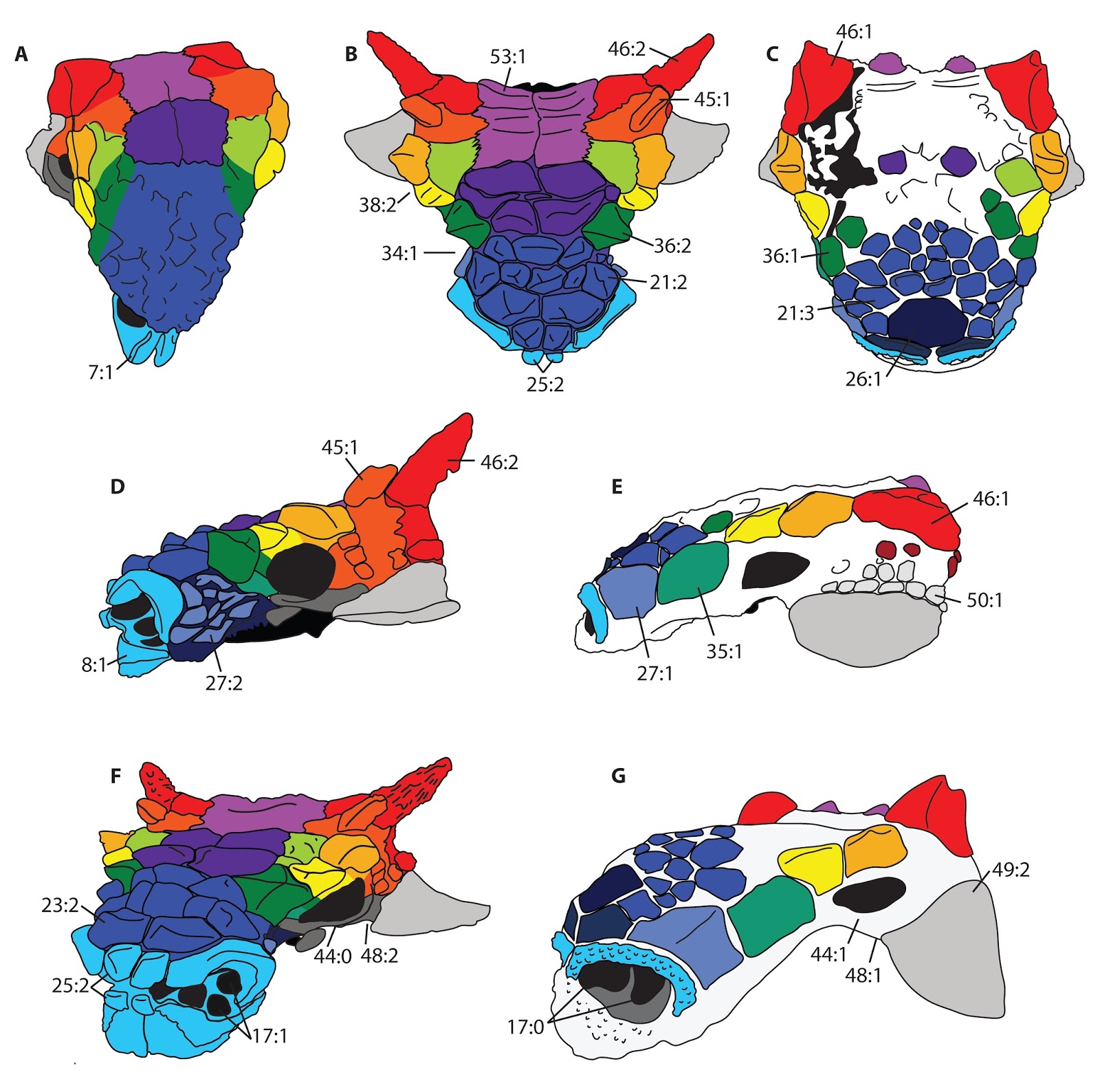
So with all of those posts about ankylosaur taxonomy over the last few weeks, what have we learned about the evolution of this group? Over the course of my PhD research, I was able to identify a bunch of new characters that seemed useful for understanding ankylosaur phylogenetic relationships, including characters related to the cranial ornamentation, pelvis, and osteoderms. Although ornamentation and osteoderms can be tricky, they can still yield useful information if you’re careful about how you construct the characters.

Here’s a sampling of some of the new characters from the supplementary file that goes along with the paper. Long live rainbow ankylosaur skulls. Continue reading

Know Your Ankylosaurs: North American Odds and Ends Edition

I’ve covered many of the North American ankylosaurs in my previous papers and blog posts. In 2013, I argued that what we thought was Euoplocephalus was more likely 4 taxaAnodontosaurus, Dyoplosaurus, Scolosaurus, and Euoplocephalus proper. Then in 2014 we described a newankylosaurid, Ziapelta, from New Mexico. There are a few other taxa that had previously been proposed to be ankylosaurids, so let’s take a look at them here.

Continue reading

Know Your Ankylosaurs: Gondwana Edition

Last time, I talked about the ankylosaurids of China, and today we’re talking about Gondwanan ankylosaurs. Gondwana basically refers to the continents of today’s southern hemisphere; when the supercontinent Pangaea broke apart, it split into two large continents – Laurasia in the north, and Gondwana in the south. Gondwana includes South America, Africa, Australia, and Antarctica, and, somewhat nonintuitively, India (India kind of beelined into Asia from Australia and that’s why we have the Himalayas). Almost all of the ankylosaurs we know about are from the Laurasian continents, which means that the few found in Gondwana are phylogenetically and biogeographically interesting: do they represent southern branches of the ankylosaur family tree, or new migrations into Gondwana from Laurasia? Let’s take a closer look:

Continue reading

Know Your Ankylosaurs: China Edition

I’m in Utah digging up dinosaurs! But also, one of the last big chunks of my PhD thesis has just been published online at the Journal of Systematic Palaeontology. They are generously allowing free access to the paper through the end of August, so head on over and grab a copy while it’s free! This time, I’m taking all of the knowledge gained from my previous taxonomic revisions, adding in some more taxa, and doing a revised phylogenetic analysis building on previous analyses to see how everyone shakes out and to learn a little bit more about ankylosaurid biogeography. I’ll cover some of the taxonomic stuff over the next few posts, and finish off with the big picture of ankylosaurid evolution.

Continue reading

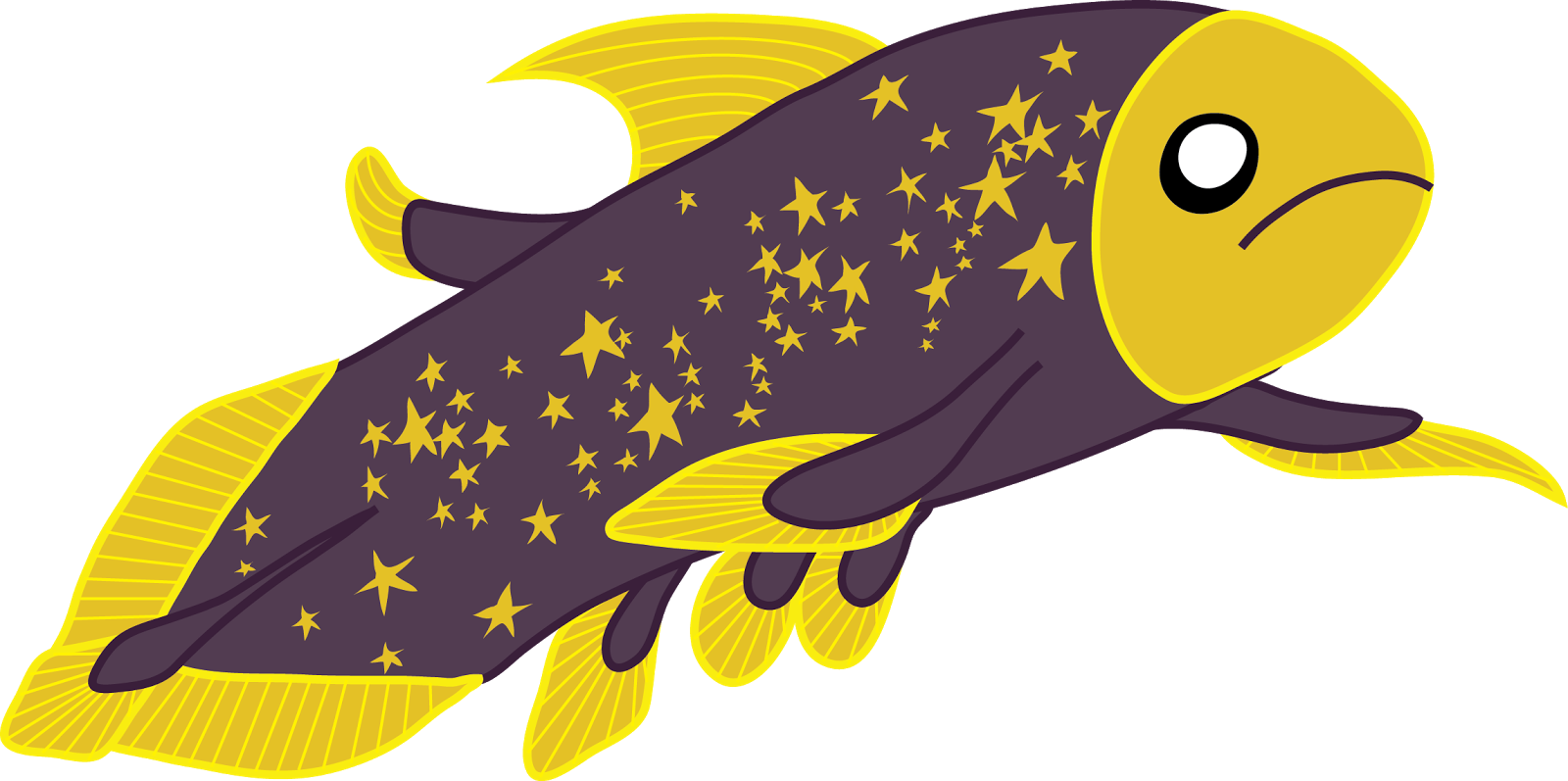
Woe betide those who summon the Galactic Coelacanth

A couple of years ago I had an existential crisis when I realized that, in the time one of my papers had been in review (almost 8 months!), I could nearly have physically created an entirely new human being in my body, if I had so chosen. Thus began the saddest game in the universe that I like to play when I submit a paper: “What kind of animal could have been gestated in the time this paper has been in review?”. And this became an even better running joke when one of my colleagues had a highly unusual review experience that lasted for several years, which completely exhausted the gestation times of real animals.

My amazing and lovely sister saw us talking about this on Facebook and went ahead and wrote an R script that tells you exactly what kind of animal you could have birthed while waiting for reviewer comments. And because I am always forgetting to save this amazing piece of code, I’ve gotten permission from Jessica to post it here for posterity. My sincere apologies to anyone who gets the Space Whale, and my deepest condolences to anyone who is graced by the presence of the Galactic Coelacanth. 

Click here for the R script!

Updated 30 June 2015: If you don’t have R, you can also download a text file to see the code!
Dinosaurs Unearthed!

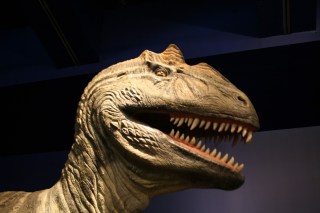
Growing up in Nova Scotia, despite its many excellent and significant palaeontological treasures, meant that there weren’t many dinosaur fossils for me to gawp at regularly. The Nova Scotia Museum of Natural History (which I loved) had only a few small fossils on display, and besides an exciting appearance by the Dinosauroid when I was small, did not have any big traveling dinosaur exhibits come through. But when I was in Grade 1 or so, DINAMATION came to town and seared its robotic dinosaurs all over my brain forever. And so I think I will forever have a soft spot in my heart for animatronic dinosaur displays.

Continue reading

Why does Jurassic World hate dinosaurs?

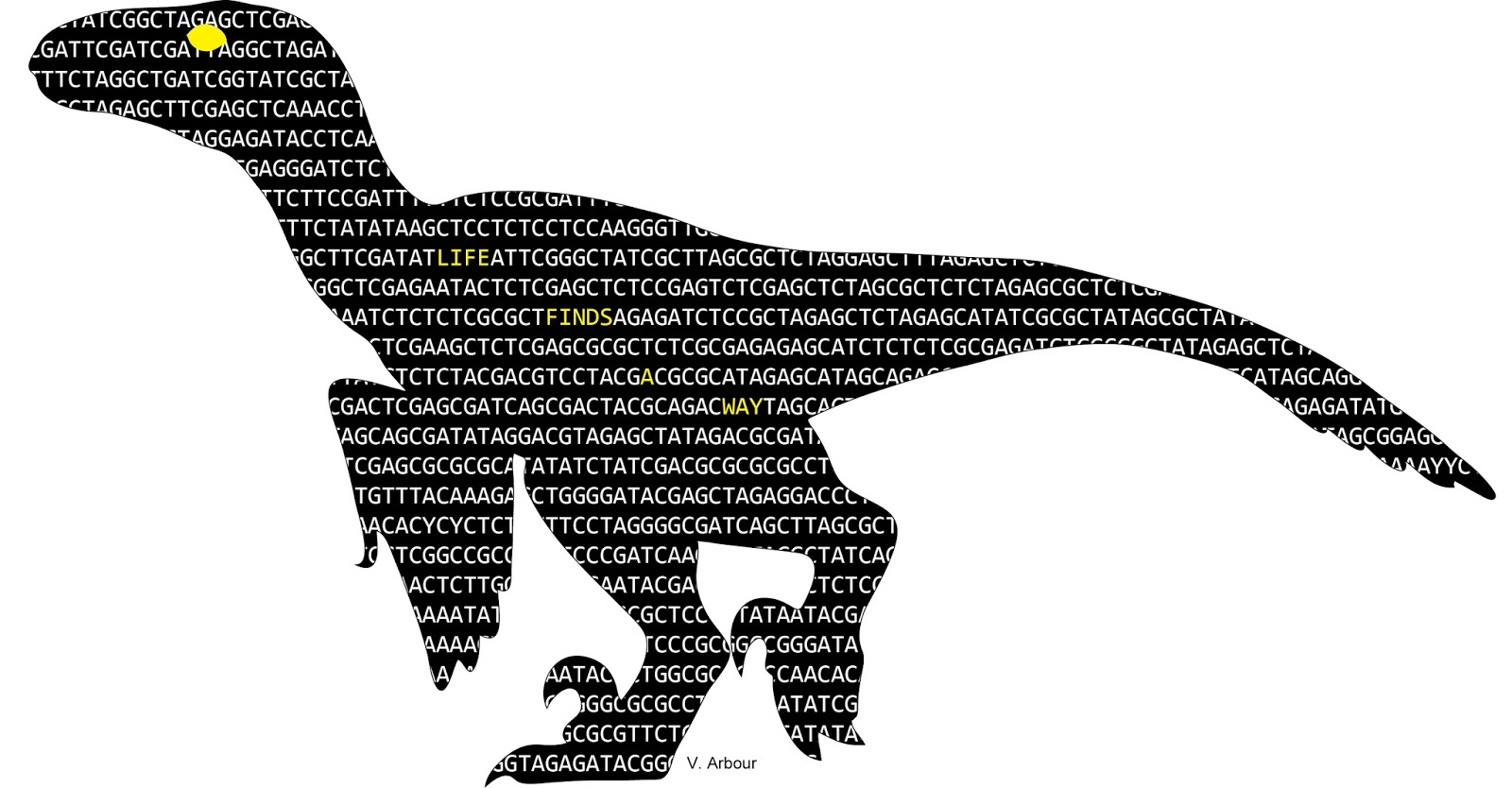
I have some Thoughts and Feelings about Jurassic World! Spoiler alert, I’m going to talk about details and plot points and this post is really for people who have seen the film. Also, while I’m going to talk about the dinosaurs a bit, this isn’t really a review of the science of the film, because that’s already been done to death. Ok, onwards and upwards into something that wound up being way too long!

Continue reading