Hello blog friends! Today I’d like to highlight an important funding campaign that needs your help: Save Mongolia’s Dinosaurs! This campaign is organized by Bolortsetseg Minjin and Thea Boodhoo through the Institute for the Study of Mongolian Dinosaurs; you may have encountered Bolor’s name during the episode involving the Tarbosaurus auction in New York a few years ago, as she was the palaeontologist who initiated the investigation around the provenance of that specimen. Her actions helped lead to the repatriation of that specimen back to Mongolia. She does important work and is a palaeontologist you should know and support!
ankylosaurs

Ankylosaur Fight Club
Pseudoplocephalus has a new home! WELCOME!
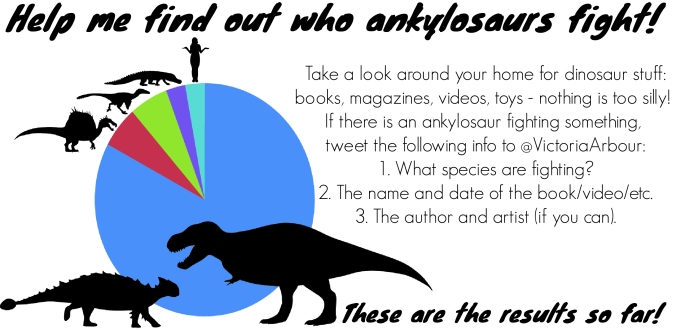
Over the many years I’ve spent thinking about ankylosaurs, I’ve amassed a not insubstantial collection of ankylosaur stuff. And one of the things that I’ve noticed is that when ankylosaurids are shown wielding their tail clubs as weapons, they are almost always fighting some kind of tyrannosaur (but usually Tyrannosaurus, of course). Are there any illustrations that show ankylosaurids fighting anything different?
Back in January I asked my Facebook friends and Twitter followers to look in their homes for ankylosaurs fighting things and to let me know what they found, and now, blog readers, I am asking the same of you! Find some ankylosaurs fighting something and either tweet it to me (@VictoriaArbour) or leave a comment below!
Here’s what the preliminary results from my January request look like! (And yes, there was one example of an ankylosaurid tail clubbing a human.) The data I get from all of you will help me develop hypotheses for better understanding the selective pressures that led to the evolution of tail weaponry in ankylosaurs. Have at it!
Ankylosaurs by the sea
Ankylosaurs, like probably most other dinosaurs, were landlubbing, terrestrial animals without obvious aquatic adaptations. And yet, surprisingly, their fossils are found in marine sedimentary environments more often than most other dinosaurs (except hadrosaurs). Some, like Aletopelta, wound up in shallow or lagoonal environments – Aletopelta’s carcass became a reef! – but some, like the Suncor nodosaurid, wound up far away from shore.

Aletopelta! See if you can spot the oyster marks, invertebrates, and shark teeth around the pelvis and legs.
Ankylosaurs all the way down
After the SVP meeting in Dallas, I spent a couple of days working on Texan ankylosaurs at the Ft Worth Museum of Science and History, and at the collections at Southern Methodist University. It was nice to see a bit of Texas outside of downtown Dallas, so here’s a few shots from my visit to Ft Worth!

This Way to the Dinosaurs
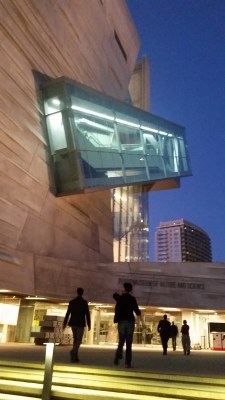
Welcome to the Perot Museum of Nature and Science! The Society of Vertebrate Paleontology Annual Meeting’s welcome reception was held here last week. This museum is trying out some interesting and different exhibition ideas that I haven’t seen too often elsewhere, so let’s take a look at some highlights.
Burgers and Hot Dogs
Sydney Mohr is a friend and colleague of mine whose art you will have seen in the news lately, if you are inclined to read about ankylosaurs. She’s done amazing reconstructions of two ankylosaurs for me in the last year – Ziapelta and Gobisaurus – and so I asked her to take a few minutes and tell us about her process for creating her palaeoart. Also this way I get to show off more of her drawings, so yay!
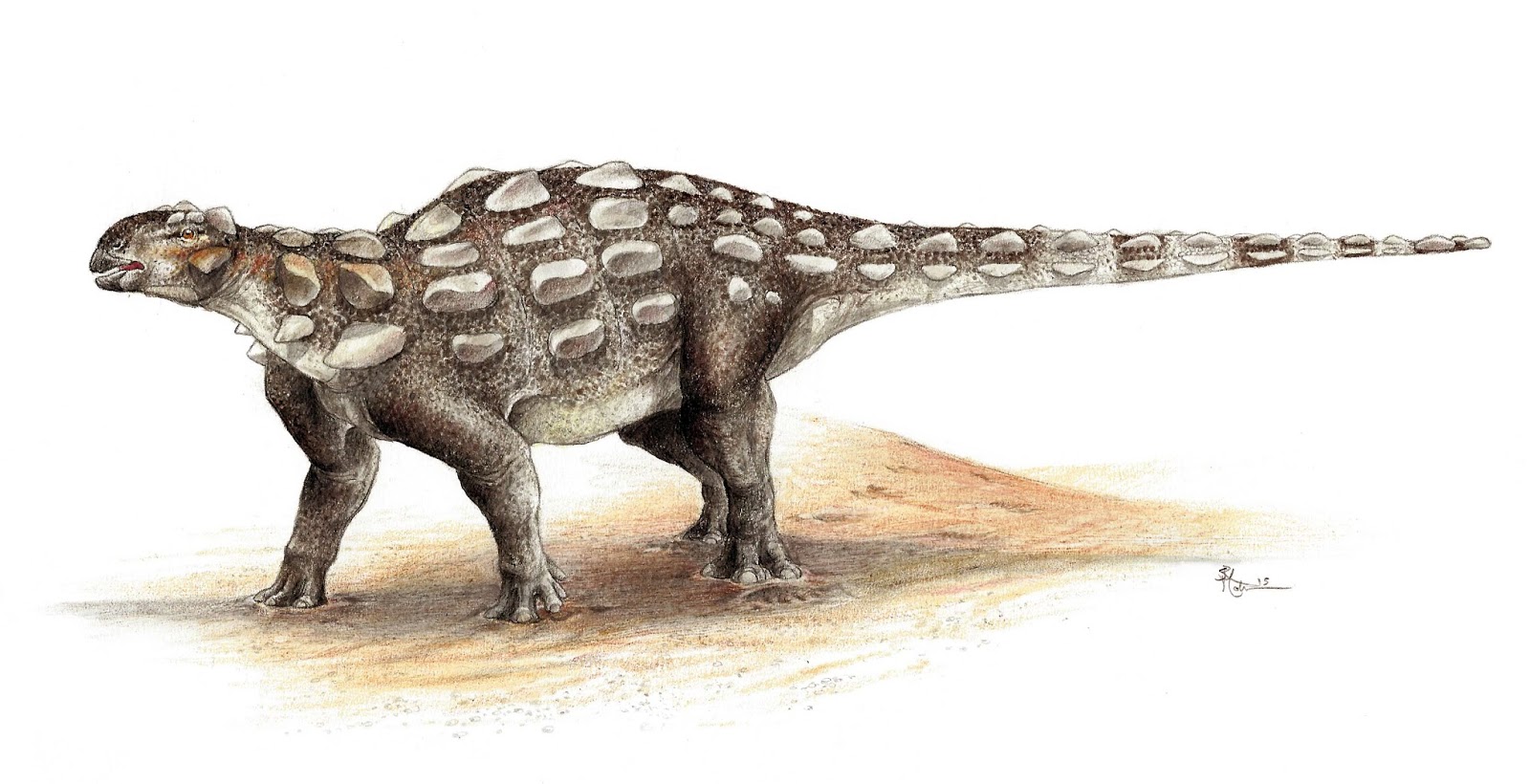
Sydney decided that this Gobisaurus was named Burger, and that seemed fine with me. Continue reading
How the ankylosaur got its tail club
Ankylosaur tail clubs are odd structures, odder than they are usually given credit for. They represent substantial modifications to two different skeletal systems – the endoskeleton, in the form of the caudal vertebrae, and the dermal skeleton, in the form of the caudal osteoderms. The centra of the caudal vertebrae lengthen but stay robust, and the neural arches undergo huge changes, such that the prezygapophyses, postzygapophyses, and neural spine become a robust, V-shaped structure on the top of the centrum, and which creates a tightly interlocking vertebral series with almost no flexibility. We call this the handle of the tail club. The osteoderms at the tip of the tail smush together and two of them become huge: although the tail club knob is small in some species, there are colossal knobs exceeding 60 cm in width. The ankylosaur tail club represents one of the most extreme modifications to the tail in terrestrial tetrapods.

Look at that thing. That is a weird thing.
(This is UALVP 47273, a really nice club that I studied for my MSc work on tail club biomechanics.)
Know Your Ankylosaurs: Everybody’s in this Together Edition
So with all of those posts about ankylosaur taxonomy over the last few weeks, what have we learned about the evolution of this group? Over the course of my PhD research, I was able to identify a bunch of new characters that seemed useful for understanding ankylosaur phylogenetic relationships, including characters related to the cranial ornamentation, pelvis, and osteoderms. Although ornamentation and osteoderms can be tricky, they can still yield useful information if you’re careful about how you construct the characters.
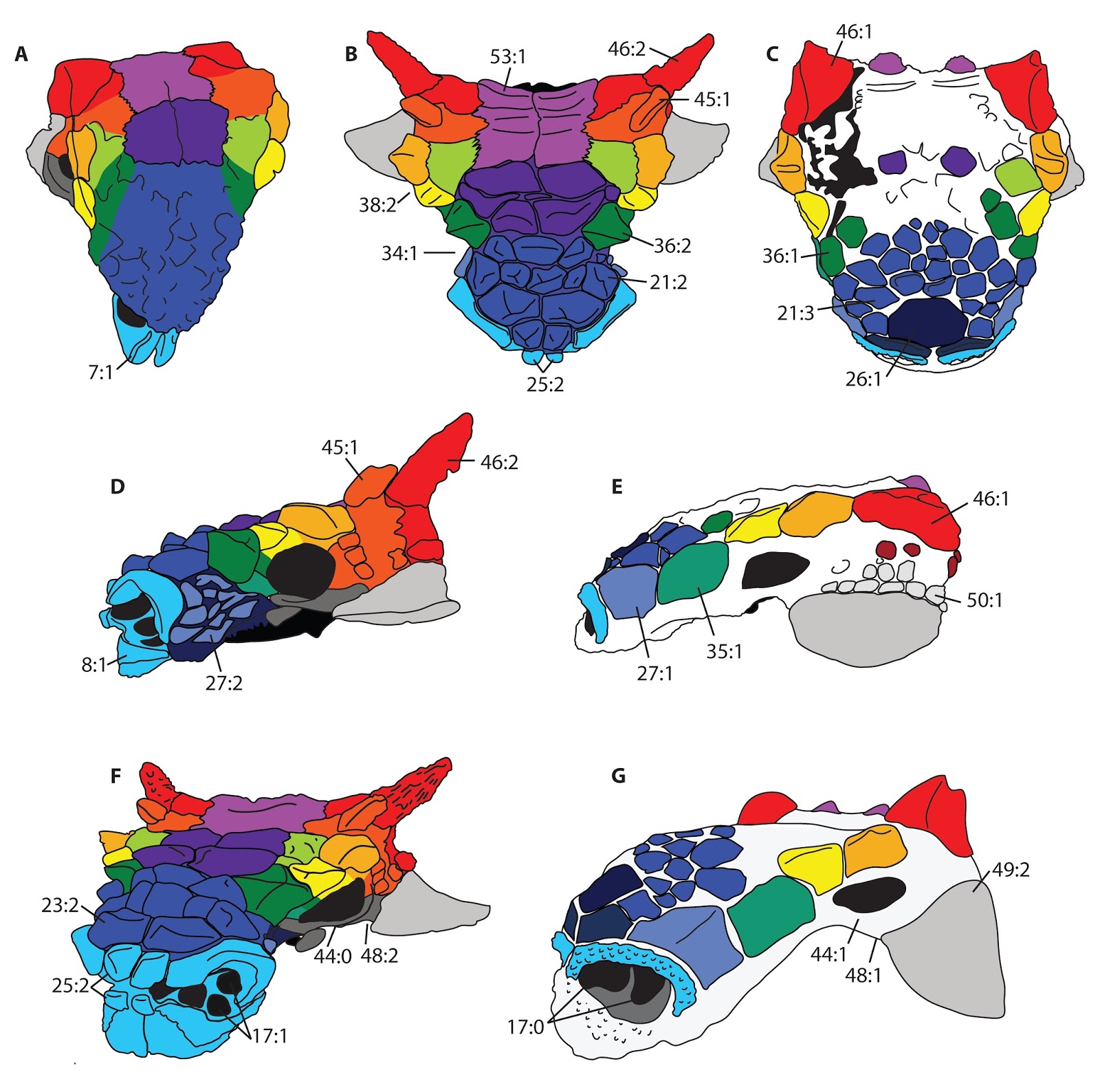
Here’s a sampling of some of the new characters from the supplementary file that goes along with the paper. Long live rainbow ankylosaur skulls. Continue reading
Mamma mia, è un dinosauro!
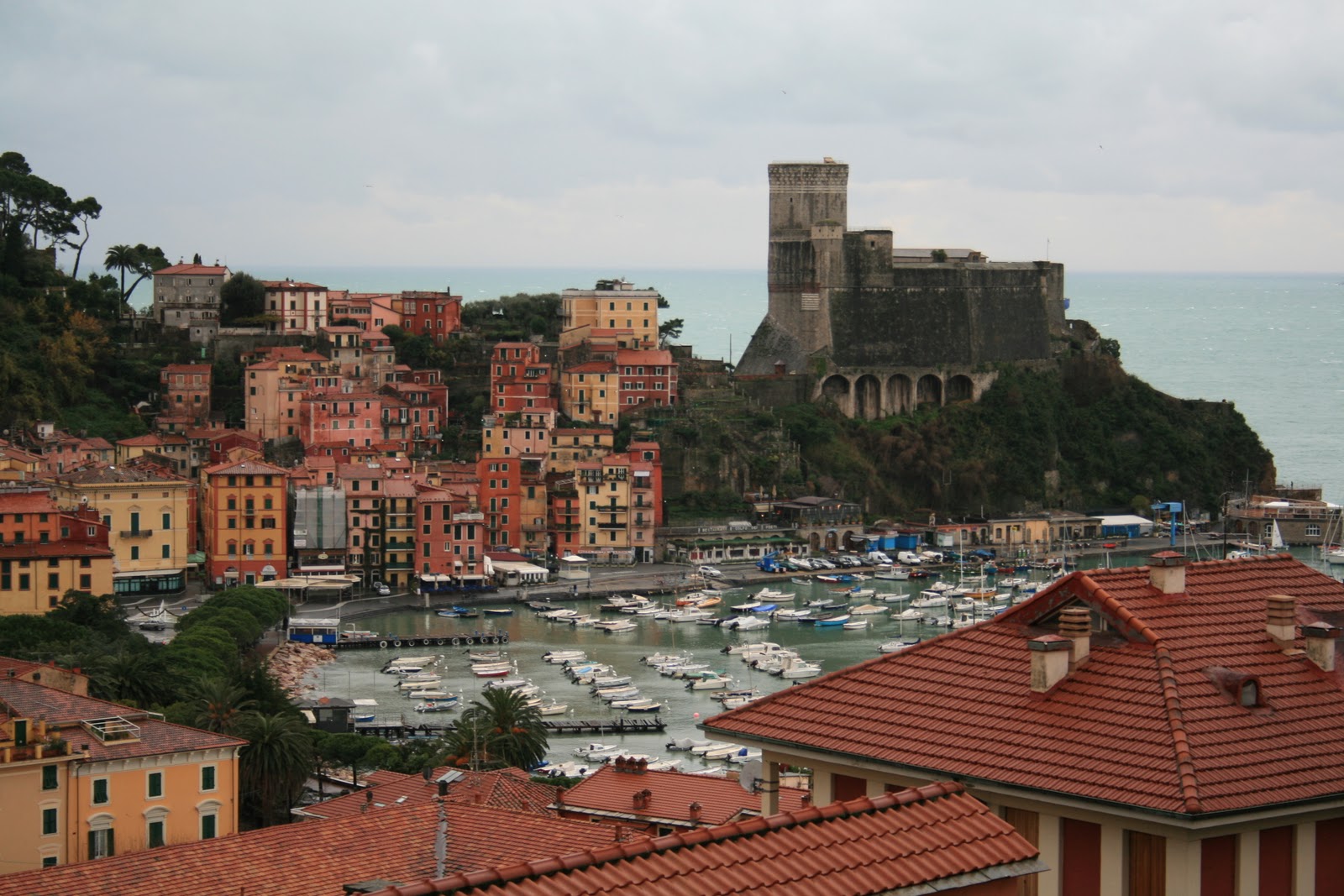
It is Christmastime, which means it is time for me to make my annual pilgrimage to my favourite 13th-Century-Castle-that-is-also-a-Palaeontological-Museum in lovely Lerici, Italy.

A visit to the Jurassic Forest.
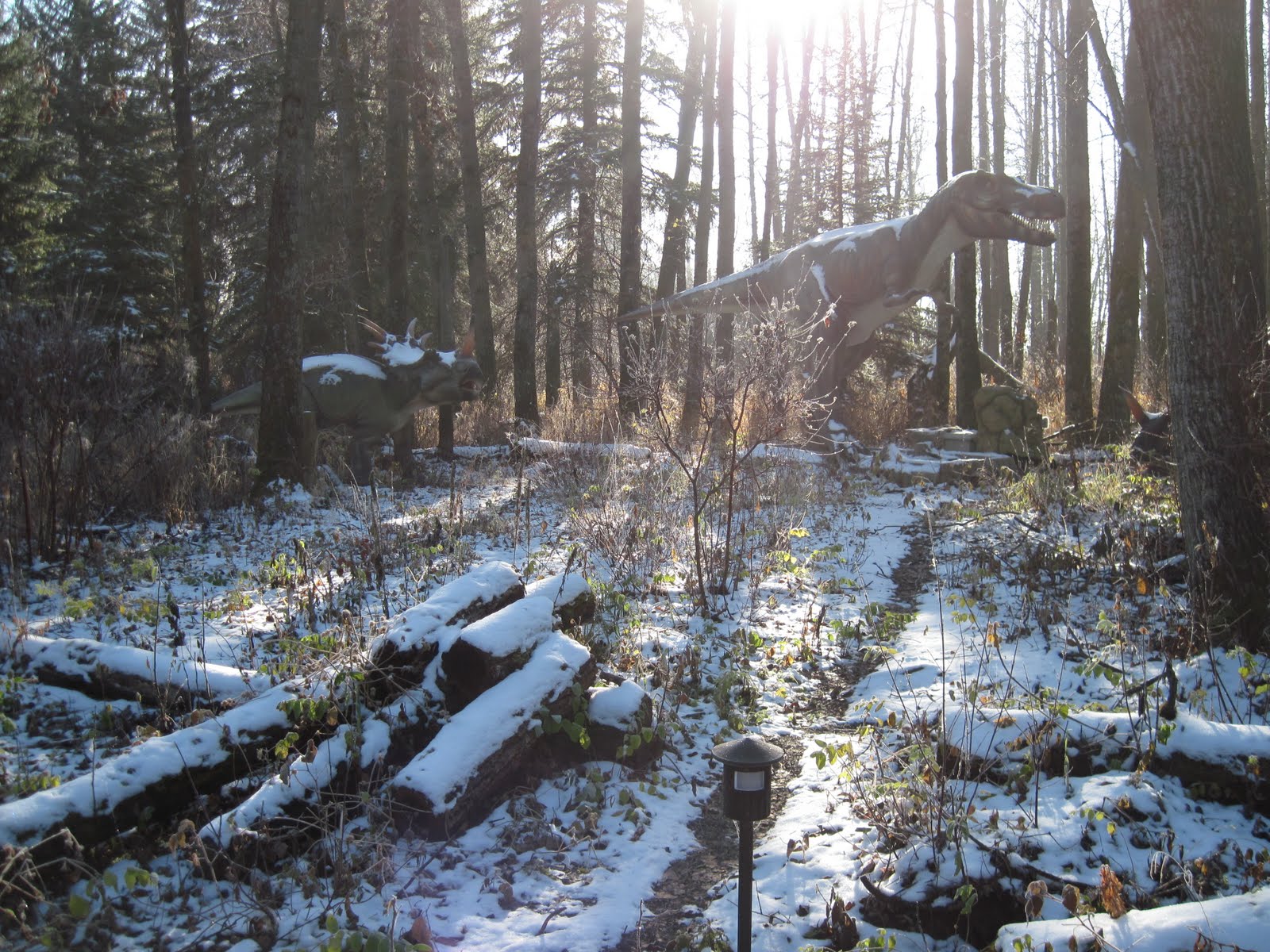
The University of Alberta has a pretty active Palaeontological Society with undergrad, grad student, and faculty members, and when we can we try to organize palaeo-themed field trips. Lucky for us, this summer Edmonton had a very cool new dinosaur attraction open called the Jurassic Forest, so of course we had to check it out.
 pseudoplocephalus