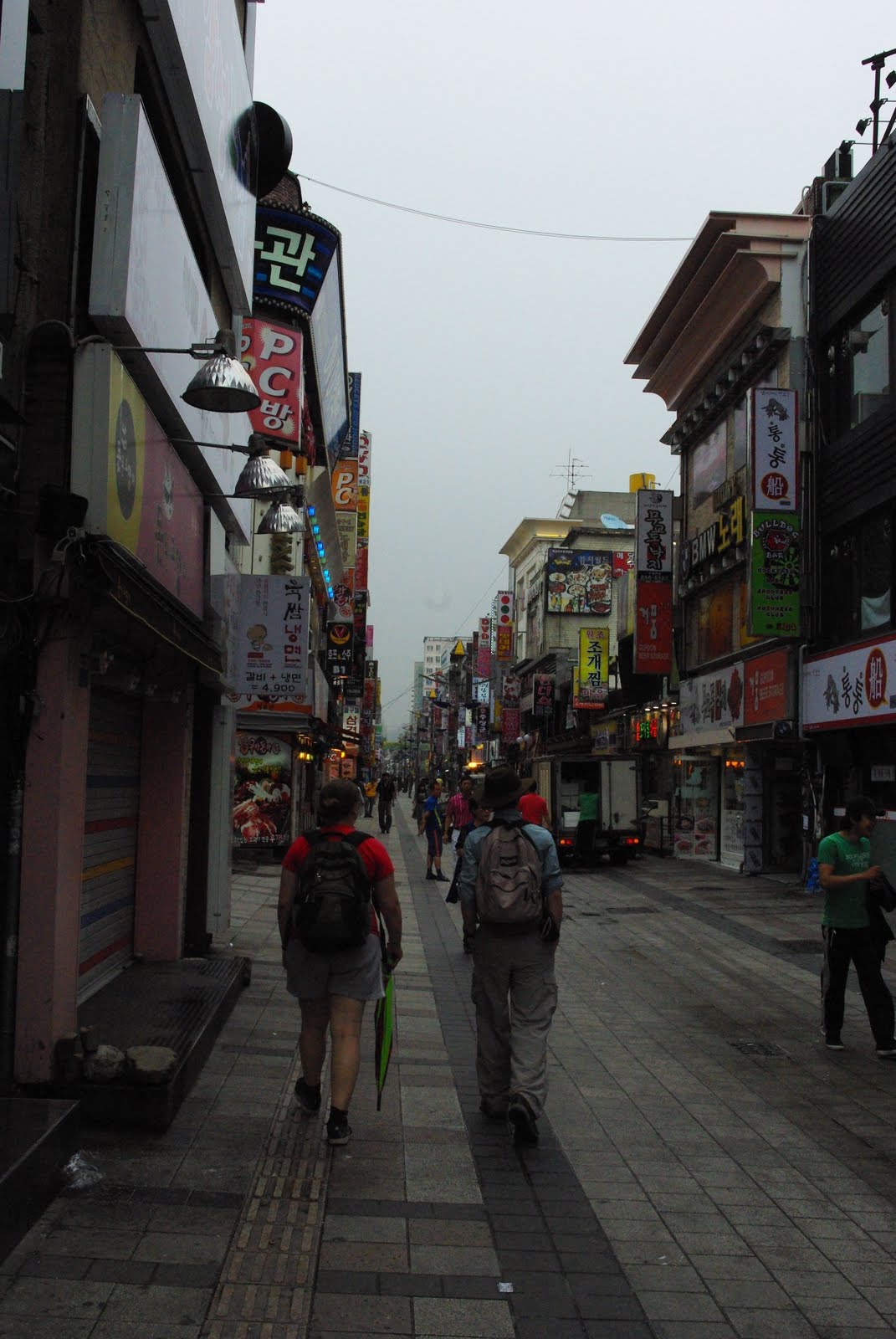
Before we headed to the Korean Folk Village we had a bit of a stroll around the streets near the Suwon train station. There is a great pedestrian street with lots of interesting shops and restaurants. Continue reading
Korean Folk Village, part 3: in which there is general silliness

For an extra 3000 won (about $3) you could go in the Korean haunted house! Spooky! It was just about the best 3000 won I’ve ever spent. Winding through dark corridors you would occasionally set off a blacklight-lit scene with little animatronics. Spooky characters included a bat eating a person, giant Arthropleura-like centipedes, someone getting pounded to death in a grain mill, and a snake coiling around a person. There were frequent appearances by a monster with a red face and a horn coming out of its forehead – presumably a monster from Korean folklore? Continue reading
Korean Folk Village, part 2: in which there are flora and fauna
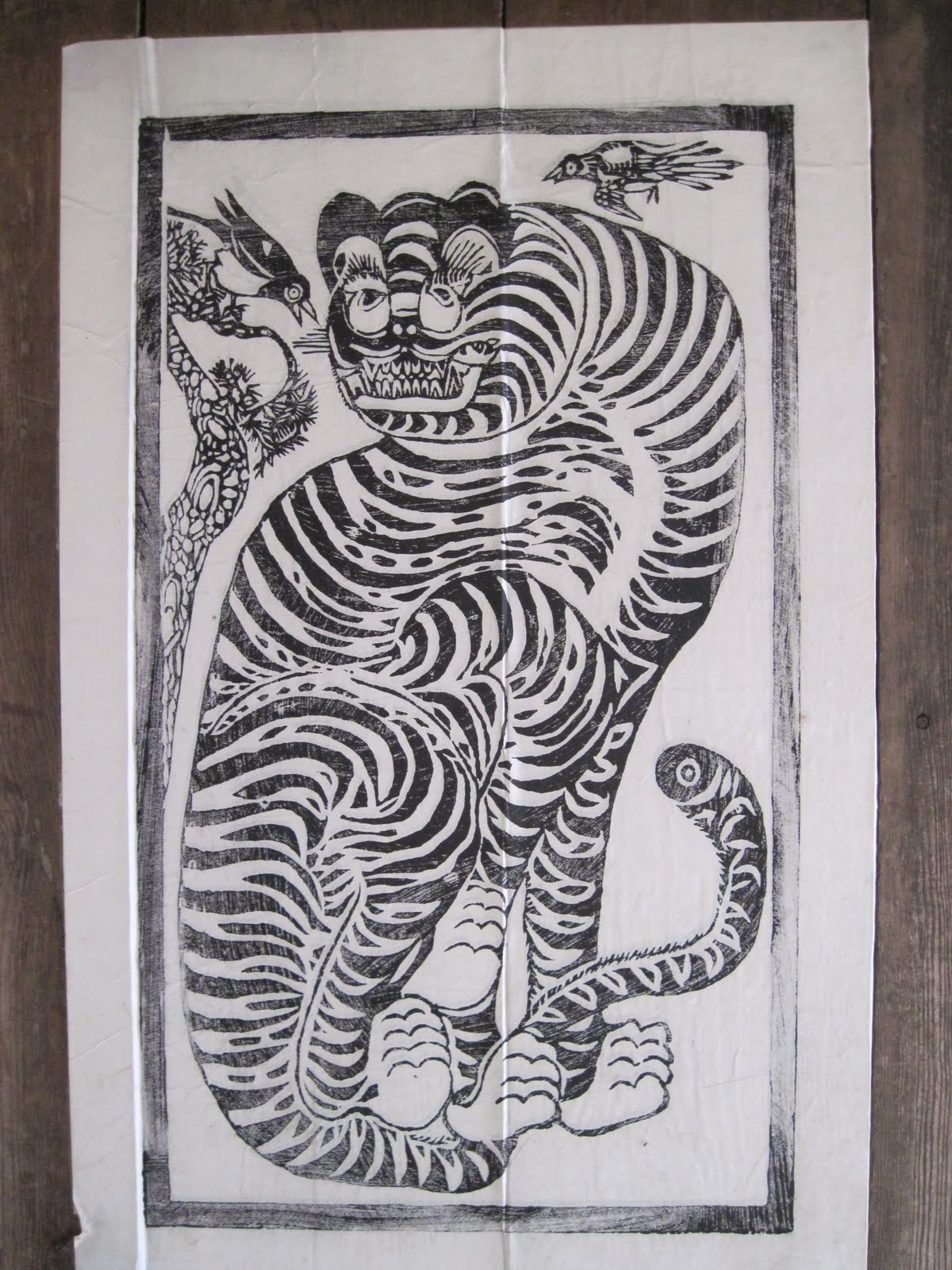
A traditional folk painting in Korea includes a tiger, a magpie, and a pine tree, and is called a jakhodo. The pine tree is a symbol of the first month of the year, the tiger has power to chase away evil spirits, and magpies were good omens that brought good news. I like these very much! Continue reading
Korean Folk Village, part 1: in which there is edutainment
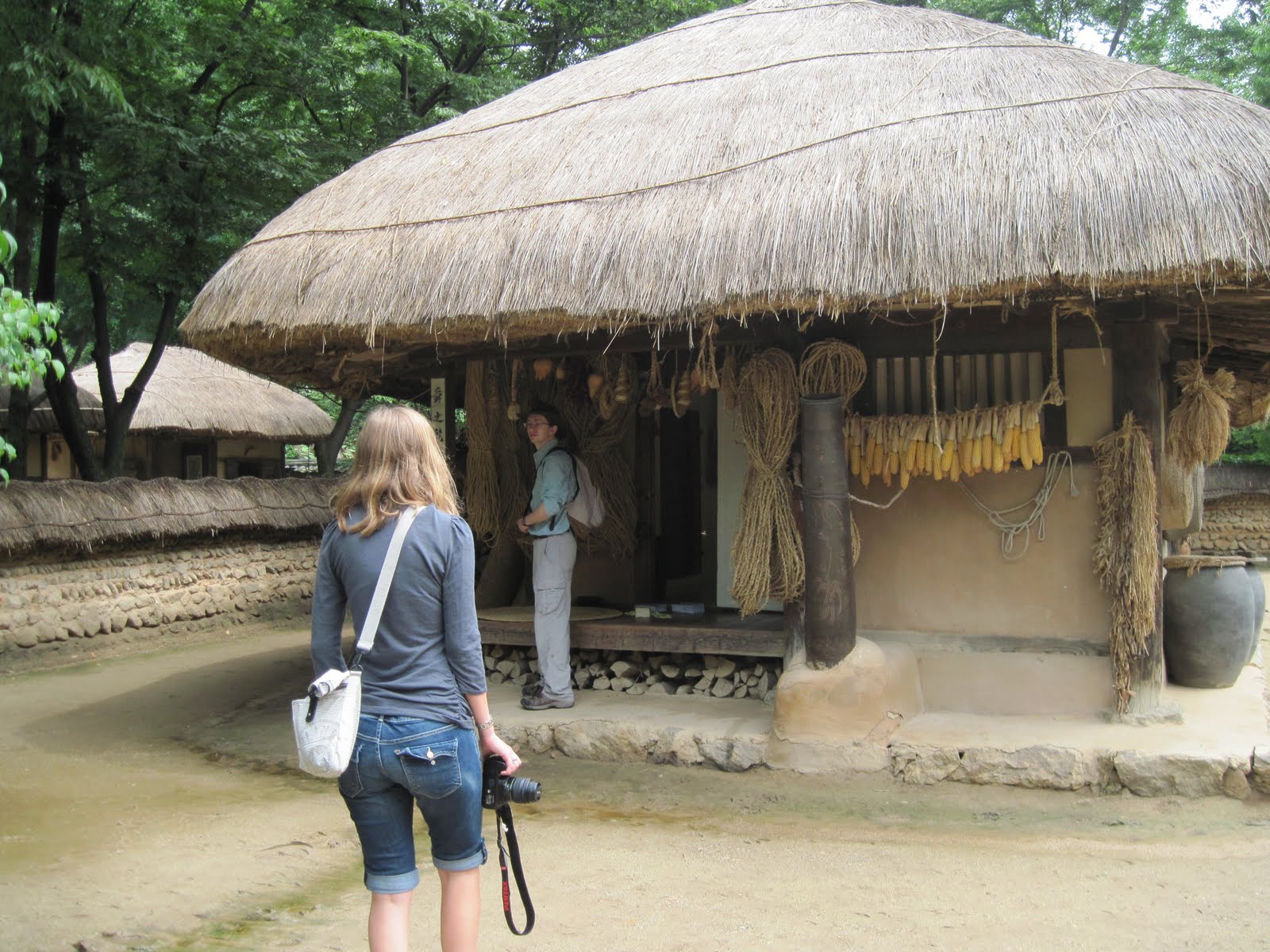
Last Saturday we headed in to Suwon to visit the Korean Folk Village. I would highly recommend making the trip in to Suwon if you’re ever visiting Seoul or other nearby cities in Korea. The village is a reconstruction of many different styles and types of Korean buildings – scholar’s homes, temples, palaces, governor’s mansions, or the farmer’s thatched roof cottage (THATCHED ROOF COTTAGES!) shown here. There are so many interactive elements to the whole place – you can learn to make paper, straw sandals, and pottery, or you can try your hand at farm machinery, try catching a mudloach, wear traditional clothes, sit in a palanquin, and tons of other little activities. The three of us learned a lot about traditional Korean culture, AND had a lot of fun – true edutainment. The whole place is a little bit like Fortress Louisbourg in Cape Breton, or Fort Edmonton Park. Continue reading
Jebudo
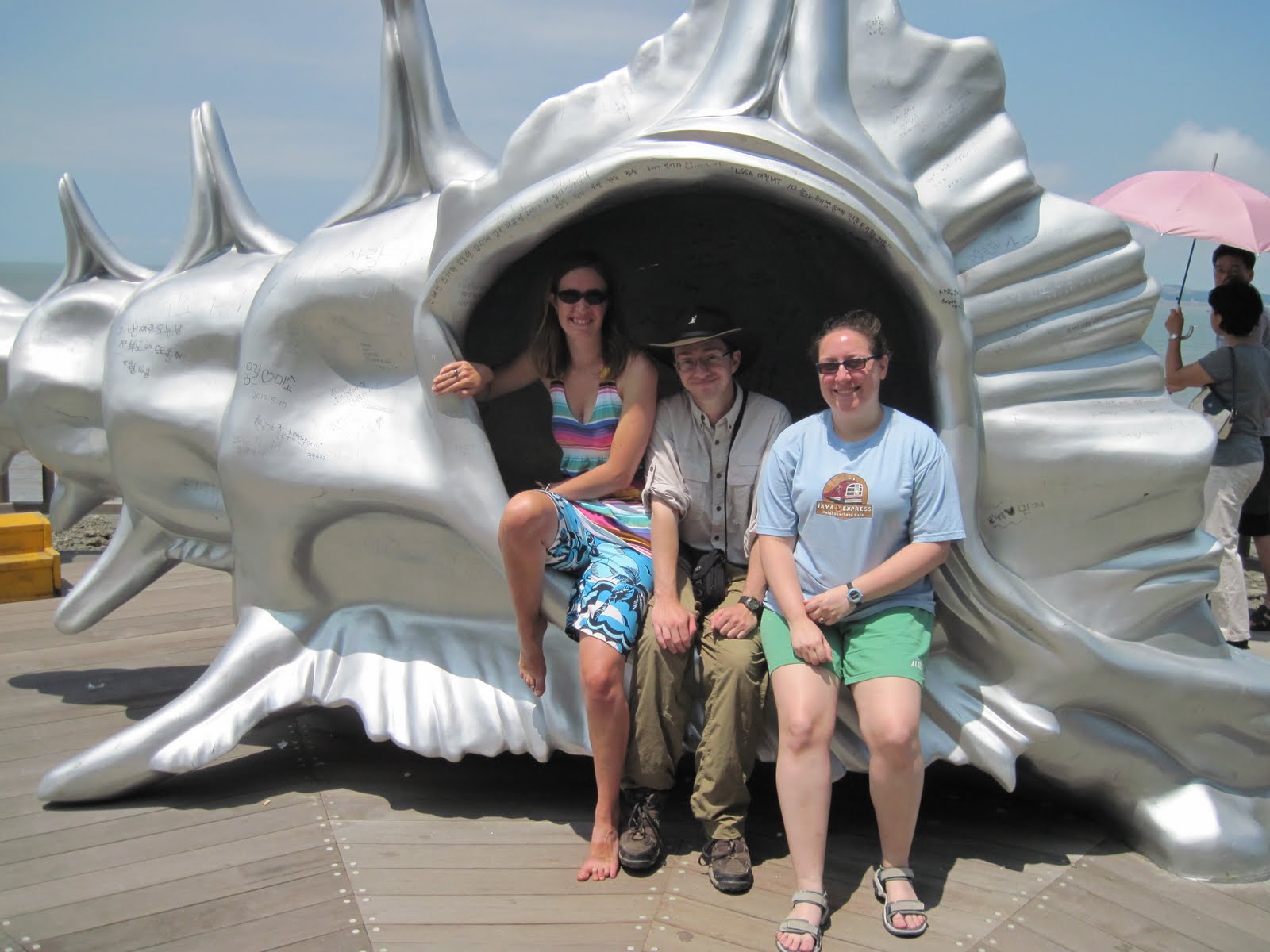 We went to the beach this weekend! Continue reading
Korean Food Adventures, part whatever the part it is now.

I realize a lot of the food posts probably make it seem like the cuisine over here is all live octopi and anglerfish and things that are very unusual to the North American palate. While everything is certainly different, not all dishes are as extravagantly odd. Hushik nangmyeon are cold dessert noodles that I have heard are very common snacks in the summertime. There are really thin noodles, cucumbers, radishes, melons, half of a hardboiled egg, and sesame seeds. It is quite tasty and certainly nice at the end of the meal!

The noodles can be challenging to eat, however. Too slippery!
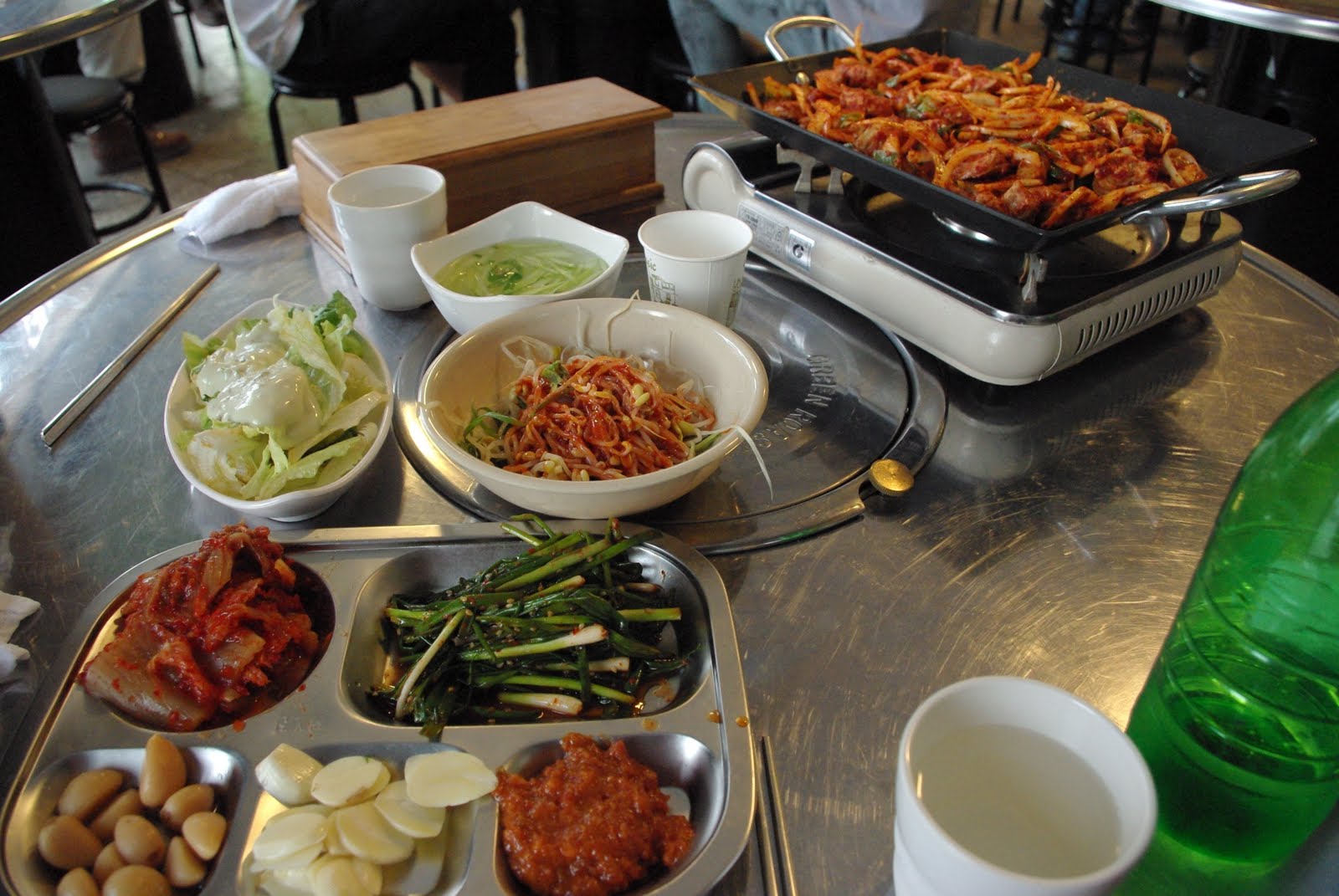
Ok, I need to include one more extravagantly odd dish. Can you guess what the spicy meat on the grill is? Hint: it’s not squid, as we initially thought….
…it’s pig intestines!
Taking the Seoul Train, part 2
During our visit to Seoul we also visited the National Folk Museum, which was quite interesting. They have a series of Saturday traditional dance and music performances, and we were treated to a wonderful group of traditional dancers. My favourite number involved dancing with hourglass-shaped drums.

Taking the Seoul Train, part 1
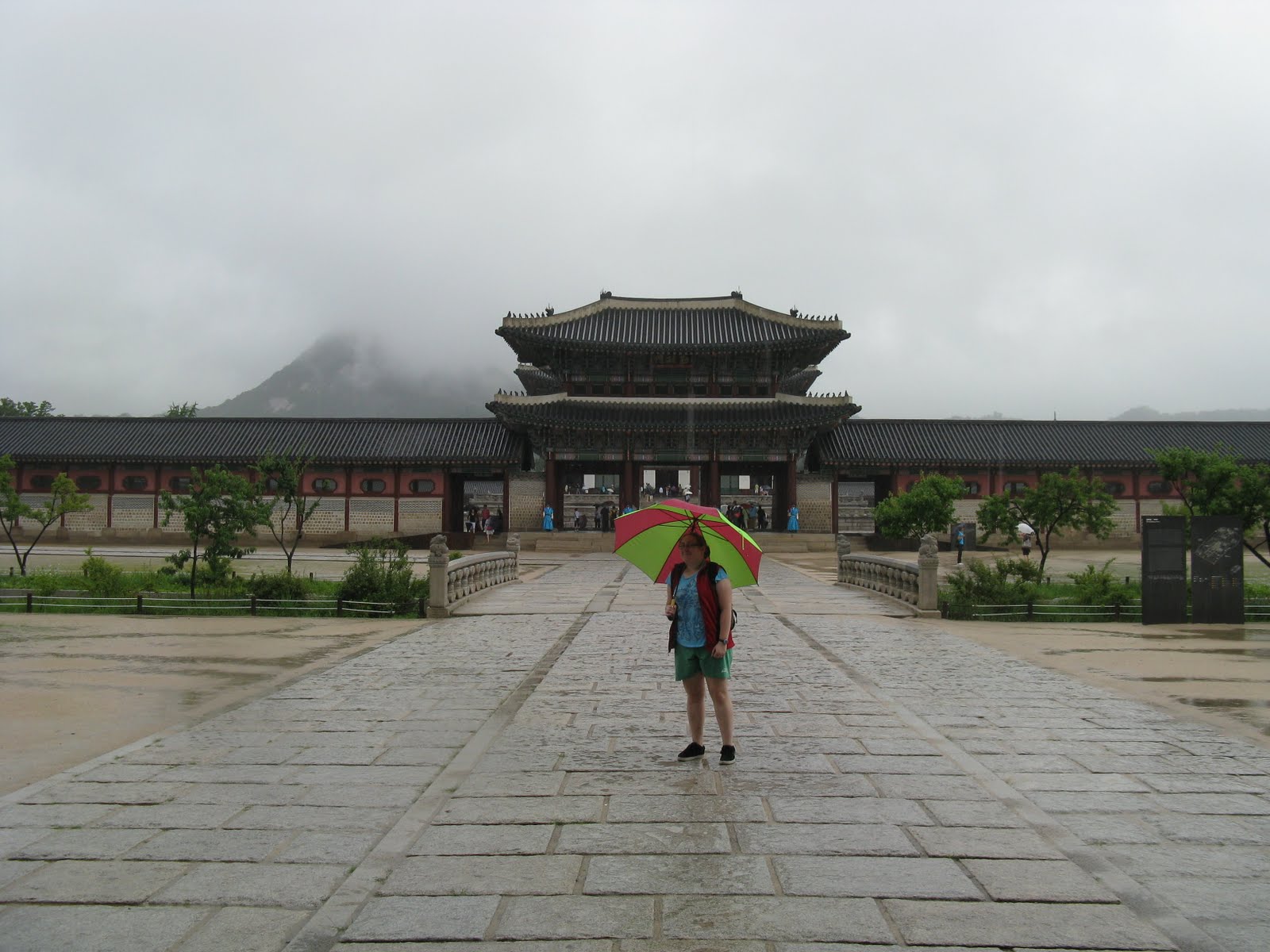 Scott and I trekked in to Seoul on Saturday and visited Gyeonbok Palace. The palace was founded in the 14th century, during the Joseon Dyanasty. It was a monsoon day in Korea but that meant the crowds were pretty thin and we had a great day.
Continue reading
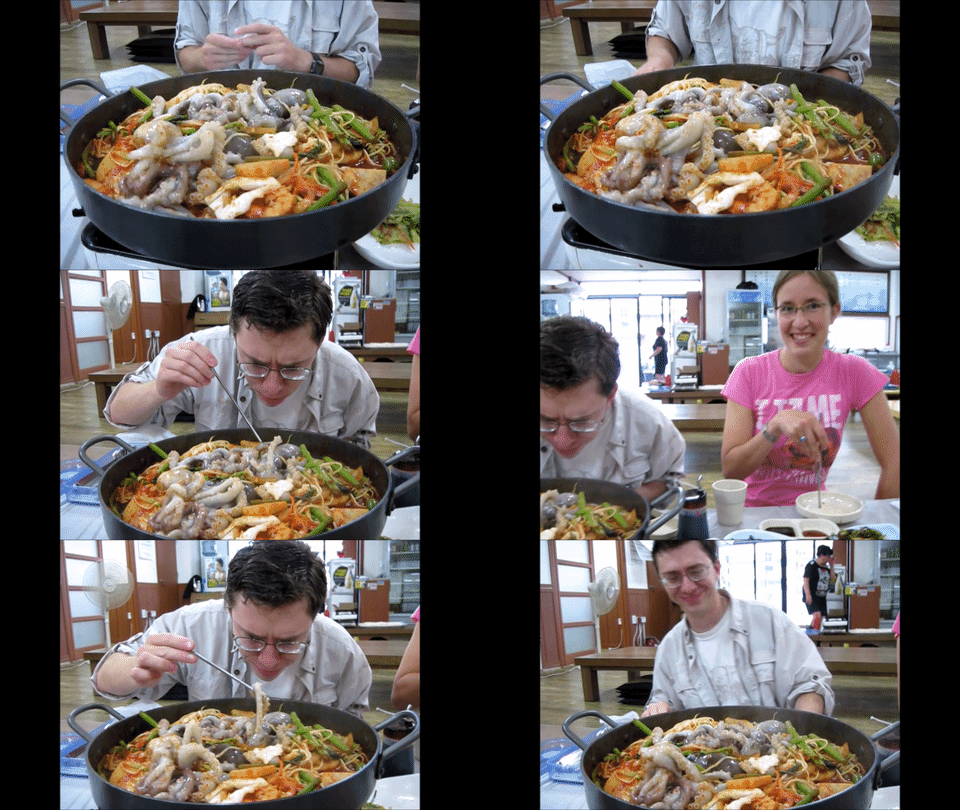
Bulnakchi!
I’ll just let this speak for itself.
Hwaseong dinosaur eggs.
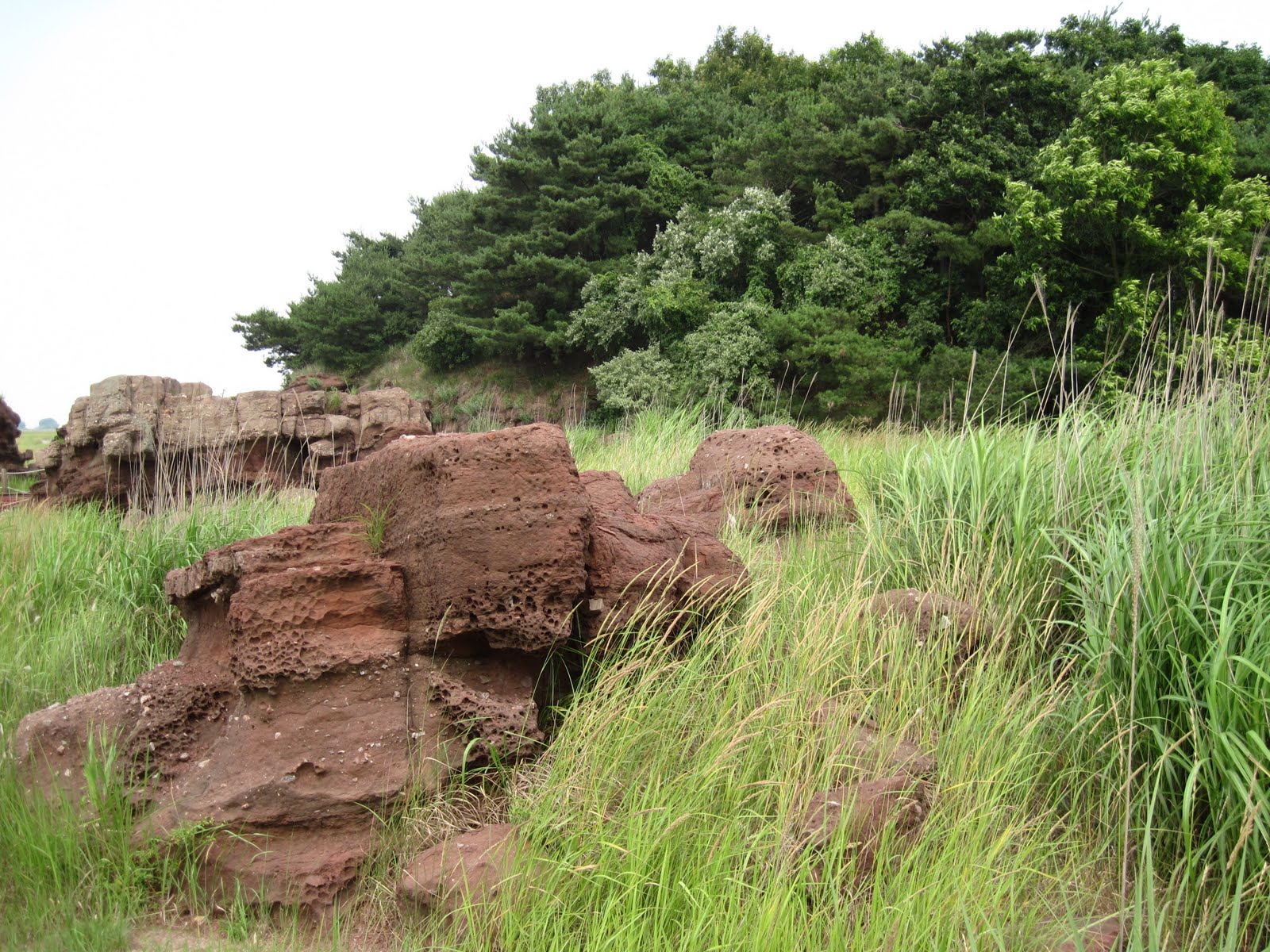 The Hwaseong dinosaur egg site is just a 15 or 20 minute walk from the visitor centre across the salt marsh. The nests are found in these little island outcrops, which look as though waves were crashing on them just yesterday. Continue reading
 pseudoplocephalus